Spirit Airlines CEO Called Air Travel a Rigged Game Before Creditors Sold the Last 27 Jets

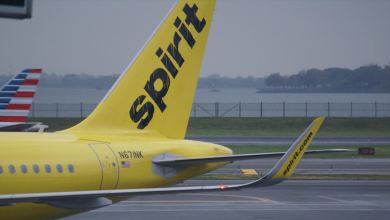
On September 23, 2026, U.S. Bankruptcy Judge Sean H. Lane signed off on the sale of what was left of Spirit Airlines‘ flying metal: 27 Airbus A320-family jets for a combined $668.129 million. Twenty-three of them, a mix of A320s and A321s, went to Save 2026-B LLC, a vehicle controlled by holders of Spirit’s aircraft equipment notes, for $567.4 million that is mostly a credit bid against debt already secured by the planes. Four A321s, tail numbers N661NK, N665NK, N670NK, and N671NK, went to FTAI Aircraft Leasing Bermuda for $100.7 million in cash. The yellow fleet Ted Christie once defended as the public’s last cheap seat is now a creditor inventory.
That is the ending of a sentence Christie started on a 2024 earnings call. After a federal judge killed JetBlue Airways‘ $3.8 billion bid for Spirit, the ultra-low-cost carrier’s chief executive told analysts that nearly all of the profits in U.S. air travel had pooled inside a handful of companies. Smaller airlines, he said, were left scrambling „in what seems ever more like a rigged game.“ American travelers, in his phrasing, were „the long-term losers.“ He was arguing for a merger. The market delivered a liquidation.
Christie had run Spirit since 2018 as president and since 2019 as chief executive. He sold the JetBlue combination as a way to build „a real challenger to the dominant ‚Big 4‘ U.S. airlines“ — American, Delta, United, and Southwest. In January 2024, U.S. District Judge William Young sided with the Justizministerium and blocked the purchase. The court found that folding Spirit into JetBlue would take cheap seats off the board on city pairs where Spirit still disciplined fares. Christie called the ruling „a serious misreading of both the evidence and the law“ and said Washington had treated two carriers with a combined share under 8 percent as the problem, instead of the four airlines that already controlled most domestic capacity.
Investors heard the „rigged game“ line as an attack on the Biden-era antitrust staff. Travelers heard something plainer: if the discounter that made a Tampa weekend possible could not survive alone, the next sale would not be a $29 base fare. Both readings were incomplete. The Justice Department won the injunction. Spirit still collapsed. The cheap seats did not move intact to JetBlue, and they did not stay on Spirit either.
Two bankruptcies, then an empty departure board
The injunction did not, by itself, put Spirit into bankruptcy court. The company had already burned through years of losses, aircraft-lease obligations, and a fare war in which larger brands copied bag fees and „basic economy“ pricing that used to be Spirit’s edge. On November 18, 2024, Spirit filed Chapter 11, the first major U.S. passenger airline to do so since American’s case in 2011. A prepackaged plan converted about $795 million of debt into equity, layered in a $350 million equity infusion, and canceled the old common stock. The carrier walked out of that case on March 12, 2025, talking about a stronger airline.
Christie war nicht da, um es zu betreiben. Er trat am 7. April 2025 zurück, in derselben Woche verließ Chief Commercial Officer Matt Klein. Entschädigungsanträge zeigten später einen Retentionsbonus von 3,8 Millionen US-Dollar, der Tage vor der November-Petition in einem 2024-Paket über 8 Millionen US-Dollar gezahlt wurde. Crews, die bereits terminpläne gekürzt hatten, bemerkten das timing. Der Vorstand installierte Dave Davis, einen ehemaligen Manager von Sun Country und Northwest Airlines, als Chief Executive mit Wirkung zum 21. April 2025 und sagte ihm, er solle die Marke von reinen no-frills fliegen.
Davis parkte Jets, ließ dünne Routen fallen, stornierte Airbus-Lieferungen und beurlaubte Besatzungen. Es war nicht genug. Nachdem ein Kreditkartenprozessor Liquidität eingesperrt hatte und Leasinggeber in die Flotte gewechselt waren, reichte Spirit am 29. August 2025, fünf Monate nach dem ersten Ausstieg, das Kapitel 11 ein zweites Mal ein. Die Aviation Week meldete später einen Nettoverlust von 2,76 Milliarden US-Dollar für 2025, gegenüber einem Verlust von 1,22 Milliarden US-Dollar im Jahr 2024, obwohl die Betriebskosten um 24 Prozent fielen. Die Gläubiger skizzierten Anfang 2026 einen schlankeren Plan, der eine weitere Entstehung hervorbringen sollte. Bis Februar, Gerichtsanalysen setzen Vermögenswerte in der Nähe von $ 5,66 Milliarden gegen etwa $ 8,01 Milliarden in Verbindlichkeiten.
Fuel prices then jumped during the 2026 war involving Iran, the United States, and Israel. In a May 2, 2026 statement filed with the Securities and Exchange Commission, Davis said a March agreement with bondholders „would have allowed us to emerge as a go-forward business,“ but „the sudden and sustained rise in fuel prices in recent weeks“ left no alternative. „Sustaining the business required hundreds of millions of additional dollars of liquidity that Spirit simply does not have and could not procure.“ A last push for roughly $500 million in federal support under the Trump administration died after rival carriers and members of Congress lined up against it. Flying stopped in the early hours of May 2. The last scheduled trip, Detroit to Dallas-Fort Worth, landed after midnight. About 50,000 people had flown Spirit that final day. Roughly 14,000 employees and thousands of contractors, on the order of 17,000 jobs tied to the operation, were done. Spirit Aviation Holdings called it an „orderly wind-down“ and told guests not to go to the airport.
The merger JetBlue could not buy, purchased in pieces
Die Ironie sitzt im Auktionskatalog. Richter Young hatte JetBlue daran gehindert, die gesamte Fluggesellschaft für 3,8 Milliarden Dollar zu kaufen, weil die Regierung sagte, dass Reisende einen Fahrpreis verlieren würden. Im Sommer 2026 wurde JetBlue der erfolgreiche Bieter für die 22 operativen Slots von Spirit in New York LaGuardia, ein Paket, das mit 58,5 Millionen US-Dollar gemeldet wurde und ein Frontier-Gebot enthielt dann beantragten das Verkehrsministerium und die Federal Aviation Administration eine Ausnahmegenehmigung, damit der Slot-Verkauf abgeschlossen werden konnte. Das Konkursgericht hatte die Übertragung am 22. Juli 2026 genehmigt, vorbehaltlich dieser Regulierungsbehörden. JetBlue nahm auch Spirit Flugsimulatorausrüstung in Orlando für 2,7 Millionen Dollar als einziger Bieter auf. Es hat die gelbe Fluggesellschaft nicht gekauft. Es kaufte die Stücke, die zu einem Netzwerk passen, das es bereits hatte.
Der Rest des Anwesens folgte der gleichen Logik. Am 13. August 2026 berichtete der South Florida Sun Sentinel, dass der 8,3 Hektar große Campus des Dania Beach-Hauptquartiers, der erst seit dem Frühjahr 2024 besetzt war, für 93,25 Millionen US-Dollar verkauft wurde an DPC Holdco LLC, eine Tochtergesellschaft des Bostoner Hedgefonds Hill City Capital, nach einem Stalking-Pferd-Angebot in Höhe von 88 Millionen US-Dollar. Mitte August wurde Google in einer Insolvenzerklärung zum erfolgreichen Bieter mit 10 Millionen US-Dollar für ein Paket mit deidentifizierten Unternehmensdaten ernannt, die vor dem Strippen persönlicher Informationen geschützt wurden jede Übertragung nach einer Auktion, die den 14. August eröffnete und ein konkurrierendes Angebot von Mercor erhielt. Die Berichterstattung Ende September behandelte diesen Datenverkauf immer noch als eine neue Art von Konkursvermögen: E-Mails, Chats und Code, die von Namen geschrubbt wurden, wurden angeboten, um Maschinen zu trainieren. Die Passagiere, die den 49-Dollar-Tarif kauften, waren nicht im Zimmer, als die Gebote gelesen wurden.
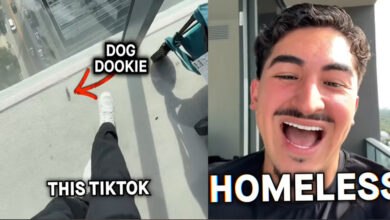
Within hours of the May shutdown, TikTok creator Hunter Peterson stood up a „Let’s Buy Spirit“ campaign. Nonbinding pledges were reported near $214 million from more than 247,000 people by May 6, and later tallies floated from about $337 million to $377 million before the pledge site buckled. An accredited-investor round that opened June 13 reached about $2.2 million from 433 investors by June 19, short of the $5 million Peterson said was needed to bid before a June 26 deadline. He halted the raise, said the money would be returned, and described a shift toward building a new airline rather than resurrecting the old one. An August 23 email to supporters, reported by View from the Wing, renamed the effort „Let’s Build An Airline,“ pitched a membership model the founder called a „Costco of airlines,“ and promised a September 1 name and capital raise. No scheduled yellow-tail passenger flights have come back.
An air-carrier certificate, insurance, trained crews, and working capital measured in the billions sit between a pledge page and a departure board. The campaign proved that a lot of people missed cheap seats to Orlando. It did not prove they could staff a hangar. When an ultra-low-cost carrier disappears, the remaining network does not automatically refill every Fort Lauderdale itinerary at the old price. American, Delta, United, and Southwest already held most U.S. capacity. Removing Spirit concentrated that share further, which is the outcome the Justice Department said it was trying to prevent, and the outcome Christie said would arrive if Spirit could not combine with a partner.
The AEGIS Alliance has followed how consolidation in Vereinigte Staaten Geschäft leaves households with fewer options when a discounter fails. The same stranded-passenger problem shows up when a carrier cancels a long-haul trip with little warning, as in the Air Japan Dallas-to-Tokyo cancellation. Job loss on this scale also belongs next to reporting on how millions of U.S. jobs vanished in earlier shocks. Broader fallout sits in our Vereinigte Staaten News Datei.
Christie’s line was easy to mock in May 2024, when Spirit was still boarding passengers and selling Big Front Seat upgrades. It is harder to dismiss after two bankruptcies, a failed rescue, a fan campaign that could not buy a single Airbus, and a September 2026 order that handed the last 27 jets to lenders and a lessor. The passengers he called long-term losers are the ones opening airline apps and finding that the cheap extra frequency is simply gone. The game he called rigged did not need a conspiracy after that. It needed a docket, a fuel spike, and a buyer for whatever still had a tail number.
Featured image: CC/Flickr/David Ackerman.