
Kan cannabis hjælpe med at behandle opioidafhængighed? den cbd videnskab bag trang gennembrud

As the opioid epidemic grinds on, many of those claiming to seek “solutions” have largely sidelined one of the most promising avenues of research: medical cannabis. When the Comprehensive Addiction and Recovery Act (CARA) was being debated in 2016, amendments to study medical cannabis were stripped out before the bill became law.
Det skete på trods af, at der var flere beviser, der pegede den anden vej. A klinisk undersøgelse fandt, at fordampet cannabis lettet neuropatiske smerter, og selv den føderale regerings egne nationale sundhedsinstitutioner anerkendt at lægemidler til marihuana kan spille en rolle i at reducere brugen af opioider, der er nødvendige for at håndtere smerte.
En stigende mængde forskning har knyttet cannabis til lavere opioidbrug. Flere analyser viste, at Fald i opioidrelaterede skader I lande med lovlig cannabis, og undersøgelsesarbejde rapporteret, at en stor del af cannabispatienter skære tilbage på eller stoppet med receptpligtig medicin. Et bredt citeret 2017-undersøgelsen rapporterede, at opioidafhængighed og overdoser faldt i stater med medicinske cannabisprogrammer.
I januar 2017 Nationale videnskabsakademier published a sweeping review of the scientific literature and concluded that one of the most strongly supported uses of cannabis is the treatment of chronic pain — the very condition that so often serves as the on-ramp to opioid dependence. Yet much of this evidence was ignored by policymakers, while critics have pointed to the role pharmaceutical companies played in at fremme opioidkrisen For det første.
Det cbd gennembrud: hvordan cannabis mål trang
Den mest slående udvikling kom fra laboratoriet af Dr. Yasmin Hurd, direktør for Addiction Institute på Icahn School of Medicine på Mount Sinai. Bygning på år præklinisk forskning viser, at cannabidiol (CBD) reduceret heroinsøgning adfærd hos dyr, Hurd team kørte en dobbelt-blind, placebo-kontrolleret klinisk undersøgelse hos mennesker med heroin use lidelse. Resultaterne blev offentliggjort den 21. maj 2019 i American Journal of Psychiatry.
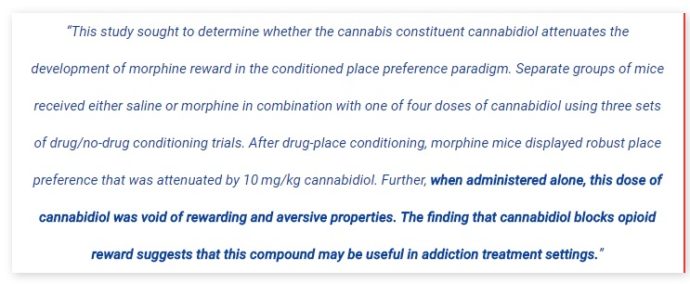
In the trial, drug-abstinent participants who had a history of heroin use were given either 400 mg of CBD, 800 mg of CBD, or a placebo. Compared with placebo, CBD significantly reduced both the craving and the anxiety triggered by drug-related cues — the environmental triggers most strongly tied to relapse. Strikingly, the effect lasted up to seven days after the final dose. CBD also lowered measurable physiological stress responses, reducing elevated heart rate and salivary cortisol levels, and the study reported no serious adverse effects.
Crucially, CBD does not produce the intoxicating “high” associated with THC, the other major active compound in cannabis. That makes it far harder for prohibitionists to attack on the grounds of impairment, and it can even be extracted from hemp. Because purified CBD is non-intoxicating, CBD-based medicines have gained acceptance even in historically prohibitionist states, where they are used to treat children with intractable epilepsy — the same active ingredient was approved by the FDA in the medication Epidiolex.
It is worth being precise about what the science shows. Hurd and her colleagues framed their findings not as a cure but as “significant promise” and “a strong basis for further investigation” of CBD as a treatment option for opioid use disorder. CBD appears to help break the cycle of craving and relapse rather than to instantly erase addiction, and Hurd has since launched larger NIH-funded clinical trials in people with opioid use disorder to test whether those early results hold up at scale.
Et omstridt, men lovende billede
The broader population-level evidence is genuinely mixed, and honest reporting has to acknowledge that. Some research continues to associate cannabis legalization with fewer opioid overdoses, reduced prescriptions, and lower rates of non-fatal opioid poisonings. Other rigorous work cuts the other way: a major reanalysis published in PNAS found that the once-celebrated finding of a 21 percent drop in opioid overdose deaths in medical-cannabis states actually reversed over a longer time frame, swinging to a 23 percent increase, leading those authors to caution that claims of cannabis reducing overdose deaths should be met with skepticism. Economists writing for the National Bureau of Economic Research likewise found that retail cannabis sales were associated with higher, not lower, opioid mortality in some models.
What emerges is not a slogan but a serious scientific case: at the level of individual craving and relapse, the CBD evidence is encouraging and supported by a controlled clinical trial, while the population-wide impact of legalization on overdose deaths remains contested and dependent on how the data are analyzed. That nuance is exactly why the research deserves to continue. For decades, cannabis’s Schedule I status made it harder for scientists like Hurd to study the plant. That barrier started to crack on April 23, 2026, when Acting Attorney General Todd Blanche placed FDA-approved marijuana products and marijuana sold under a qualifying state medical license into Schedule III. Hemp-derived CBD was already easier to work with after the 2018 Farm Bill, which is why Epidiolex reached pharmacies while whole-plant research lagged. Recreational cannabis and bulk marijuana remain in Schedule I while DEA’s administrative law judge writes a recommendation on whether the rest of the plant should follow. The science Hurd published still has to fight the leftover paperwork.
States have long been reluctant to recognize opioid addiction as a qualifying condition for medical cannabis, and the pharmaceutical industry has lobbied heavily to protect its market, including in states where well-funded anti-cannabis campaigns helped defeat legalization measures. But as controlled clinical evidence accumulates alongside the statistical signal from cannabis-legal states, the case for treating opioid addiction with cannabis-derived compounds like CBD continues to strengthen.
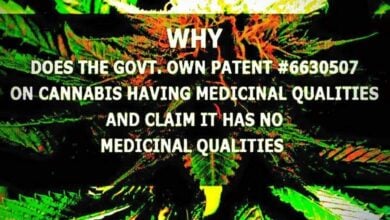
For mere af vores rapportering om narkotikapolitik og regeringens egen modsigelse om cannabis, se United States cannabinoid-patent og vores Nyheder om sundhed.




Jeg har en nær ven, der fik succes. Det er rent i et par årtier nu.
Wow! På dette tidspunkt vil det være lettere at nævne de ting cannabis ikke kan gøre, sådan en fantastisk plante