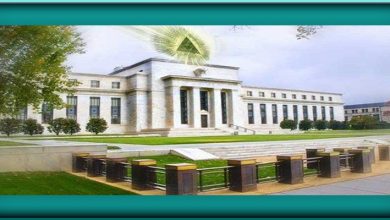
Senatorerne, der stemte imod revision af den føderale reserve - og formanden, der overtog efter sonden kollapsede


On January 12, 2016, the United States Senate took a recorded vote that still explains the central bank better than any press conference. Rand Paul’s Federal Reserve Transparency Act needed 60 votes to break a filibuster. It got 44. Fifty-three senators decided the Government Accountability Office would not walk the books of the Board of Governors, the regional banks, or the Federal Open Market Committee.
Det var ikke et procedureproblem. Det var en politik. Den eneste institution, der lovligt kan fremstille regningsenheden, ville beholde det eneste privilegium, som ingen forretningsbank er tilladt: det er forbudt at gå ind i en bankboks, kongressens egen revisor.
Paul put Democrats who campaign against Wall Street’s revolving door on a roll call. Bernie Sanders voted yes. Elizabeth Warren voted no. The Obama White House had already called a full audit “dangerous” — not because the numbers were in dispute, but because elected people might “supplant its judgment” on monetary policy. Translated: looking too closely would be treated as interference.
The Fed is a legally protected monopoly over money. Marketplace and Fortune documented years ago how that monopoly prints dollars, buys interest-bearing securities with them, and books the spread. Post-crisis remittances to Treasury ran on the order of $90 billion a year. That is how the arrangement is sold as a public service. What the public does not get is a GAO walkthrough of emergency facilities, foreign swap lines, or closed-door FOMC trades.
Den ene begrænsede udseende Kongressen nogensinde tvunget - en engangs Dodd-Frank gennemgang - viste mere end $16 billioner funnneled til indenlandske og udenlandske banker under finanskrisen. Den 2016 navneopråb var en beslutning om at holde de næste $16 billioner off the record.
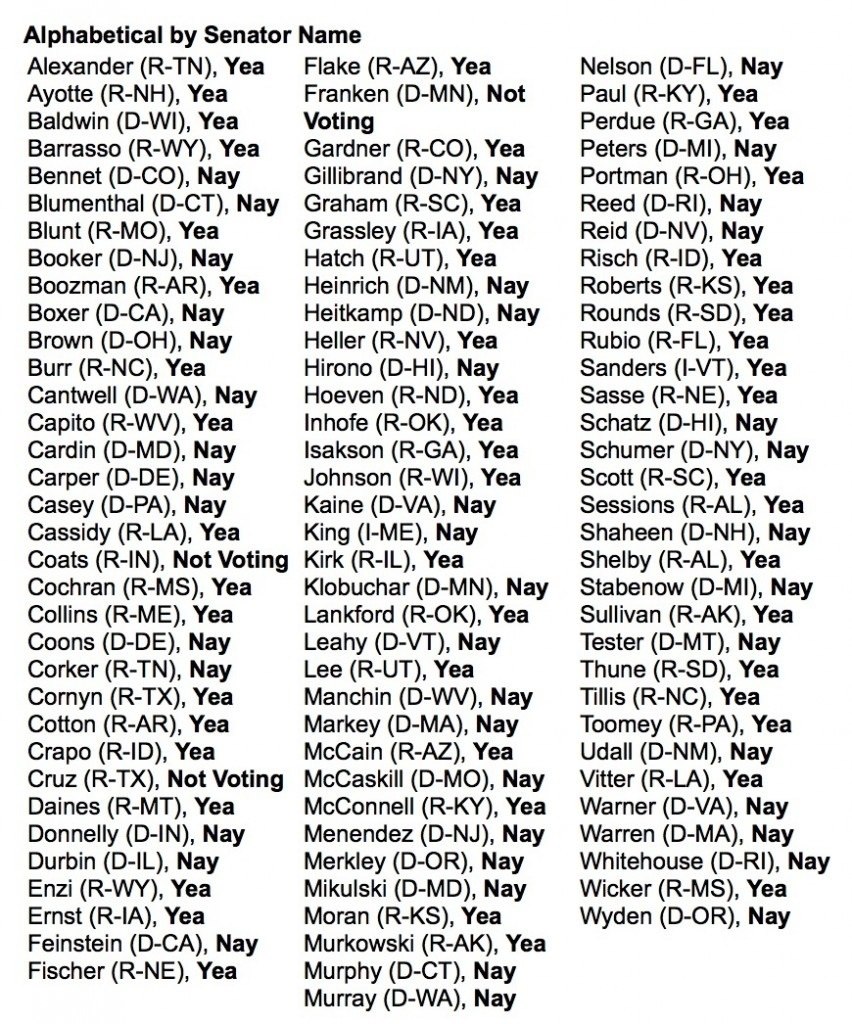
Det officielle tal er stadig bogført af Senatet: Den 14. kongres, Afstemning 2Læs det. De folk, der sagde, de ville tage på bankerne sætte deres navne på den anden side af siden.
Samme regning, samme regning.
Audit the Fed did not die in 2016. It came back in nearly every session, and the math never flipped. On November 1, 2023, Paul attached it as an amendment to a spending bill. Forty-six senators voted with him. Fifty-one voted to keep the GAO out. He reminded the floor that the pandemic-era balance sheet had swollen by roughly $5 trillion, much of it steered toward favored industries, and that a central bank which can do that in the dark is not independent — it is unaccountable.
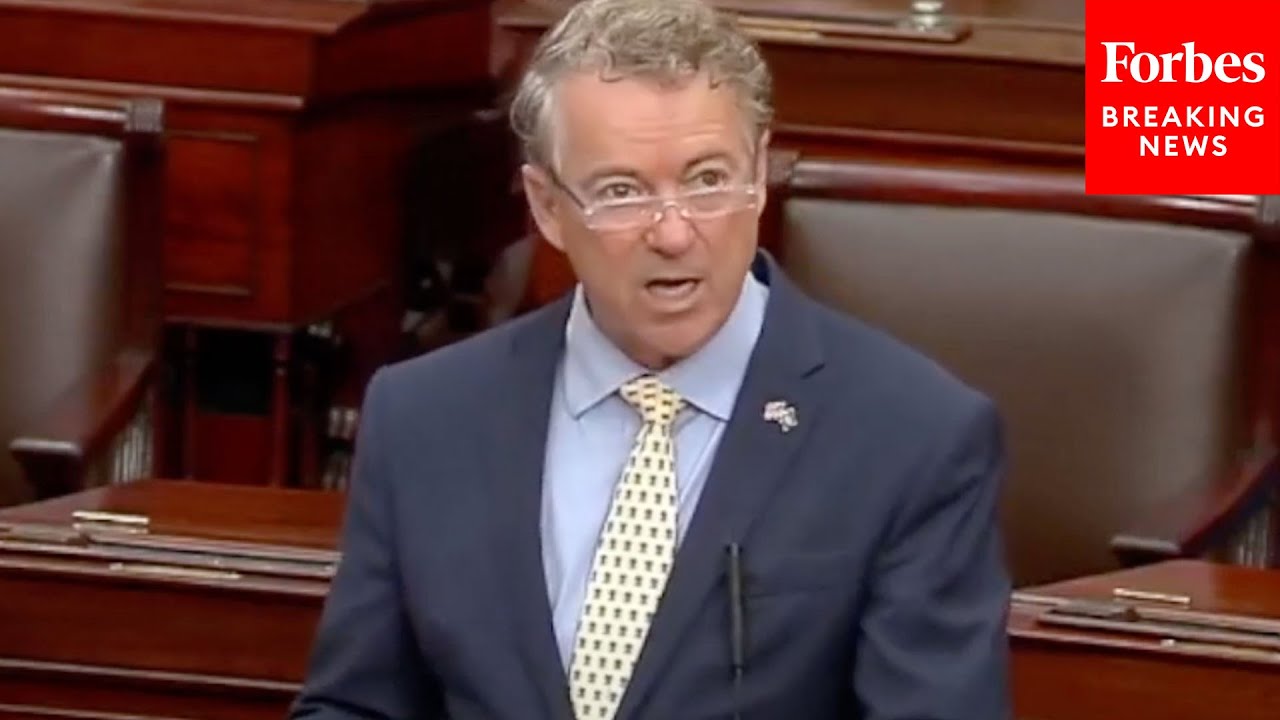
On July 17, 2025, Paul reintroduced the Federal Reserve Transparency Act with Senator Todd Young of Indiana. Cosponsors included Marsha Blackburn, Jim Risch, Ted Cruz, Rick Scott, and John Barrasso. The machinery is unchanged: a GAO audit finished within twelve months of enactment, findings to Congress within 90 days. In the House, Thomas Massie carries the companion, [...], loven om gennemsigtighed i den føderale reserve af 2025., stadig sidder i Hustilsynskomiteen af den 119. kongres - indført 3. januar 2025, og ikke flyttet.
Paul paired the 2025 reintroduction with a Waste Report on the Fed’s Washington headquarters renovation. A project sold at about $1.9 billion had been Board-approved at $2.46 billion — a 35 percent overrun, roughly $600 million, on an institution that still insists a full congressional audit would endanger the republic. Campaign for Liberty, the National Taxpayers Union, and Americans for Limited Government backed the bill. The vault door still did not move.
In December 2025, Paul used the Senate Homeland Security and Governmental Affairs Committee to hold a hearing titled “The Fed’s Big Bank Welfare Program,” walking through interest on reserves and emergency facilities as a standing subsidy for the largest banks. That hearing is still the closest thing the public has gotten to the examination the 2016 roll call refused.

En kriminel fil, en dommer og en ny stol
On January 11, 2026, then-Fed Chair Jerome Powell issued a rare public statement. The Justice Department, he said, had served the Federal Reserve with grand jury subpoenas threatening a criminal indictment over his June testimony to the Senate Banking Committee about the renovation. Powell called the cost increase a function of factors outside the Board’s control and described the probe as a pretext aimed at forcing him from office. The Supreme Court had already signaled, in a December 2025 ruling on another agency, that a president can fire a Fed governor only for cause. A criminal file on a construction invoice is the kind of “cause” that would, if it stuck, punch a hole in that protection.
U.S. Attorney Jeanine Pirro, running the District of Columbia office, had approved the inquiry. Senator Thom Tillis warned that anyone still doubting whether White House advisers wanted the Fed’s independence broken should now have none. Markets treated the fight as a live risk to the dollar. Tillis also said he would block a confirmation vote on Kevin Warsh, President Trump’s pick to succeed Powell, until the Justice Department dropped the investigation.
Then a court looked at the evidence. In March 2026, Judge James Boasberg quashed the subpoenas. The government, he wrote, had “offered no evidence whatsoever that Powell committed any crime other than displeasing the president.” On April 24, 2026, Pirro announced the Justice Department was closing the investigation. Powell was never charged.
The political obstacle Tillis had planted was gone. The Senate confirmed Warsh as a Board member on May 12, 2026, and as chairman on May 13, 54-45 — the most divisive confirmation vote for the job on record. He took the oath on May 22 and was unanimously selected as FOMC chair the same day. His term as chairman runs through May 21, 2030. Powell remains on the Board.
Warsh marked his 100th day in the job at Jackson Hole on August 28, 2026, talking about AI as a general-purpose technology and promising to change how the Fed communicates. On August 31 he told G20 finance officials that capital was flowing into productive uses such as AI infrastructure — “secular growth,” in his phrasing. None of that is Audit the Fed. H.R. 24 is still the live House vehicle. Until it, or Paul’s Senate companion, becomes law, the public is left with the picture 53 senators locked in: a central bank that can print the money, hide the transactions, renovate its headquarters for billions, see its chair criminally investigated when a president wants him gone, and then hand the gavel to the president’s replacement without ever opening the vault.
Den samme Washington vane med at sige én ting, mens patentering af en anden er dokumenteret i AEGIS Alliance-rapporten om USA 's regerings eget cannabispatentFor hvordan denne uansvarlige penge maskine ser ud, når nogen faktisk hakker det i offentligheden, se vores dækning af en Bitcoin tilhænger konfrontere Federal Reserve på live tvMere af dette beat lever i United States News og resten af Organisationernes alliance nyheder.