مهندسون عراقيون وأوستراليون يدربون (إي) إلى مرض العلم من صورة اللسان مع 96 في المائة من دقة الاختبار

A machine-learning system built by engineers at Middle Technical University in Baghdad and the University of South Australia matched tongue color to a patient’s already-diagnosed condition in 58 of 60 hospital cases — about 96.6 percent accuracy on that test set. The paper, “Tongue Disease Prediction Based on Machine Learning Algorithms,” ran in the open-access journal التكنولوجيات في يوليو 2024 مكتب الإعلام بيونيسا وصف العمل كحاسوب يُجري فحصاً طبياً صينياً تقليدياً يبلغ من العمر نحو 000 2 عام The AEGIS Alliance read the paper and the later follow-on studies. صورة لسان ليست طبيبة إنّه مُجس رخيص، تحت الضوء المُسيطر، يُمْكِنُ أَنْ يُصنّفَ الألوانَ بما فيه الكفاية لإرْفاع العلمِ.
The team trained models on 5,260 images spanning seven colors — red, yellow, green, blue, gray, white, and pink — under varied lighting. They then checked the system against 60 real tongue photographs taken in 2022 and 2023 at teaching hospitals in Dhi Qar and Mosul, Iraq, comparing each reading with the patient’s medical record. Of six algorithms tested, Extreme Gradient Boosting did the best job of naming the color. Color naming is not diagnosis. The leap in the study is that those colors lined up with known conditions in 58 of the 60 bedside photographs.
Senior author Ali Al-Naji, an adjunct associate professor at MTU and UniSA, said color, shape, and thickness can flag a range of problems: a yellow tongue in diabetes, a purple tongue with a thick greasy coating in some cancer patients, an unusually shaped red tongue in acute stroke, a white tongue in anemia, a deep-red tongue in severe COVID-19, and indigo or violet coloring in some vascular, gastrointestinal, or asthma-related cases. Those pairings come from the study’s clinical data. They are associations, not a claim that a camera replaces bloodwork, imaging, or a physical exam.
كشك إضاءة، أداة بروزر 2025،
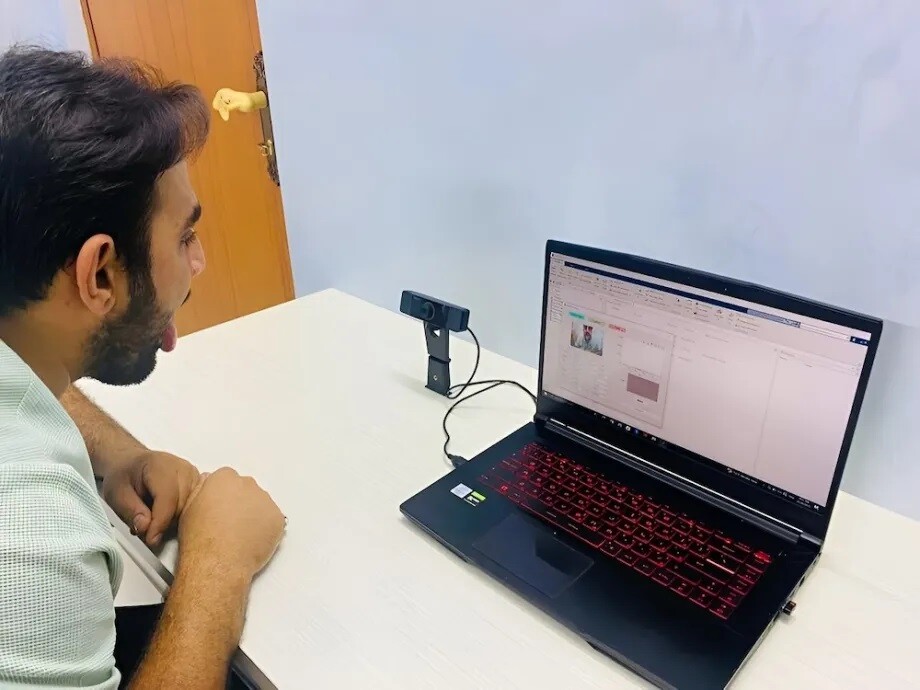
Earlier tongue-image papers stumbled on inconsistent light. A phone camera in a kitchen is not a lab. Co-author Javaan Chahl, joint chair of sensor systems at UniSA, had patients place their heads in an LED-lit box while a camera about 20 centimeters away captured the image. That box is the unglamorous heart of the method. Without it, white balance drifts and a “yellow” tongue becomes a lighting artifact. The long-term aim, Chahl has said, is a smartphone version that people could use at home as a screen, not as a diagnosis.
The work did not freeze in 2024. In June 2025, Al-Naji and Chahl reported preliminary results on a Streamlit web application that detects tongue shape and color and compares the reading against both traditional Chinese medicine and Western-medicine frames. The demo sits at a public Streamlit address the authors listed in the مجلة الهندسة الكهربائية التقنيةواستخدم الفريق أيضا نحو 750 صورة على شبكة الإنترنت وخوارزمية الكشف عن الأجسام " يولو " للنظر إلى القرح والشقوق. Separate 2025 papers, including one in التقارير العلميةاختبار نماذج التصوير اللساني كدليل غير متفشي لمرض الشريان التاجي وهذا هو مطالبة مختلفة من مطابقة لون 60 لسان مستشفى، وينبغي أن تقرأ على هذا النحو.
The commercial temptation is obvious. A phone already lives in a pocket. A two-second photo costs nothing. Primary-care wait times in many countries are measured in weeks. If a model can say “this tongue is not the pink you expect” with high color accuracy, a clinic could use it as a triage hint. The AEGIS Alliance has covered other screening tools that promise the same shortcut, from مشروع اللسان للعمل الصحة و التكنولوجيا المكاتب التي تعامل الأدوات الاستهلاكية كأدوات طبية قبل أن يقوم المنظمون بذلك
ما لا يمكن للصورة أن ترى
The researchers themselves warn that many diseases leave no visible change on the tongue. A model trained on seven colors will always find a color. It will not find a silent tumor, a lab value, or a history the patient did not give. Traditional Chinese medicine remains contested even after the World Health Organization added TCM diagnoses to its International Classification of Diseases. Gathering enough consistently lit images is still a bottleneck. Sixty bedside photographs is a pilot, not a multicenter trial. Internet-scraped tongues used in the ulcer work introduce their own bias: people photograph what looks dramatic.
There is also a privacy problem that the 2024 paper treats lightly. A tongue photograph is a biometric. It is tied to a face if the frame is sloppy. A home app that uploads that image to a cloud model is a medical data pipe wearing a wellness costume. Any smartphone version will have to answer who stores the picture, how long it lives, and whether an insurer or an employer can ever demand it. Those questions sit outside the engineering result and inside the reason The AEGIS Alliance covers this file as news rather than as a product launch.
Color science is the part of the study that travels. Lighting control is the part that does not. A kiosk in an Iraqi teaching hospital is a different optical world from a bathroom mirror. Until the group publishes a phone-only trial with a locked white-balance protocol and a much larger, multi-country patient set, the honest headline is narrower than the press release. The algorithm is good at naming tongue colors under a box of LEDs. In 58 of 60 hospital cases, that name matched a charted illness. That is a result. It is not a clinic in your pocket.
القراء الذين يريدون الطرق يمكن أن تبدأ مع Technical paper ورقم 2025 على شبكة الإنترنت القراء الذين يريدون السياق المؤسسي يمكنهم البقاء مع التحالف العلم التغطية هذه المادة هي معلومات عامة، وليس نصيحة طبية. إذا كان اللسان يبدو خاطئا، الخطوة التالية لا تزال عيادة مرخصة، وليس الشاشة.
Color-matching under a light box is also a reminder that medicine already uses cheap optical tricks. Pulse oximeters guess blood oxygen from two wavelengths. Phone apps already try to estimate heart rate from a fingertip on a camera. Tongue color is older than both. What Al-Naji and Chahl added is a classifier and a protocol. What they have not added is a regulatory path, a bias audit across skin tones and lighting cultures, or a trial large enough to tell a hospital administrator to budget for the kiosk. Until those arrive, the 96.6 percent figure belongs in a methods section, not on a home-screen button. The oldest diagnostic organ in the room is still the one that talks. The newest one is a camera twenty centimeters from a mouth, counting hues a physician already knew how to see. The useful question is not whether the model can replace that physician. It is whether a cheap, well-lit photograph can pull high-risk patients into a real exam sooner than a waiting list would. On the evidence published so far, that question is open, and it is the only question worth the word count.