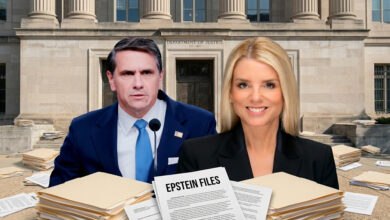

A federal judge has told President Donald Trump’s Justice Department to stop treating the Epstein files that name him like an ordinary paperwork pile. On September 30, 2026, U.S. District Judge Colleen Kollar-Kotelly ordered expedited processing of Freedom of Information Act requests for investigative records that mention Trump or Mar-a-Lago, and for the internal messages showing how his senior officials handled those files.
The ruling in Democracy Defenders Fund v. U.S. Department of Justice does not order an instant public dump. Kollar-Kotelly held that the department’s own rules already required these searches to jump the line, because the subject raises possible questions about government integrity and public confidence. Trump campaigned on opening the Epstein files. His administration then spent more than a year arguing about pace, redactions, and which names the public was allowed to see.
What the court ordered the Justice Department to move first
Democracy Defenders Fund filed the core request on July 22, 2025, with the Criminal Division. It asked for records from the federal investigations of Jeffrey Epstein and Ghislaine Maxwell that mention Donald J. Trump, Donald Trump, President Trump, name variations, Mar-a-Lago, or any code name used for the president or the Palm Beach estate. Kollar-Kotelly granted expedited processing for that request in full. Her memorandum opinion says the request showed widespread and exceptional media interest in the investigations and in those keywords.

The July 22 request seeks investigative records that mention Donald Trump or Mar-a-Lago, the Palm Beach estate now at the center of a court-ordered search.
Two matching requests went out on July 28, 2025, to the Criminal Division and to the offices of the attorney general and the deputy attorney general. They cover records from January 20, 2025, forward. They seek communications about Epstein or Maxwell, including messages on personal devices, calendars and meeting materials, documents that identify clients or associates such as flight logs, and communications about how officials should handle or flag references to Trump or Mar-a-Lago.
The named officials are then-Attorney General Pam Bondi, then-Deputy Attorney General Todd Blanche, then-Principal Associate Deputy Attorney General Emil Bove, FBI Director Kash Patel, and then-FBI Deputy Director Dan Bongino. The judge moved most of those July 28 requests to the front of the queue. She cut back the pieces that swept in any Justice Department official, limiting priority treatment to the senior officials actually named. A request for expedition, under earlier D.C. precedent she applied, has to be reasonably tailored to the controversy generating the coverage.
Why the judge said public confidence is on the line
Expedited processing under 28 C.F.R. § 16.5(e)(1)(iv) is required when a request involves a matter of widespread and exceptional media interest in which there exist possible questions about the government’s integrity that affect public confidence. The department denied that treatment. Democracy Defenders Fund sued on August 21, 2025. Kollar-Kotelly reviewed the refusal afresh and treated it as a constructive denial of the department’s own rule.
The opinion tracks the record the group put in front of her. Trump said in the 2024 campaign that he would declassify the Epstein files. On February 21, 2025, Bondi was asked on Fox News whether a client list would be released. Phase 1 binders that followed were dismissed as a repackaging of material already public. A July 7, 2025, memo said investigators had found no incriminating client list, and the backlash was bipartisan. A Reuters poll on July 15 and 16, 2025, found that 69 percent of Americans believed the government was concealing information about Epstein’s clients.
The court also cited a July 18, 2025, letter from Senator Dick Durbin describing a March 2025 review in which Bondi pressed roughly 1,000 FBI personnel, working around the clock, to examine about 100,000 Epstein-related records and flag any that mentioned Trump. The same week, Bondi and Blanche signed a New York motion to unseal grand jury testimony.
The name-flagging fight these requests are built to expose
Trump’s social tie to Epstein is not a rumor invented for this lawsuit. The two men moved in the same Palm Beach and Manhattan circles for years. Flight records later showed Trump on Epstein’s jet more often than his public denials suggested, a gap The AEGIS Alliance examined after a federal prosecutor’s letter put additional trips on the record. Trump has said he barred Epstein from Mar-a-Lago. He has not explained, with documents, what his administration did when FBI reviewers started marking pages that contained his name.
That is the hole the July 28 requests are shaped to fill. They ask for the messages, calendars, and handling instructions of the officials who ran the review. Those five were in a position to decide which pages moved, which names disappeared under a black box, and which campaign promises survived the file room.

Patel has been pressed in Congress on whether Trump’s name was scrubbed while agents were pulled off other work. He has rejected that account. The court did not adopt either version as proven fact. It held that the dispute is public enough that the records have to move ahead of the ordinary line. Earlier coverage of Blanche and a missed disclosure deadline already showed how often this administration meets a court date with another delay.
A partial win that still leaves room to withhold
The watchdog did not get everything it asked for. Kollar-Kotelly denied expedition under the separate compelling need track in the Freedom of Information Act. That track applies when the requester is primarily engaged in disseminating information and there is an urgency to inform the public. On this record, the judge found Democracy Defenders Fund is mainly a litigation and advocacy group. Publishing what it learns is incidental to that work, so the statutory claim failed.

Expedited processing moves these requests up the FOIA queue. It does not force the Justice Department to publish every page at once.
Priority processing means a faster search and response. It does not waive exemptions. Victim identities, grand jury secrecy, and law-enforcement privileges can still black out pages. If the department over-redacts or under-searches, the fight returns to the same court. Norm Eisen, executive chair of Democracy Defenders Fund, said stalling had been the tactic and that it stops now. The order is a lever, not the binders.
How the order collides with the transparency law Trump signed
Congress already tried the direct route. The Epstein Files Transparency Act, signed by Trump on November 19, 2025, told the attorney general to publish unclassified files on Epstein, Maxwell, and their associates by December 19, 2025. The department posted batches that month and again on January 30, 2026, then said it had complied after releasing about 3.5 million pages. The AEGIS Alliance reported in January 2026 on an earlier admission that only a thin slice was out. Later drops did not end the argument.
On September 10, 2026, Democracy Defenders Fund said FBI records from its FOIA litigation showed emails among Patel, Bongino, and Bove tracking the March 2025 review. The group said many of those messages never appeared in the Epstein Library, or appeared with officials’ names stripped, even though the same names were readable in the FOIA copies. It also said the department had reviewed a purported 6 million pages and released 3.5 million. If that accounting holds, the library the public was told was complete is still missing the paper trail of the people who decided what the public would see.

The same afternoon as the court order, Senate Finance Committee Ranking Member Ron Wyden demanded that Attorney General Todd Blanche and FBI Director Kash Patel turn over FBI interview reports from the Epstein investigation, including interviews of bank employees. Wyden said at least one banker interview had been kept from the public and from Congress. A lawsuit by journalist Katie Phang has already accused the department of obstructing full disclosure. The pattern is no longer a single missed deadline.
What the public should watch as these files move
Eisen said the public deserves answers about who and what is in the Epstein files, and that what the department has produced falls far short of what Congress mandated. His group will hold the department to the order until Americans can judge the records themselves. The October 1 statement is a promise of more litigation, not a claim that the boxes are open.
Three tests will show whether the order means anything. The Criminal Division has to search for Trump, Mar-a-Lago, and the code names in the request, instead of pointing at the library and calling the job finished. Messages on personal devices have to be searched or the refusal defended in court. Redactions have to protect victims, not the officials who gave the orders. Maxwell is serving a 20-year sentence. Epstein died in federal custody in 2019. The open question is which powerful men the files still name, and who in Trump’s government decided the public should not be first to know.
Bondi’s removal did not reset the file. Blanche has insisted the change atop the department had nothing to do with Epstein. The requests now moving were written while both of them still sat in the chain of command that ran the review. If the communications exist, they will show whether that insistence matches the paper.
Related reporting is in 犯罪新闻, 政治,以及 美国新闻 from The AEGIS Alliance, including the 吉斯莱恩·麦克斯韦尔被捕.