TikTok Came Back With a Thank-You Screen Before Anyone Proved the Algorithm Changed Hands


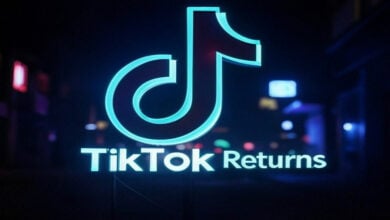
A tela que trouxe TikTok de volta não descreveu uma venda. Descreveu um patrono. Usuários que passaram sábado à noite olhando para um aviso de proibição abriram o aplicativo no domingo, 19 de janeiro de 2025, e receberam uma recepção que disse que o serviço havia retornado nos Estados Unidos como resultado dos esforços do Presidente Trump. CBS News em Nova Iorque marcou o período escuro em cerca de quinze horas, de sábado à noite até domingo à tarde, e depois assistiu a mudança de mensagem de "estamos trabalhando nele" para "Bem-vindo de volta." A Aliança AEGIS apresentou a história legal desse apagão em the account of how the app actually went dark. This piece stays with the restart: who got thanked, who got paid later, and which parts of the product never left the old parent company.
A political stay with a pop-up attached
O instrumento legal que importava no domingo de manhã não era o pop-up. Era uma promessa dirigida às empresas que poderiam ser punidas por manter o serviço online. O presidente eleito Donald Trump escreveu no Truth Social que emitiria uma ordem executiva na segunda-feira, dia da sua inauguração, prolongando o tempo antes das proibições da lei Efeito para que pudesse ser feito um acordo de segurança nacional. Ele disse às empresas para não deixarem o TikTok ficar às escuras. A conta política de TikTok respondeu na língua de alívio e defesa imediatamente. Agradeceu-lhe para "a clareza necessária e a garantia" que os provedores de serviços não enfrentariam nenhuma penalidade para oferecer TikTok a mais de 170 milhões americanos e para deixar mais 7 milhões de pequenas empresas continuam a funcionar. Ele chamou o movimento de um stand para a Primeira Emenda e disse que a empresa iria trabalhar com ele em uma solução de longo prazo.
Apple e Google já tinham puxado a listagem. Funcionários da administração de Biden disseram que não cumpririam o estatuto nas últimas horas do presidente cessante. ByteDance desligou o serviço de qualquer maneira, em seguida, ligá-lo quando o presidente que vem disse aos tubos que eles não seriam processados por carregá-lo. O Times de Nova Iorque e the BBC both described that sequence as a restoration built on assurance, not on a completed divestiture. Shou Zi Chew, TikTok’s global chief executive, was expected at the inauguration the next day. In 2020, Trump had been the politician most associated with trying to throw the app out. The thank-you screen did not mention that history. Political memory on a pop-up is short on purpose.
A return is a stay of execution with branding. The statute stayed in the U.S. Code. The Supreme Court had already declined to kill it. The only open variable, on January 19, was whether the eventual transaction would move control or costume it. That variable was still being argued in the Senate in 2026.
What users did with fifteen hours, and what they could not do
People who make a living inside an algorithm treated the outage like a layoff notice delivered by software. People who scroll treated it like a utility failure. A utility failure ends when the lights return. A layoff notice changes how you think about the building. Creators posted farewells on Instagram and discovered that a duplicate account is not a business. Demand for virtual private networks in the United States jumped 827 percent on Sunday, according to Top10VPN figures cited by The New York Times, because a location spoof feels like resistance when the barrier is a statute aimed at Oracle, Apple, and Google rather than at a user’s IP address.
Some of the clone apps that trended on Saturday night were jokes by the next week. RedNote, the Chinese alternative that absorbed a rush of American users before the deadline, did not become the new public square. The durable move was political. A president-elect learned, in public, that he could be credited with restoring a habit of 170 million people by telling prosecutors to wait. Staffers who wrote the original bill had warned that this was the point. If a platform is too popular to leave off, the person who can switch it back on inherits the leverage. If it can be switched off for an afternoon, the leverage is real. Both lessons fit inside fifteen hours. Neither lesson is a cap table.
At an appearance that Sunday, Sen. Kirsten Gillibrand said the version she wanted was simple: sell it to an American, because the worry was ownership by an adversary, not the existence of short video. Trump, at a rally the same day, took the credit in person and mused about the United States holding a large stake. The pop-up and the rally were doing the same work. They attached a name to a restoration before any share had changed hands.
The year between the pop-up and the closing memo
The restart bought time, and time became a stack of executive orders. Extensions carried the app through 2025 while negotiators assembled a buyer group the statute might tolerate. In September the White House described a framework around a $14 billion valuation. In December, Chew told employees the papers were signed. On January 22, 2026, ByteDance said the deal had closed. TikTok USDS Joint Venture LLC would secure U.S. user data, the app, and the algorithm. Oracle, Silver Lake, and MGX would each hold 15 percent as managing investors. ByteDance would keep 19.9 percent. A White House official told Reuters that both governments had signed off. Trump thanked Xi Jinping for approving a deal he said the Chinese leader could have blocked.
Reuters described Adam Presser as chief executive of the venture and Will Farrell as chief security officer. Chew stayed on as global chief executive and took a board seat. Oracle’s Ken Glueck joined that board, with representatives from Silver Lake and MGX and Mark Dooley of Susquehanna, the firm associated with Jeff Yass. Michael Dell’s investment office was among the smaller American holders. The board was described as seven members and majority American. Oracle would keep U.S. data in its cloud, review source code, and oversee a recommendation algorithm retrained on American user data. The Verge noted two consequences the victory lap skipped: nobody could say when the retrained algorithm would ship, and the privacy policy was set to collect precise location if a user allowed it, rather than only an approximate one.
Applause is not the advertising contract
The part of the company that sells things did not move with the part that stores data. Reporting on Chew’s internal explanation said ByteDance would keep e-commerce, marketing, and advertising, while employees were sorted into the joint venture or into entities that stayed under the old parent. That is the adult version of the welcome screen. The screen told users who to clap for. The org chart told advertisers who still sent the invoice. A creator who lost a sales day in January 2025 did not receive equity in January 2026. Seven million small businesses were a number in a thank-you statement. They were not a party to the license that lets the joint venture use ByteDance’s recommendation engine.
The statute, as the Associated Press underlined when the deal closed, cuts against ongoing cooperation on a content-recommendation algorithm between ByteDance and a new American owner. The closing statement answers with a license plus a promise to retrain. Sen. Ed Markey called the structure a deal that raised more questions than answers. A press release can satisfy the executive order Trump signed on September 25, 2025, the document TikTok’s newsroom cited, and still leave the statutory prohibition looking unfinished. Reuters treated the close as the end of a ban fight that began when Trump first tried to throw the app out in August 2020. The Senate’s questions treat it as a change of stationery.
By February 2026 the predicted exodus had not arrived. The feed still loaded. That is a win for everyone who wanted the app alive. It is not an answer to who ranks the next video, and it is not an answer to a law that remains available to the next president who decides the calendar is a tool. A political stay can last years. It can also end.
There is a smaller version of the same loss of control in the hardware. The phones that went dark that weekend were already arguing with their own software. The Galaxy S24 file is about heat and a camera app that second-guesses the owner. The same month, Meta dropped outside fact-checkers and reached for a crowdsourced notes model. The platforms were not coordinating. They were demonstrating that the rules between a person and a feed are written somewhere the person does not sit.
The honest summary of January 19, 2025, is shorter than the celebration that followed it. The app came back because the incoming administration told prosecutors and service providers to stand down. The law that authorized a ban did not vanish. The sale the law demanded took another year, left ByteDance with 19.9 percent and a licensed engine, and left advertising on the old side of the wall. Users got their videos. The country got a joint venture and a pop-up. The AEGIS Alliance will keep the welcome screen and the closing memo in the same folder until the source-code review and the advertising split are public documents rather than adjectives. More of that desk is here: política e tecnologia.