Bank of America Pays $72.5 Million After Judge Rakoff Calls the Epstein Survivors Deal Justice Even If Partial


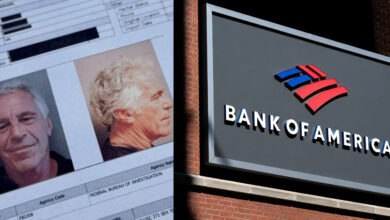
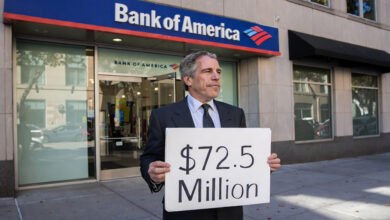
The number stopped being a rumor on August 27, 2026. In a packed courtroom in lower Manhattan, U.S. District Judge Jed S. Rakoff told Bank of America that its $72.5 million class settlement with women who accused the lender of helping Jeffrey Epstein traffic and abuse them would receive final approval. Rakoff called the fund “substantial” compensation and “justice, even if partial.” He waved off three accusers who said the release was too wide because it forced them to abandon related claims against the bank and other possible defendants without being paid for those claims. Reuters recorded the hearing. Days later the written judgment landed, fees were locked at 30 percent of the pot, and the covered claims against the bank were dismissed with prejudice. The AEGIS Alliance records the sentence that actually matters: partial justice is still a release the bank wanted more than a jury.
The class is estimated at roughly 60 to 75 women trafficked or abused between June 30, 2008, and Epstein’s July 2019 arrest. Individual checks will move through a claims administrator under the court’s continuing supervision. Bank of America denies wrongdoing and says the deal closes the file. It does not close the larger ledger. JPMorgan Chase paid $290 million in 2023. Deutsche Bank paid $75 million. Bank of America comes in third and lower, a ranking that tracks how long and how deep each shop’s Epstein relationship ran rather than how loudly any of them now talks about compliance culture.
How a Russia-to-Manhattan Complaint Became a Bank Case
Jane Doe filed in October 2025 in the Southern District of New York. She described recruitment in Russia in 2011, a controlled relationship she later called cult-like, and sexual abuse on at least 100 occasions. Rent and a supposed job were paid through Bank of America accounts opened at the direction of Epstein’s accountant. The complaint said the bank took Epstein-circle deposits and wires, skipped timely suspicious-activity reports, and “financially benefited” while the trafficking continued. In January and February 2026 Rakoff let reckless-disregard claims proceed against Bank of America even as he dismissed a parallel case against Bank of New York Mellon. Lawyers told him on March 12 they had a settlement in principle. The $72.5 million figure hit the docket on March 27. Preliminary approval followed on April 2, with the August 27 fairness hearing locked in and orders to publish notice so, in Rakoff’s phrase, “nobody is left out.”
That timeline is a year of paper, not a year of discovery the public can read. The bank bought quiet. The class bought a distribution. Three accusers said the quiet was too expensive because the release swept claims they had not been paid to drop. Rakoff disagreed. Final approval is a judicial sentence, not a finding that the wires were clean. It is also not a finding that compliance officers who watched eight-figure slices leave a convicted sex offender’s orbit did their jobs.
Jane Doe’s own accounts are part of the record the settlement now buries. She said Epstein’s team used her Bank of America products the way a handler uses a prepaid card: money in, control out, no questions that would have interrupted the arrangement. A bank that files a SAR in 2020 covering $170 million that had already moved is a bank describing a fire after the house is gone. The AEGIS Alliance has said the same thing about other ledgers in this universe, from the unredacted little black book to the Justice Department’s admission that less than 1 percent of Epstein files had been released.
Leon Black’s Wires Were the Exhibit the Bank Could Not Shrug Off
Plaintiffs pointed to more than $170 million that Apollo Global Management co-founder Leon Black sent Epstein from a Bank of America account, often in $10 million and $20 million slices, labeled as tax and estate work. Black was not a defendant. His deposition had been set for the week the deal first leaked; it was postponed when talks moved. Attorney Sigrid McCawley, a managing partner at Boies Schiller Flexner, called him a “critical witness.” A 2021 Apollo review said Epstein advised Black on estate, tax, and family-office matters and found no proof Black joined the crimes. Black left the CEO job that year under the weight of the relationship. Senate work associated with Ron Wyden had already mapped those transfers. Wyden called the settlement a step toward justice and a vindication of that investigation. PBS carried the political overlay. The BBC carried McCawley’s line that the resolution was “one more step on the road to much deserved justice.”
Labels on a wire are not a character witness. “Tax and estate work” is a memo line. A bank that files no timely suspicious-activity report on repeated eight-figure slices to a man already convicted in Florida in 2008 is a bank that decided the relationship was still profitable. That is the allegation the settlement does not try. It is also the allegation the settlement makes expensive to retry. The same logic sits behind reporting by The AEGIS Alliance on the UBS wires that reached Ghislaine Maxwell’s New Hampshire hideout. When the client is rich enough, cutoff emails and grand jury subpoenas become background noise instead of stop signs.
Third Bank, Smaller Check, Same Legal Team
Plaintiffs’ counsel, including McCawley, received court approval for fees equal to 30 percent of the $72.5 million fund, about $21.8 million. The same lawyers are still appealing Rakoff’s January 2026 dismissal of the parallel case against Bank of New York Mellon. Civil recoveries across the three closed bank files now sit near or above $437 million. None of those checks is a criminal charge against a compliance officer. None of those checks opens a SAR file to the public. None of them answers the question Jane Doe’s complaint put on the table: how a convicted trafficker kept a commercial banking relationship after Florida, after the Miami Herald, and after the federal indictment.
The AEGIS Alliance has followed the money trail from the first survivor suits through the document wars now aimed at the Justice Department, including the Blanche deadline fight, Katie Phang’s injunction fight, Maxwell’s arrest, and questions around Epstein’s death in federal custody. A civil payout that never produces a nameplate on a compliance desk is not the end of that trail. It is a receipt.
What Final Approval Does Not Do
It does not decide whether the wires should have been frozen in 2008, after Epstein’s Florida conviction, instead of 2019. It does not bind BNY Mellon. It pays a defined class and releases a defined set of claims. Rakoff’s line about partial justice is the most honest sentence in the docket. Survivors get a distribution. The bank gets quiet. The public still does not have a full map of which desks saw which flags and filed nothing.
Settlements of this kind always arrive with the same two paragraphs. The first is the bank’s: we deny the allegations, we cooperated, we are focused on customers. The second is the lawyers’: this is a step, not the destination. Both paragraphs can be true at once and still leave the public with a hole. Epstein’s operation ran on planes, islands, and bank accounts. The planes were photographed. The island was raided. The accounts were the part that required a licensed institution to keep saying yes. JPMorgan said yes longer and paid more. Deutsche Bank said yes and paid a mid-range check. Bank of America said yes long enough to absorb Leon Black’s transfers and Jane Doe’s rent, then paid $72.5 million to keep a jury from reading the memos aloud.
Readers who want the rest of this file can stay on The AEGIS Alliance crime news and U.S. news desks. A settlement is not a confession. It is a price. $72.5 million is the price Bank of America paid to keep the rest of the ledger off a jury form. Partial justice, as the judge said. The AEGIS Alliance will keep the other partials in view.