Georgetown Texas Crews Close San Gabriel Parks After 100,000 Gallons Of Sewage Escape A 42-Inch Line At Wolf Ranch


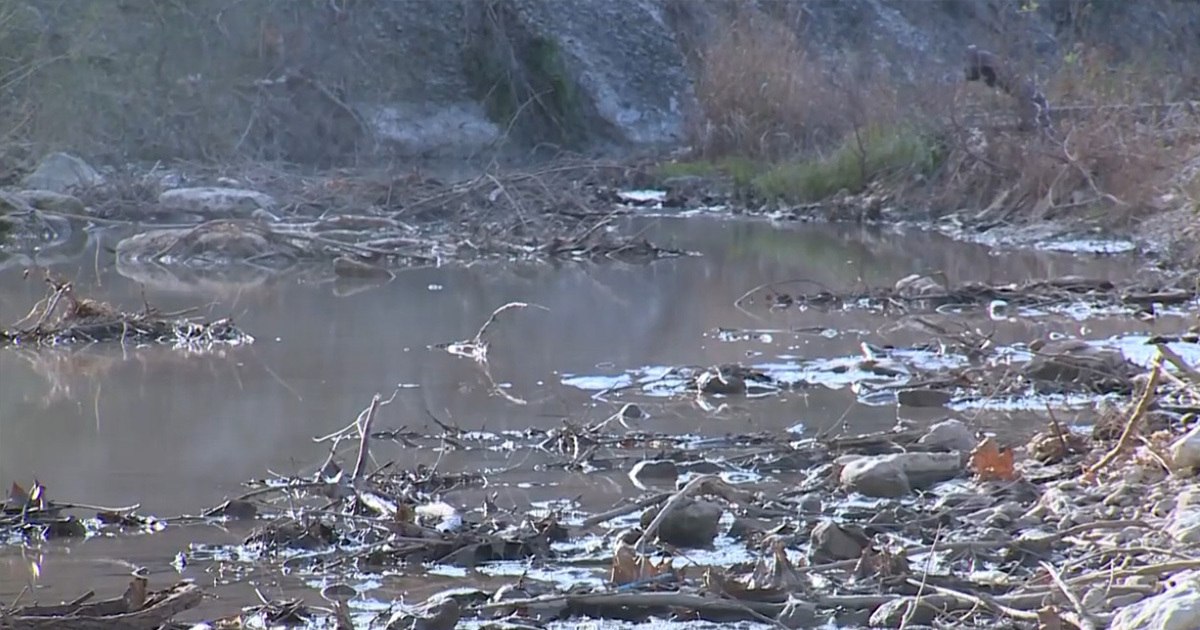
Georgetown water crews did not go looking for a river disaster. They went looking at a lift station that was running hot. At 10 a.m. on Monday, January 5, 2026, that check led them to a 42-inch wastewater main in the south fork of the San Gabriel River, about a quarter mile west of I-35 behind Wolf Ranch Shopping Center. Untreated sewage was already in the channel. The city put the volume above 100,000 gallons and called the Texas Commission on Environmental Quality.
Residents were told to stay out of the water. A section of the South San Gabriel River Trail closed. Officials asked the public to avoid contact through San Gabriel Park, including Blue Hole Park, the swimming hole that sells Georgetown as a river town rather than a suburb of Austin. The cause was not announced with the first notice. That is the usual sequence in a line-break story: volume first, blame later. The AEGIS Alliance treats the break as an infrastructure file, not a weather event.
A dam in the south fork, then a patch
By Tuesday afternoon crews had isolated the broken pipe. By January 7 they had built a dam so they could work in the channel instead of watching the plume travel. Thursday morning, January 8, the city said repair work was nearly complete. The same keep-out rules stayed in place while TCEQ took the spill report. Official notices live on the City of Georgetown site. Local television wrapped the first day at CBS Austin, KXAN, and Spectrum News. The Austin American-Statesman put Blue Hole in the lede because that is the park people actually enter.
A 42-inch main is not a house lateral. It is a trunk. When it opens in a riverbed the load is measured in tanker-truck units, not buckets. One hundred thousand gallons is roughly thirteen residential swimming pools, or a short convoy of vacuum trucks, dumped into a fork that feeds parks, a trail, and the South Fork subdivision. Downstream residents asked the obvious question: did the plume stop at the dam? The city’s first answers were about isolation, not a lab sheet. Isolation is a construction update. A lab sheet is a public-health update. Those are not the same document.
TCEQ requires spill reports when untreated wastewater leaves the pipe. The report starts a clock the public rarely sees: sampling, signage, and a decision about when a swimming hole is a swimming hole again. Cities like to close that clock with a sentence about repairs being “nearly complete.” Bacteria do not read press releases. E. coli, enterococcus, and the usual sewage cocktail persist in slow water and in sediment after the smell fades. Parents who treat a lifted caution tape as a laboratory result are making a bet the city is not underwriting.
Why a shopping-center lift station is a public-health file
Wolf Ranch is retail and rooftops. The pipe under the south fork is the hidden half of that growth. Georgetown has spent the last two decades absorbing Austin overflow: new subdivisions, new square footage, new toilets feeding an older trunk that was cheaper to run through a riverbed than to rebuild on dry ground. Fast-growing Texas cities keep finding that the river is still the cheapest right-of-way until the main fails. Then the river becomes the complaint line.
Lift stations exist because gravity does not always point toward the treatment plant. When a station runs hot, it is telling the utility that either the pumps are losing the fight or a main downstream has opened. The Georgetown crew did the right first thing. They went to the station instead of waiting for a kayaker to call. The failure is not the inspection. The failure is a 42-inch pipe in a recreational channel in a city that sells the channel as an amenity.
Blue Hole is the political problem inside the public-health problem. A park that draws weekend traffic cannot be closed on a rumor, and it cannot be reopened on a hope. The city’s own notice kept people out of San Gabriel Park water while repairs finished. That is the minimum. The minimum does not answer whether sediment in the south fork held the spill after the surface looked clear. It does not answer how many hours the raw load moved before the dam went in. It does not answer whether similar trunks under other forks have been camera-inspected or only hoped about.
The AEGIS Alliance environment desk has watched this pattern in other rivers. A liquid-nitrogen fertilizer spill in Iowa killed nearly 750,000 fish and then produced a settlement that looked small next to the kill count. Who paid to run the hazard through the amenity, and who pays when the amenity becomes a discharge point, is the governance question. On the other end of the materials problem sits a Swedish project that turned dead turbine blades into parking-garage architecture. Ugly infrastructure can be redesigned. It can also be left in the river until it splits.
What 100,000 gallons does to a growing county
Williamson County’s growth machine does not pause for a spill. Homebuilders sell the parks. The parks sit on the same hydrology as the wastewater map. When a trunk fails, the people who bought the view are told to stay out of the view. That is not a one-week inconvenience. It is a disclosure that the utility’s capital plan and the city’s tourism pitch are not the same document.
Sewage in a river is also a class problem dressed up as an operations problem. Households on septic systems in the county already live with the smell of their own failure. Households on city service are told the plant is modern until a 42-inch line proves the collection system is the weak joint. Ratepayers will be asked to fund the next round of lining, replacement, or relocation. Developers who needed the capacity last decade will not be on that bill in the same way.
Public notices after a spill tend to talk about “untreated wastewater” because the phrase sounds cleaner than raw sewage. The load is the same. It includes human waste, household chemicals, and whatever industrial or commercial connections feed the Wolf Ranch basin. Pets and children do not distinguish the vocabulary. Neither do the fish. The Iowa kill showed what a pulse of nitrogen can do. A sewage pulse is a different toxin list and a shorter headline cycle, which is how these stories die before the sampling ends.
How to read the next city update
Look for three numbers, not a tone. First, the final volume. “In excess of 100,000 gallons” is a floor. Metered bypass and revised estimates often move after the first day. Second, the sampling. If the city and TCEQ do not publish bacterial counts for the south fork and Blue Hole, the all-clear is a public-relations sentence. Third, the capital fix. A clamp and a dam are a repair. Moving a 42-inch main out of a recreational channel is a decision. Only one of those changes the next failure’s location.
Stay out of the San Gabriel until the city and TCEQ lift the caution with data attached. One hundred thousand gallons does not rinse out on a headline cycle. The AEGIS Alliance will treat later TCEQ enforcement, any fine, and any decision to relocate the trunk as the next chapter of the same file, not as a new surprise.