ICC Confirms Crimes Against Humanity Charges Against Rodrigo Duterte and Sets a Hague Trial Date While Keeping Him Locked Up


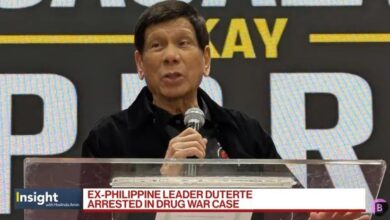
Rodrigo Duterte told the International Criminal Court it had no claim on him. The court now keeps him in a cell in Scheveningen. Philippine police arrested the former president on March 11, 2025, after he flew home from Hong Kong. The warrant had been signed under seal on March 7 and made public four days later. It accused him of crimes against humanity tied to the so-called war on drugs, a campaign that ran from his years as Davao mayor through March 16, 2019, six months after Manila walked out of the Rome Statute.
He was surrendered to the ICC on March 12, 2025, and made his first appearance by video on March 14. The case that survived pre-trial review is three counts of murder and attempted murder as crimes against humanity under Article 7(1)(a). Prosecutors say those killings were not stray police work. They say they were a widespread and systematic attack on civilians, with Duterte as an indirect co-perpetrator and the old Davao Death Squad as part of the machinery.
A Hearing He Refused to Sit Through
Defense lawyers spent the rest of 2025 arguing that an 80-year-old client could not endure confirmation. Pre-Trial Chamber I postponed a September 2025 date. On January 26, 2026, after three independent experts in forensic psychiatry, neuropsychology, and neurology examined him, the chamber found him fit for pre-trial proceedings and refused an indefinite adjournment. Judges ordered shorter sessions and regular breaks. Two experts said he had the mental capacity the law requires. The third hedged on diagnosis and still did not give the defense the shutdown it wanted.
The confirmation hearing ran February 23 to 27, 2026, before Judge Iulia Antoanella Motoc. Duterte waived the right to attend. Nicholas Kaufman spoke in the room. On April 23, 2026, the chamber unanimously confirmed all three charges and sent him to trial. The Appeals Chamber that same month rejected his jurisdiction challenge with finality. The Philippines left the court in 2019. The court kept the years when the country was still a member. That is the entire legal fight in one sentence, and Duterte lost it.
Why the Door at Scheveningen Stays Locked
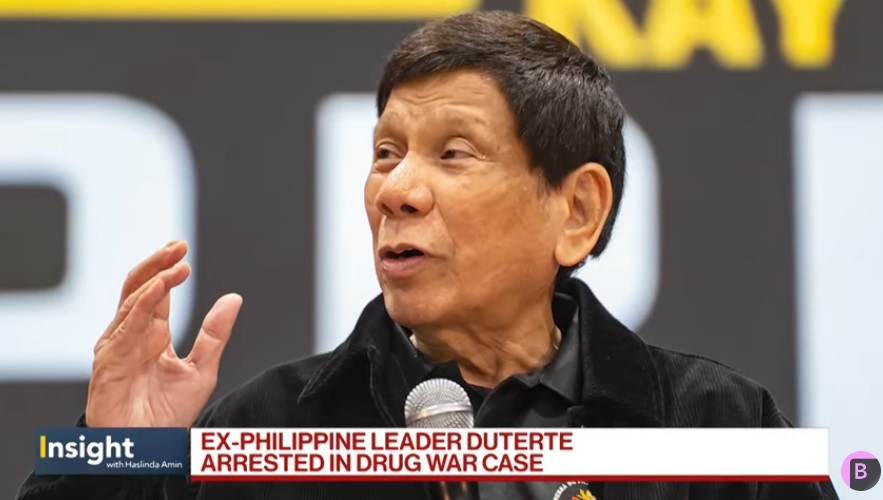
Trial Chamber III — Judges Joanna Korner, Keebong Paek, and Nicolas Guillou — reviewed detention again. On May 22, 2026, the chamber kept him locked up. Judges wrote that confirmed charges raise the risk an accused will run, that Duterte still refuses to recognize the court, and that he retains political reach at home. Under the Rome Statute he is expected in the room for trial. A May 1 order had already demanded fresh observations on his conditions at the ICC detention center.
On May 27, 2026, the chamber held its first status conference and set November 30, 2026, as the opening date, subject to an updated fitness exam by the same three experts. The defense had asked for a new medical review on May 25. Lead counsel is now Peter Haynes KC, with Kate Gibson. The prosecution is in the hands of Deputy Prosecutor Mame Mandiaye Niang. Some 539 victims have been authorized to take part, represented by Joel Butuyan, Gilbert Andres, and Paolina Massidda.
That victim list is the part Manila spent years trying to keep as a statistic. Human-rights groups put the drug-war death count in the thousands. Exact tallies remain a fight because so many bodies were filed as “nanlaban” — suspects who supposedly fought back. The legal question that is no longer a fight is whether The Hague can try a former president whose country denounced a treaty after the graves were already filled.
What the Prosecutor Says the Counts Cover
The Office of the Prosecutor presented evidence at confirmation on 49 incidents and 78 victims and said those lists are not exhaustive. The charged window runs from November 1, 2011, to March 16, 2019. That span covers Duterte’s last years in Davao City Hall and his presidency from 2016 to 2022, cut off at the date the withdrawal from the Rome Statute took effect for new conduct. Prosecutors originally asked for a wider menu that included torture and rape. The confirmed case is murder and attempted murder. That narrowing is not an acquittal. It is the chamber telling the parties which crimes have enough evidence to go to a trial courtroom.
Duterte has denied the charges. His political allies in the Philippines still talk about the drug war as a body count that made streets safer. Families who spent a decade asking local prosecutors for names now have a docket number in the Netherlands. Those two stories cannot both be the full truth. A campaign that treated slum suspects as disposable is not a policing success. It is the definition of an attack on a civilian population, which is why the ICC used the crimes-against-humanity label instead of ordinary homicide.
The AEGIS Alliance has covered other long-delay accountability cases, including an extradition that took 17 years. Crossing a border, or leaving a treaty, is not the same as erasing a file.
Fitness Is Now a Trial Issue, Not an Escape Hatch
The defense will keep litigating Duterte’s health. That is its job. Cognitive impairment in multiple domains is the phrase lawyers put on paper. Age and detention wear a defendant down. They do not automatically cancel a case the chamber has already called fit for pre-trial work. Trial Chamber III’s November date is expressly tied to the new expert reports. If those reports flip, the calendar moves. If they hold, an 81-year-old former president will have to sit in Courtroom I while witnesses describe killings carried out under a policy he advertised on television.
There is no serious claim that this prosecution is a model of speed. Thirteen months passed from arrest to confirmed charges. Another seven sit between confirmation and the scheduled opening. Victims’ lawyers will spend that interval organizing testimony. The defense will spend it on fitness and disclosure. The court will spend it trying to keep an old man alive and present without handing him a medical veto.
What already changed is the venue. For years the drug war was a domestic talking point. It is now a crimes-against-humanity indictment with a trial date, a locked cell, and more than 500 participating victims. The AEGIS Alliance will follow the November calendar because a president who dared the court to come get him is still in the building, and the families who were told their dead were collateral finally have a place to stand that is not a Manila press conference.








Too bad that $hit don work for the Jews