Mobile Homicide Detective Jacob Clifford Bound Over to a Baldwin County Grand Jury on Child Sex Charges


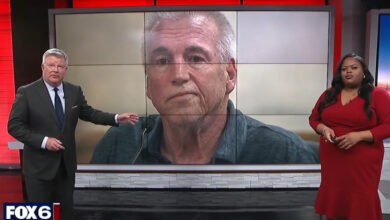
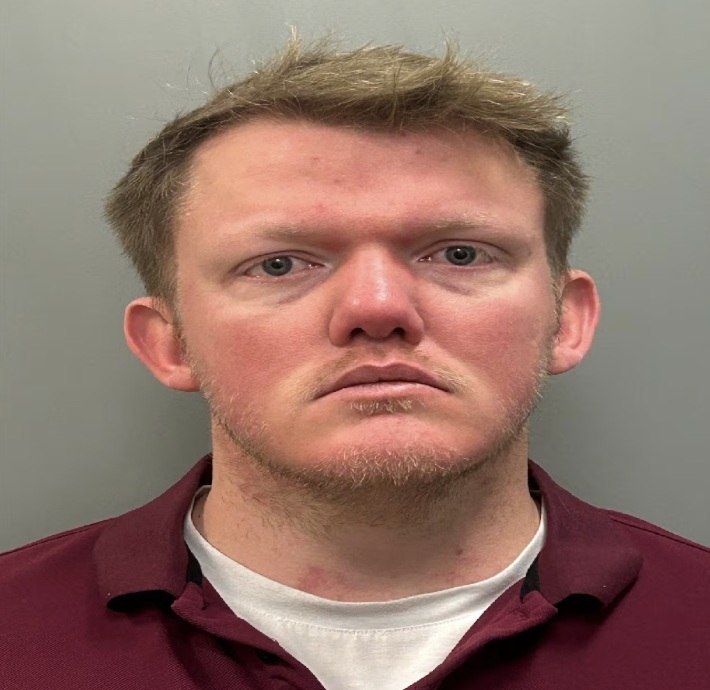
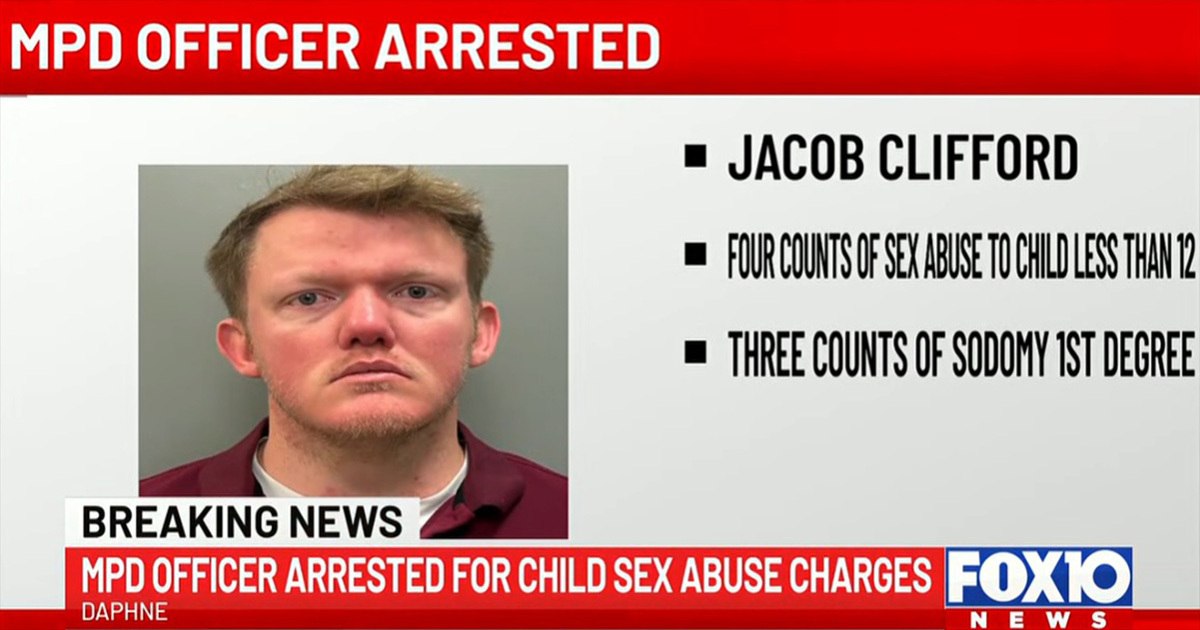
Daphne Police Department booked a Mobile homicide detective because the complaint landed on the other side of the county line. Jacob Marcus Clifford, 30, was taken into custody the night of December 17, 2025, on four counts of sexual abuse of a child under 12 and three counts of first-degree sodomy. He did not resist. He denied the allegations at the station and has denied them on camera since. Mobile Police placed him on administrative leave the same night and collected his credentials and city property. A Baldwin County judge later set a $500,000 bond. Jail records broke that figure into $50,000 on each abuse count and $100,000 on each sodomy count. Clifford posted it on December 19 and walked out.
The alleged conduct, according to Daphne investigators, happened inside a house in Daphne between October and November 2025. A third party reported it on December 4. Detectives learned early that the suspect carried a Mobile badge. Chief Brian Gulsby said his department notified Mobile PD as a courtesy and kept that agency in the loop while Baldwin County ran the file. The Baldwin County Multi-Disciplinary Team — police, the Department of Human Resources, the Child Advocacy Center, and the district attorney’s office — handled the interviews so Mobile would not be investigating its own detective.
That structure is the part of the story that does not depend on a jury. When the accused wears one city’s shield, another city has to hold the warrant. The AEGIS Alliance has watched that pattern in other badge cases, including the Hardy, Arkansas, chief who was later convicted and the Bethel, Ohio, chief who resigned under a 70-count indictment. The point is not that every file ends the same way. The point is that the home department does not get to write the first report.
What the January hearings actually decided
A preliminary hearing opened January 6, 2026, and spilled into January 29. Local stations clocked about eight hours of testimony across the two days. Defense attorney Christine Hernandez put Clifford’s Mobile colleagues, DHR workers, advocacy counselors, and the original reporter on the stand. She has framed the criminal file as a custody fight that got charged as a sex case. Prosecutors objected when the defense tried to collapse the seven counts into that civil dispute. Assistant District Attorney Kristi Hagood told the court the grand jury could be months away and might take a year.
At the end of the second day the judge bound the case over. That is not a conviction. It is a finding that the state put up enough evidence to let a grand jury look at the same record. Clifford has said he wants to testify to that panel. “I know I have never touched a kid,” he said when he first spoke on camera. He is presumed innocent. The charges are accusations until a jury, or a plea, says otherwise.
Preliminary hearings in Alabama child-sex files are often ugly for everyone in the room. The state has to preview enough of the child’s account and the forensic interviews to clear the bind-over. The defense has to attack that preview without a full discovery dump. Hernandez used the extra day to pull in people who work with Clifford and people who work with the child-welfare side. That is a standard defense theory in cases that start as family reports: show the jury-to-be a messy civil fight and argue that police charged the mess. Prosecutors will argue the opposite — that a badge and a custody docket do not cancel a forensic interview.
WKRG and FOX10 both covered the return to court in late January. Neither outlet reported a plea. Neither reported a dismissal. The file moved. That is all a bind-over means.
Why Daphne had to make the arrest
Gulsby called the arrest disappointing and a blow to the profession. He also described a fast investigation: complaint on December 4, arrest on December 17 when Clifford came to the Daphne station for a follow-up interview. The location of that interview matters. Clifford was not pulled out of a Mobile precinct by his own command staff. He walked into the agency that owned the complaint.
Police departments hate these cases for reasons that have nothing to do with sympathy. A homicide detective who is later acquitted still burns the unit’s trials. A homicide detective who is later convicted burns every confession he took. Defense lawyers in Mobile murder files will now have a line of questioning about the detective’s credibility even if this Baldwin County case never reaches a verdict. That collateral damage is why chiefs put a person on leave in hours and why they want another agency to hold the warrant.
The same logic showed up when El Cajon police booked a Bible teacher instead of letting a school handle its own employee, a file The AEGIS Alliance covered as the Christian Unified case. Access is not a defense. A title is not a defense. A custody motion is not a defense. Those sentences cut both ways. They also mean the state has to prove the counts, not the job description.
Alabama’s first-degree sodomy and sexual-abuse-of-a-child-under-12 statutes are felony-grade for a reason. The under-12 cutoff exists because the law treats that age as a bright line. If a grand jury indicts, Clifford will face a trial in Baldwin County, not in the city that signed his paycheck. That venue is another reason Daphne ran the arrest. Jurors in the home department’s city bring a different set of assumptions about the badge.
What still is not public
The child’s identity is correctly out of the coverage. The precise forensic findings are not in the press releases. DHR’s internal disposition, if one exists, has not been read into a public docket that reporters can quote. Readers should be wary of social-media versions of this file that name the child or treat a bind-over as a guilty verdict. They should be equally wary of versions that treat a $500,000 bond as proof the case is weak. Bond is a flight-and-danger calculation, not a scoreboard.
Clifford remains a former lead on Mobile homicide cases until the department says otherwise. Leave is not termination. Termination, if it comes, will likely wait on the grand jury or on a departmental administrative hearing that uses a lower burden of proof than a criminal court. Cities often fire first and let the union grieve later. Mobile has not advertised that step.
Anyone who needs to report suspected abuse can call the Childhelp hotline at 1-800-422-4453. Alabama DHR takes county-level reports. The existence of a hotline is not a comment on this defendant. It is the only responsible close for a story that starts with a child-sex warrant.
The grand jury is the next room
Hagood’s warning that the panel could take months is normal for a multi-count child file that already ate two hearing days. Grand juries in Baldwin County do not meet on a newspaper’s schedule. If they true-bill, Clifford will be arraigned on an indictment instead of a complaint and the discovery fight will start in earnest. If they no-bill, the criminal case ends and the custody fight, if there is one, continues in family court without a felony caption.
The AEGIS Alliance is not going to launder either outcome in advance. This desk has written enough police accountability and crime copy to know that badge cases attract two mobs: the mob that convicts on the mugshot and the mob that acquits on the uniform. Both are lazy. Daphne did the part it could do. It took a complaint it owned, ran it through a multidisciplinary team, and made an arrest its neighboring department could not cleanly make. The grand jury will decide whether that arrest becomes a trial. Clifford says he will look that panel in the eye. That is his right. The child at the center of the file has rights that do not include being named in a headline.