Delaware Driver April Love Crashes a Kia Sixty Feet Into the Inspira Emergency Ambulance Bay in Bridgeton on New Year’s Eve


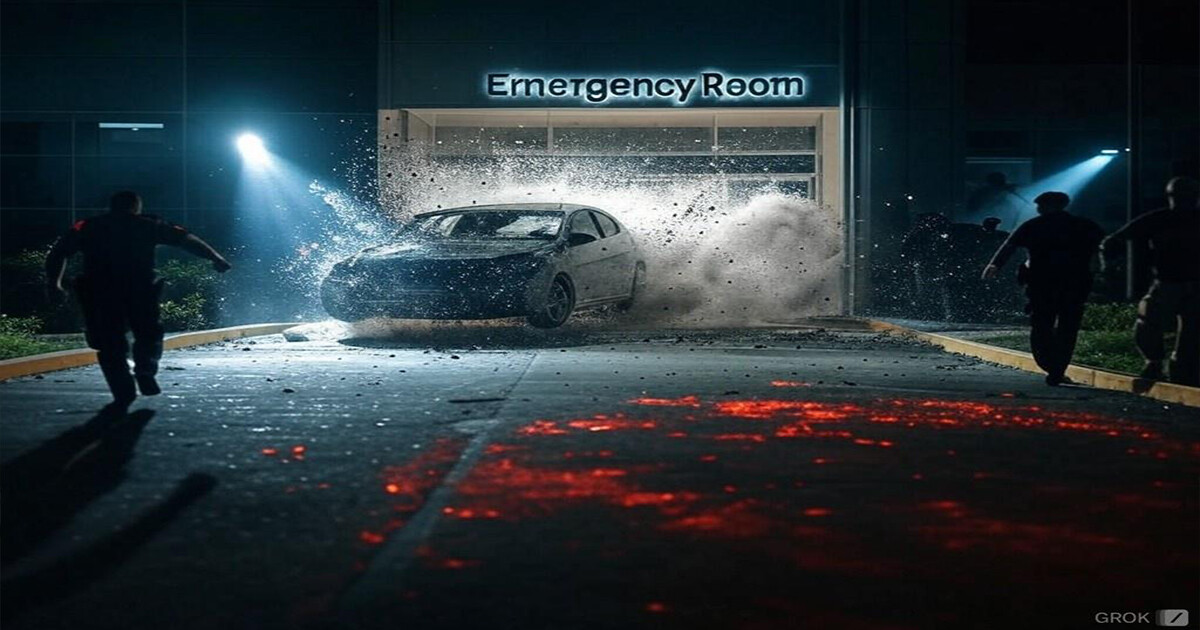
Minutes before midnight on December 31, 2024, a white Kia came through the ambulance-bay doors at Inspira Health Center Bridgeton and kept going. Bridgeton police say the driver was April Love, 38, of New Castle, Delaware. Officers were called just after 11:30 p.m. When they arrived, the car was about 60 feet down a hospital hallway that was built for stretchers, not sedans.
Love stayed at the scene. She was arrested and taken to the Bridgeton Police Department. The complaint that followed listed assault by auto, endangering another person, and criminal mischief. Local court reporting later described those counts in New Jersey terms as fourth-degree assault by auto and endangering, plus third-degree criminal mischief. She was held in the Cumberland County Jail. The charges are allegations. She has not been convicted in the public reporting available on this file.
The AEGIS Alliance is treating the crash as a hospital-security case with a criminal docket attached, not as a metaphor for New Year’s Eve. An emergency department is a workplace. A car inside it is a failure of geometry before it is anything else.
What the Hospital and the Police Put on Paper
Inspira’s statement, carried by NBC Philadelphia, put the time at about 11:35 p.m. No patients or visitors were injured. A security officer suffered a minor injury jumping out of the way. The emergency department went on ambulance divert until about 3:30 a.m. while crews secured the wrecked entrance and stood up an alternate bay. The walk-in door stayed open. Officials said patient care inside the building was not stopped.
NJ.com, CBS Philadelphia, and 6abc described interior video of a four-door Kia wedged between hallway walls, with glass and door frames on the floor. Damage estimates landed around $135,000. That is a reconstruction bill, not a medical bill. It is still a number a nonprofit hospital system has to explain to insurers and to the next ambulance that needs a clear threshold.
Love told detectives a story that is now in the charging file. According to breakingac.com and 6abc’s account of the complaint, she said she had been upset after an argument in the Seabrook section of Upper Deerfield Township, wanted crisis help, believed no one would assist her, and drove through the sliding doors in an attempt to knock herself out with the airbags. She got out of the car and was walked to the emergency section to wait for police.
That statement is her explanation. It is not a finding. Prosecutors can charge a crash as an assault even when the driver describes a psychiatric emergency. Defense counsel can argue the opposite. A detention hearing was set after a brief video appearance from the jail, where she was seen in a wheelchair. Additional motor-vehicle citations from Upper Deerfield, including reckless driving and leaving the scene of a crash that damaged property, were listed in the same local court coverage.
An Ambulance Bay Is a Doorway, Not a Guardrail
Hospitals spent a decade after 9/11 and another decade after mass-casualty shootings talking about access control. Most of that money went to badge readers, metal detectors, and active-shooter drills. Vehicle ramming is a different problem. It is solved with setbacks, bollards, and an ambulance approach that does not line up with a long indoor corridor. Those features are ugly. They are also the reason some emergency departments never make this list.
Bridgeton’s Inspira campus on Irving Avenue is a community hospital, not a fortress. Ambulance bays are designed so a crew can roll a stretcher in a straight line. A straight line is also a runway. When a driver decides the sliding doors are the intervention, physics does the rest. Sixty feet is not a tap on a bumper. It is a sedan occupying a hall where a nurse should be able to run.
The security officer who jumped is the nearest near-miss. Inspira said the injury was minor. That sentence can hide a torn knee or a night of paperwork. It still means no one was pinned. The divert until 3:30 a.m. on New Year’s Eve is the operational cost. Holiday nights are when emergency departments already run thin. Closing the ambulance door for four hours pushes stroke and trauma traffic onto other Cumberland County and South Jersey rooms.
How Courts Usually Sort a Crash Like This
New Jersey’s assault-by-auto statute is built for drivers who cause injury by reckless or drunk operation. Endangering covers risk to other people even when the injury is slight. Criminal mischief covers the doors, the glass, and the $135,000. None of those counts requires a manifesto. They require a mental state the state can prove: recklessness, knowledge, or purpose, depending on the degree.
A defendant who says she was trying to force a crisis admission puts motive on the table. Motive can cut both ways. It can support a finding that she aimed the car at a building on purpose. It can also support an argument about capacity and the need for treatment rather than a long county sentence. Judges in detention hearings listen for danger to the community. A person who has already driven through a hospital door starts that hearing in a hole.
This newsroom is not diagnosing her. It is not treating a police statement as a medical chart. People in a psychiatric emergency deserve a door that opens for them without a Kia attached. Staff and patients deserve a building that cannot be entered at highway angle. Both sentences can sit in the same story.
Readers who follow crime news and health coverage on this site have seen the pattern. A viral hallway video. A name. A damage number. Then the case leaves television and becomes a status conference. The AEGIS Alliance will treat later judgments, pleas, or dismissals as the update. Until then the documented facts are the car, the distance, the charges, the security officer who jumped, and the four hours the bay was closed.
Related files include the Fullerton warehouse plane crash, another case where a vehicle ended up inside a building that was not designed for it, and broader U.S. news and odd news reporting. Odd is the wire category. For the nurse who had to reroute an ambulance at 11:36 p.m., it was a shift.
A hospital entrance is supposed to take a stretcher at walking speed. On the last night of 2024, Bridgeton’s ambulance bay took a Kia instead. The people inside got lucky. The building did not. The docket is where the rest of the story belongs.
Video from inside the hallway circulated locally within hours. National copy followed because a car in an emergency department is an image that does not need a caption. The AEGIS Alliance is not going to treat that clip as entertainment. It is evidence of a design choice: a sliding door that opens for an ambulance also opens for a sedan if no post stands in the way. Counties that run community hospitals should price bollards against a $135,000 repair and a four-hour divert. That math is ugly and clear.









Hey …..who wants to talk about hacking ??? Anyone
https://videyco.id/BreakingNewsUpdate