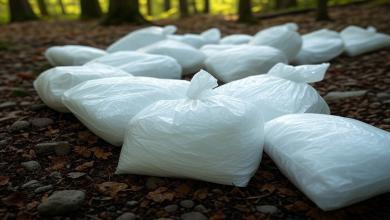
Border Patrol Finds Two Backpacks Holding $1.1 Million in Cocaine in Woods Near the Canadian Line in Lynden Washington


Two black backpacks on a forest floor north of Lynden, Washington, did not look like a trafficking case until agents unzipped them. U.S. Border Patrol assigned to the Blaine Sector found the bags on December 19, 2024, in woods close to the Canadian line. Inside were 30 brick-like packages of a white powder that field tests later called cocaine. Combined weight: about 78 pounds. Combined street estimate from Customs and Border Protection: more than $1.1 million.
No one was standing next to the bags. No one was booked in the first announcement. The AEGIS Alliance is treating this as a drop that lost its walker, not as a solved conspiracy. Seizures of this size on the northern border happen often enough that they rarely rewrite a statute. They do rewrite a Saturday for whoever has to carry the evidence into a DEA vault.
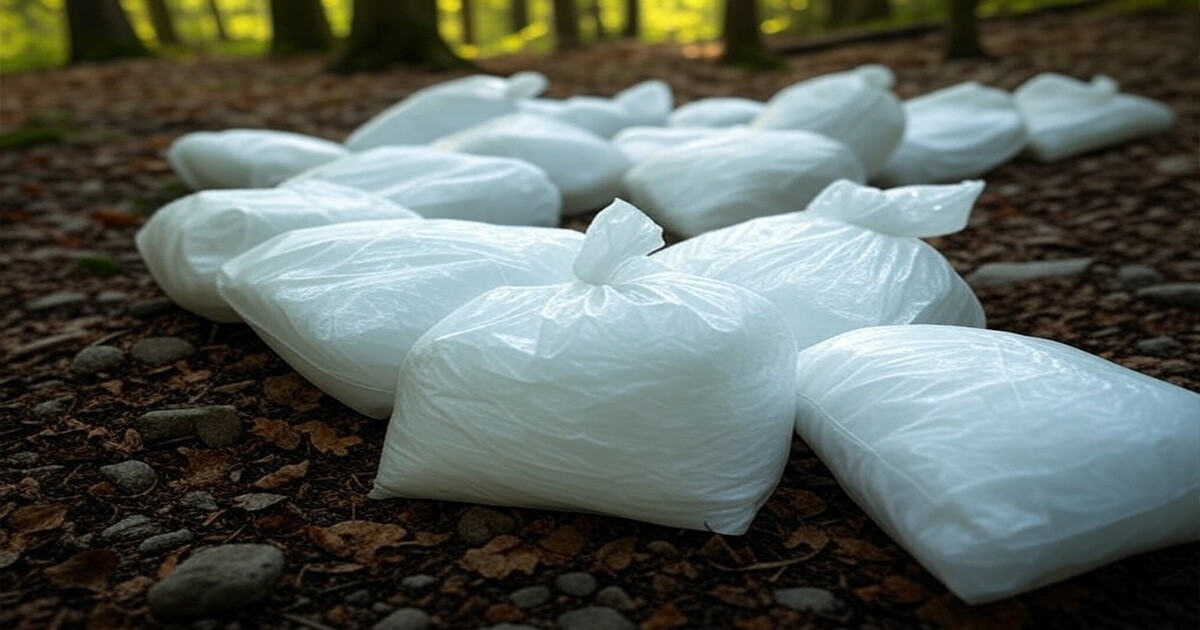
What the Blaine Sector Actually Found
CBP’s December 23 release is short on theater and long on inventory. Agents on patrol spotted the backpacks on the ground in a wooded area near the border at Lynden. They opened them. They counted 30 packages. They tested the powder. They called the Drug Enforcement Administration. Chief Patrol Agent Rosario “Pete” Vasquez said the seizure kept the load out of communities his sector is paid to protect.
Lynden sits in Whatcom County, a few miles south of British Columbia. The Blaine Sector covers a stretch of the 49th parallel that looks pastoral from a highway and looks useful from a smuggler’s map. Farm roads, tree lines, and a border that is a ditch in some places and a camera tower in others. Backpacks are a common tool on that ground. They move without a license plate. They can be cached and collected later. When the collector does not arrive, the cache becomes a press release.
ABC News, CBS News, and the New York Post repeated the same numbers because CBP gave them almost nothing else. Seventy-eight pounds. Thirty bricks. $1.1 million. Those figures travel. They also flatten the work. Valuation is an estimate used for headlines and asset paperwork. It is not a bank deposit. Street prices move with city, purity, and who is holding the scale.
The AEGIS Alliance will keep the dollar figure in the lede because that is how the public found the story. It will not pretend the figure is a confession. A courier who dumps a load can be running from a patrol, from a rival, or from a deal that collapsed on the Canadian side. Without an arrest, those are theories.
Why the Northern Border Still Matters for Cocaine
American political talk about narcotics still points south. The southern land border is where most cocaine, fentanyl, and methamphetamine are interdicted in bulk. That is not an argument that the northern line is a hobby. British Columbia has long been a production and transit zone for cannabis, precursor chemicals, and, in some years, cocaine that already entered North America through Pacific or Mexican routes and then moved north for storage or redistribution.
A backpack cache near Lynden is consistent with a short hop across a lightly staffed stretch rather than a container offloaded at a seaport. It is also consistent with a load that was never meant to sit there overnight. Agents found the bags because they were walking ground that cameras do not cover at every tree. That is the unglamorous version of border work: not a tunnel, not a drone swarm, a pair of packs in the leaves.
CBP did not name a cartel in the release. That omission is worth reading. Agencies attach brand names when they have a wire, a cooperator, or a matching seizure on the other side of the line. When they have two bags and a field test, they hand the powder to DEA and keep working the trail. Readers who want a named network should wait for an indictment, not invent one from the nearest Mexican or Canadian headline.
The same desk has covered other files where a number did the work of a narrative. See the Ebisawa case, which started as a Golden Triangle drug sting and ended with laboratory language about nuclear samples. Different product. Same lesson: the first press release is an inventory, not a map.
What a Seizure Does Not Prove
A 78-pound cocaine seizure is large for a backpack job and small for a port job. It is enough to supply a mid-size distribution cell for a while and not enough to move a national market. Policy shops will still try to draft it into larger arguments about northern-border staffing, Canadian cooperation, and whether Washington has spent too many years treating the 49th parallel as an afterthought.
Those arguments can be honest. They can also be lazy. One cache does not prove a new corridor. It proves someone used an old method on a familiar stretch of woods. The useful questions are operational. Was there a matching seizure in the Lower Mainland that week. Did trackers or cameras catch a figure who dropped the bags and ran. Did DEA already have a name attached to the wrapping. CBP’s release answers none of those. That is not a scandal. It is how an open case is written.
Communities around Lynden and Blaine live with the dual image of the border. One image is dairy farms and duty-free shops. The other is a line that organized crime treats as a tool. Both are true. Residents who find a pack on a trail should not open it. They should call it in. Agents who find a pack should do what these agents did: test, photograph, transfer, and keep walking the same ground the next day.
For readers who follow crime news and U.S. news on this site, the pattern is familiar. A number hits a wire. A photo of packaged powder circulates. Then the story goes quiet unless someone is charged. Silence after a seizure is not always a cover-up. Sometimes it is a case that still has a living suspect.
The Work After the Photograph
The photograph is what the public remembers. Two bags. White bricks. A forest. The work after the photograph is chemical confirmation, chain of custody, and an attempt to match packaging, weight, and location to other loads. DEA will run that. Royal Canadian Mounted Police counterparts may already have a missing-courier report that fits the time and place. If those files meet, there will be a second announcement with a name. If they do not, this seizure will live as a statistic in a Blaine Sector year-end chart.
The AEGIS Alliance is not going to inflate 78 pounds into a war. It is also not going to shrug it off as litter. Cocaine in that volume is a public-health product and a violence product once it reaches a city. Keeping it in an evidence room is the job. Finding the person who carried it is the harder job.
Related reporting on this desk includes broader coverage under international news when a load has a documented foreign origin. Until prosecutors file, the honest summary is the one CBP already wrote. Agents found two backpacks in the woods near Lynden. The powder tested as cocaine. The estimate was $1.1 million. The bags were empty of a person. That last sentence is the part that still needs an answer.





I bet they will find out who’s it was before they ever find out who’s coke was at the white house 🙄
Hows u fucken boy your anon karma doing he got a ass kicken i see u crooked fucken cops😂😂😂😂😂😂😂😂😂😂😂😂😂😂😂😂😂😂😂😂😂😂😂😂😂😂 hows ur tech kyle lee james😂😂😂😂😂😂😂😂😂😂😂😂😂😂🤌🤌👑👑 Luke Sdesdl Matthew Markle Dwight Wabbit
I wish I would have found it
That’s not how cocaine is packed, that is meth. And that amount would be like 2 million in cocaine.
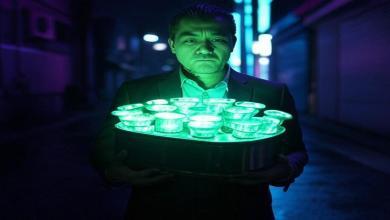
Bryan DuBois There was no real photo of the cocaine, so The AEGIS Alliance created their own image with X/Twitter Grok2 AI. It says Grok 2 AI in the image description on the site too. But the story is real.
Imagine that.