Bobby, Two-Furz, and Xena: Eight Front Claws, a Diabetes Fight, and the Oral Drugs That Came Too Late

Bobby the darker cat seen as one of the kittens in the photo was a Hemingway, because she had more than usual claws on her paws. She had eight claws on each of her front paws. She was the last surviving out of the three… And had passed in 2015. Two-Furz with the half dark grey half white face ended up getting cat diabetes; it was hard to keep up after that. He was around 15 at the time he passed away, Bobby made it to about 19. The other cat is Xena, she and also passed away, some time after her owner moved out of my teenage years home.
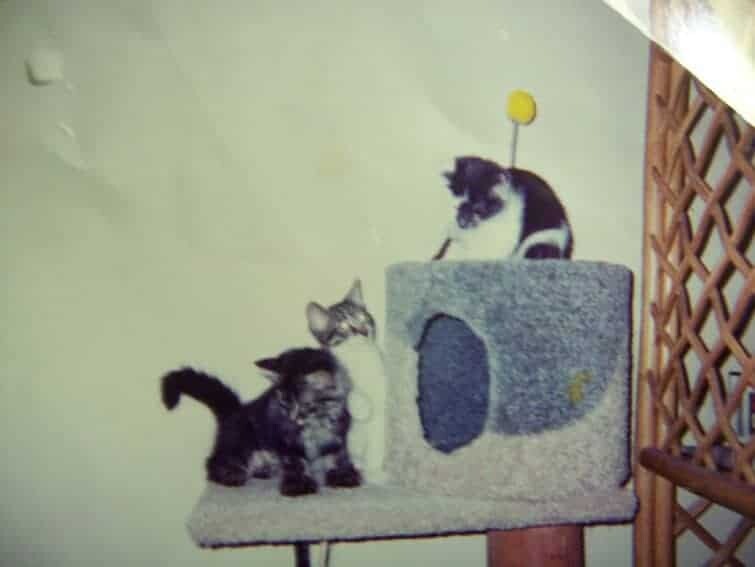
A Hemingway cat is the folk name for a polydactyl: extra toes, extra claws, a paw that looks like a baseball mitt. Ernest Hemingway’s house in Key West still runs as a sanctuary for them, descendants of a six-toed cat a ship’s captain is supposed to have given him. Bobby was not a Key West cat. She was the dark kitten on that tree, eight claws on each front paw, and she outlasted the other two. Nineteen years is a long time for a house cat. She used every one of them.
Two-Furz is the grey-and-white face. Feline diabetes is a miserable disease to manage at home. Insulin, feeding schedules, the crash if you miss a window. He made it to about fifteen. Xena left with her person and died later, which is how a lot of first-pet stories actually end: not all in the same house, not all in the same year.
Polydactyl cats are not rare in certain port towns. Sailors liked the extra grip on wet decks, and the gene traveled. Most of those cats have six toes. Eight on a front paw is the loud version. If you have never seen the Key West colony, the short film below is the cleanest look at why people still call them Hemingway cats.

The kitten photo also sits next to a later metal-and-cats joke in The Rocker Story. First animals leave a mark. These three did. More personal pieces live under The AEGIS Alliance News.
The Key West Colony Is Still There
The Ernest Hemingway Home and Museum in Key West still houses nearly 60 polydactyl cats. The museum’s own page says about half of them show extra toes, and all of them carry the gene. Snow White, the six-toed cat a ship’s captain is supposed to have given Hemingway, is the origin story they still tell. Bobby was not a Key West cat. She had eight claws on each front paw — louder than the typical six-toed Hemingway. Nineteen years is still a long time for a house cat. The kitten photo is still the record.
Bobby and Her Eight Claws, Then A Syringe for Two-Furz, And A Pill He Never Saw
Bobby’s extra claws were not a Key West souvenir. The Ernest Hemingway Home and Museum still tells the origin the same way: a ship’s captain gave Hemingway a white six-toed cat named Snow White, and the colony on Whitehead Street is descended from that gift. The museum’s own page says the house holds nearly 60 cats. About half of them show the extra toes. All of them carry the gene, which is why a cat with an ordinary paw count can still throw a mitten-footed kitten. Most of the extras land on the front feet. A thumb-like toe is why people say the paw looks gloved. Hemingway named his cats after famous people, and the museum still does. The trait is not a breed. It shows up in calicos, tabbies, black cats, white cats, whatever the litter is.
Snow White is the grandmother the posts still name, generations deep. Visitors keep photographing the colony and calling the house peak Key West, six toes and a war novel in the same courtyard. Bobby was not one of those cats. She was the dark kitten on our tree, eight claws on each front paw, louder than the usual six-toed Hemingway, and she lived about nineteen years. Nineteen is a long run for a house cat. She used it. The museum can keep a colony because it has a veterinarian, annual vaccines, and a sponsor for parasite control. A family cat with eight front claws just lives in the house and knocks things over. Both versions of the gene are the same gene. Only one of them has a gift shop.
Two-Furz did not get a gift shop either. He got feline diabetes, the grey-and-white face, and a disease that is miserable to run at home. Insulin, a feeding clock, and the crash if you miss the window. He made it to about fifteen. The medicine cabinet changed after he was gone. On December 8, 2022, the FDA approved Bexacat, bexagliflozin tablets, the first oral drug it had ever approved for diabetes in cats, and the first SGLT2 inhibitor approved for any nonhuman animal. Elanco commercialized it. The drug does not replace insulin’s job inside the cell. It makes the kidneys spill glucose into the urine so the blood sugar falls, and it is a flavored tablet once a day, for otherwise healthy cats who have not already been started on insulin. Senvelgo, velagliflozin oral solution, followed as the liquid cousin. The FDA’s animal-health page still walks owners through that difference, because the risk sheet is real: these are not harmless vitamins, and the wrong cat can get very sick.
That option did not exist in the years Two-Furz was being managed with a syringe. Saying so is not a claim that a tablet would have saved him. Bexacat was studied in cats who had not already been put on insulin, and field data the agency cited put effectiveness above 80 percent at improving glycemic control in that group, with a client information sheet that tells you what crashing looks like. His protocol was the old one, because the old one was the only one. Xena’s ending was the other ordinary ending. She left with her person and died later, not in the same house and not in the same year. First animals rarely exit on a matched schedule.
The kitten photograph is still the record of all three of them on one tree, before the diabetes, before anybody moved out, before a Florida museum’s colony became the reference image for a word Bobby was already living. Polydactyl cats spread through port towns because sailors wanted the extra grip on wet decks, and the gene traveled in ships. Six toes is the common version of that story. Eight on a front paw is the loud version, and it does not require a museum to be real. It requires a kitten, a tree, and somebody who bothers to count. The metal-and-cats joke that shows up later is in The Rocker Story. The newsroom those kittens outlived on the masthead is described in what The AEGIS Alliance is, and the personal file around them sits in The AEGIS Alliance News. Related: the later metal-and-cats joke in The Rocker Story and the rest of who The AEGIS Alliance actually is.