A 12-Second CGI Jail Clip Got a Justice Department URL Before the Epstein Portal Admitted It Also Publishes Fakes


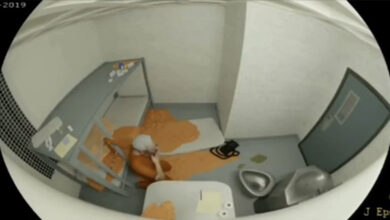
Le ministère de la Justice a mis un clip de 12 secondes sur son portail Epstein en décembre 2025 qui semblait, à quiconque défilant trop vite, comme la bande de caméra cellulaire manquante du 10 août, 2019. Le dossier portait un cachet de 4 h 29. Il a montré une figure dans une cellule. À la tombée de la nuit, le lien était mort. Un fonctionnaire de l'administration Trump a dit au New York Post que la vidéo était fausse et vivait sur Internet depuis des années. HEURE, Filset AFP reached the same mechanical conclusion. The clip matched old YouTube uploads labeled as 3D graphics. The PDF sitting in front of it was a tip email, not a Bureau of Prisons export.
La question n'a jamais été de savoir si le dessin animé était réel. Ça ne l'était pas. La question est la chaîne de garde, et ce qu'une URL du gouvernement fait à un dossier qui n'a jamais été une preuve. L'animation est entrée dans une décharge du Congrès parce qu'un membre du public l'a envoyé au FBI le 13 mars 2021. Le ministère a publié la pièce jointe à côté des documents authentiques, sans étiquette qui dit récréation. C'est ainsi qu'un rendu devient, pour un après-midi, une exposition officielle sur Justice.gov.
How a YouTube render got a justice.gov address
Wired matched the clip to a 2019 YouTube upload described as « rendering 3D graphics. » AFP found a 2020 YouTube version whose caption said it was built in 3D software and then enhanced. Textureless orange shapes sat where a jumpsuit should be. The door did not match Jeffrey Epstein’s cell at the Metropolitan Correctional Center in Manhattan. The PDF in Data Set 8, numbered EFTA00028840, is the 2021 tip. The sender wrote that he had been « busting government pedophiles since 1987 » and asked investigators whether the attachment was real.
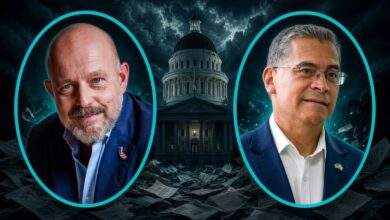
Cette dernière clause est la partie du portail enterré. Le FBI n'approuve pas le dossier. Un membre du public posait une question. Lorsque le Congrès a forcé une libération en vrac en vertu de la loi sur la transparence des fichiers Epstein, signée le 19 novembre 2025, la pièce jointe a voyagé avec la question. Le ministère a affiché les deux. Les téléspectateurs ont d'abord vu l'image en mouvement. Représentants Thomas Massie et Ro Khanna ont critiqué le département pour avoir publié le dossier sans dire ce qu'il était.
On January 30, 2026, the department pushed more than 3 million additional pages live, bringing the running total near 3.5 million pages, plus more than 2,000 videos and about 180,000 images. The press release added the sentence that should have been on the December page: the production « may include fake or falsely submitted images, documents or videos, as everything that was sent to the FBI by the public was included. » Deputy Attorney General Todd Blanche, who had been Donald Trump’s personal lawyer before he took the department job, described withholdings for victims and explicit material and said notable politicians were not being protected by name redaction. That is a different problem from posting computer graphics as if they were a cell camera. A disclaimer in January does not un-publish a December afternoon.
The cameras that were supposed to be in the hallway
Federal prisons do not put cameras inside cells. That is policy, not a glitch, and it is why a cartoon can still spike. People are looking for a picture the architecture never allowed. The 2023 Justice Department inspector general review found hallway cameras in the Special Housing Unit and also found that at least some of them were not recording the night Epstein died. CBS News, reviewing the file releases in June 2026, reported an internal document saying the department had footage from 147 cameras covering a 24-hour window around the death, more than 8 terabytes, and that the material did not reveal anything significant because the Special Housing Unit cameras were not active. The same review noted that video from July 23, 2019, the night of an earlier apparent attempt, was also missing from what the public received. By the statute’s own logic, footage the government holds is footage the government was told to publish. « Not active » is an explanation. It is not a picture.
A separate fight already existed over the hallway file the department called raw. Wired and independent forensic examiners reported in 2025 that metadata on a large MCC export pointed to Adobe Premiere and to a composite built from more than one source clip, with roughly three minutes unaccounted for in some analyses. The department presented that file as surveillance. Critics presented it as an edited package. Those two arguments are not settled by a 12-second cartoon from 2019. Hallway video was used to argue that nobody entered the tier between about 10:30 p.m. and 6:30 a.m. Then-Attorney General William Barr called the death a « perfect storm of screw-ups. » Guards Tova Noel and Michael Thomas were charged with falsifying records, admitted they sat about 15 feet from the cell shopping online and appeared to sleep for about two hours, then saw the charges dropped in late 2021 after community service.
The AEGIS Alliance has separately argued there is reason to treat the official story as incomplete. Un faux rendu ne ferme pas cet argument. Il ne remplace pas non plus les minutes manquantes du couloir. Mark Epstein, le frère de Jeffrey, n'a cessé de dire que les fractures du cou et les défaillances de la caméra sont loin d'un simple suicide. L'AEGIS Alliance a couvert cette ligne dans un fichier sur his challenge to the autopsy narrative. He is an interested witness. He is also the person most motivated to keep the gaps on the table. A YouTube render does not answer him. It adds noise to the same gap.
Volume without labels, then a second statute
La sortie de janvier a rendu le problème d'authenticité officiel. Si le FBI ingère un fichier YouTube 3D parce que quelqu'un l'a attaché à une astuce, le portail continuera de mélanger les enregistrements et les boues à moins que chaque objet soit étiqueté. La déclaration du ministère du 30 janvier a tenté de le faire dans un paragraphe. Il a également dit que des conseils sans validité étaient encore publiés parce que la loi balayait dans ce que le FBI avait reçu. Il s'agit d'une politique relative aux documents, et non d'une politique de vérification. Les lecteurs qui veulent le côté log de vol de la même décharge doivent lire le rapport AEGIS Alliance sur le SDNY email counting Trump on Epstein’s jet at least eight times. Ce document est un procureur décrivant les journaux. Le clip CGI est un membre du public décrivant un rendu. Les deux peuvent vivre sur le même site. Un seul d'entre eux n'a jamais été un produit d'investigation.
The same December wave included other sludge. A purported 2019 Epstein-to-Larry Nassar letter drew a department label of fake: wrong handwriting, a postmark after the death, no inmate number. Presence in the portal is not a fact check. The Act forced volume. Volume without labels is how a 12-second animation becomes a cable-news graphic for one night. The department later told CBS it had released every document the Act required and that roughly 3 million unreleased pages were duplicative, unrelated, or privileged. Lawmakers and survivors did not accept the arithmetic. The department had described a universe larger than 6 million pages. Half of a universe is not the same sentence as « everything. »
La journaliste Katie Phang a poursuivi Blanche, en sa qualité officielle, pour cette lacune. Le 25 juin 2026, le juge de district principal Emmet Sullivan, à Washington, a émis une injonction ordonnant des non-renonciations précises, y compris des noms sur des courriels internes et sur un projet la liste des co-conspirateurs possibles, et il a refusé de rester son propre ordre. L'Alliance AEGIS a présenté ce combat the Phang case file and in the earlier report that the department had told a court less than 1 percent was public before it declared the job finished. Compliance fights continued into the fall. On August 5, 2026, Massie and Khanna introduced an Epstein Files Transparency Act II that would let state attorneys general, local prosecutors, members of Congress, and victims sue the attorney general over withholdings. By September 23 they said they had commitments for the 218 signatures needed to force another House vote, and Massie accused Speaker Mike Johnson of canceling session to avoid it. Those fights are about paper the government is holding. They are not the same fight as the cartoon. The cartoon is a solved object. The hallway minutes are not.
A government website is not a verification stamp
In this case it was a forwarding address. The FBI received a question in 2021. Four years later the question’s attachment got a government URL because Congress told the department to empty the boxes. Someone at justice.gov eventually noticed the file was a cartoon and pulled the link. The afternoon in between is the story. Anyone circulating the 12-second clip as « the missing camera » is circulating a YouTube render. Anyone using that render to close the Metropolitan Correctional Center file is doing the department a favor it does not deserve. The cameras that should have been running in the hallway are still the cameras that matter. The AEGIS Alliance will keep the distinction in the crime record: fake attachment, real gaps, no interior tape, and a portal that had to confess it was also a junk drawer.