Shelby County Schools Fired Cafeteria Worker Avette Dunn for Taking Lunch Donations the District Says Never Bought a Child a Denied Meal


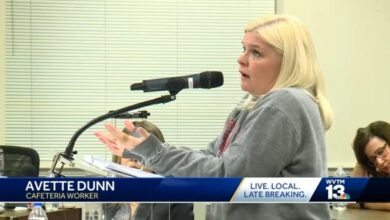
Avette Dunn spent nearly a decade putting trays in front of children at Shelby Elementary School in Columbiana, Alabama. On February 24, 2025, after a hearing that ran close to six hours, the Shelby County Board of Education fired her for taking money that was meant to pay for those trays. Superintendent Lewis Brooks recommended termination. Principal Stacy Aderholt said the job requires trust. The district’s own account of the cash is that none of it was stolen. Every donated dollar landed in the parent-teacher organization’s lunch fund.
That is the contradiction national coverage kept tripping over. Dunn was not accused of pocketing an envelope. She was accused of collecting it outside a job description, of lying when a principal asked her about it in a crowded lunchroom, and of asking a donor to stay quiet. The board treated that as a firing offense. Parents treated it as a school system punishing the person who noticed the fund was running low.
What the District Says Happened
The PTO lunch account was sliding toward a floor of about $200, the line below which it cannot be used to buy meals. A donor came to Dunn first and asked to stay anonymous. Dunn took the money and put it where the district later said it belonged. When administrators asked, she did not tell the truth in the room. She has said she was scared and that she was trying to keep a promise to the donor. The board heard that as dishonesty in a cash-handling job.
The New York Post and AL.com carried the district’s two-part line. Soliciting and accepting donations sat outside her duties. No child at Shelby Elementary, officials added, has ever been denied a meal.
If that second sentence is true, the PTO fund exists for a reason the district does not want to name out loud. Meal debt does not require a child to be turned away at the register. It requires a balance that somebody has to cover. Dunn thought that somebody could be a donor who asked her, not a central-office form.

What Dunn Told the Board
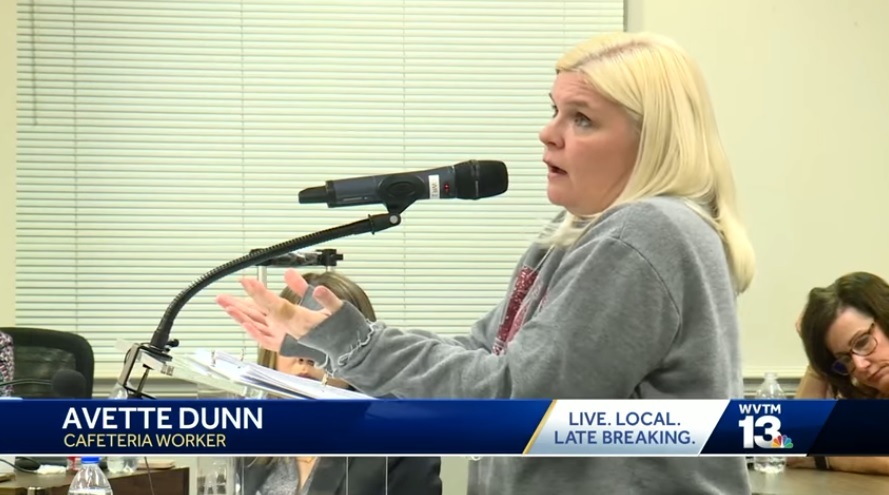
Dunn told the board she made a mistake and wanted her job back. A two-week suspension, she said, would have matched the offense. She had already been on « detached duty » since October 2024, parked away from the line while the file moved. Her lawyers noted that the written job description never banned her from accepting a donation, that the donor initiated contact, and that her evaluations over eight to ten years were strong in every category.
« I made a mistake and I think I should be able to go back to my job, » she said in the room cameras caught. The board went into executive session for about an hour and came back with a termination. ABC 33/40 and WVTM walked through the night as a process story. Process is what boards reach for when the optics are ugly and the ledger is clean.
The Alabama Education Association backed her in public. A Change.org petition asked for reinstatement. A GoFundMe titled « Support Avette Dunn: Help Her Return to Work » covered bills while she was out. Supporters called the firing a sad day for a system that will write a policy memo faster than it will write off a child’s lunch balance.
The Threats That Followed the Headlines
After the vote, the story inverted. Superintendent Brooks told AL.com that staff were being threatened over coverage he called inaccurate. That is a real risk in a small county when a national tabloid frames a cafeteria worker as a martyr and a principal as a villain. It is also a convenient fog. Harassment of clerks does not answer the question the hearing never resolved in public: if no child is denied a meal, why does the PTO keep a lunch pot at all, and why is the worker who filled it the one who lost her keys?
School finance rules exist because cash that floats through a kitchen can disappear. A district that has been burned on petty funds will treat any off-books envelope as a threat, even when the envelope is headed to the PTO. That caution is not imaginary. What the board did with it is the fight. Termination after nearly a decade of clean evaluations is not a slap on the wrist. It is a message to every other lunchroom worker in the county: if a donor finds you first, walk them to the office or walk yourself out.
Meal Debt Is the Policy the Firing Refuses to Write
The School Nutrition Association has reported for years that most U.S. districts carry unpaid student meal debt. Universal free meals would erase the ledger and the awkward conversation at the line. Alabama has not chosen that model for every campus. Federal pandemic-era waivers that briefly made school lunch free in much of the country expired, and local boards went back to charging, collecting, and shaming. Until a state or a district writes a different rule, cafeteria workers will keep meeting donors, principals will keep citing job descriptions, and boards will keep calling it a trust issue when the money was never missing.
The AEGIS Alliance has covered other public employees who were punished or praised for standing between children and a rulebook. Ohio driver Dorian Pace got a challenge coin for pulling 15 students off a burning bus. A Hartford honors graduate later sued after leaving school unable to read. Dunn’s file is smaller than either of those. It is also clearer. A worker took money for lunches. The lunches were paid. She is still out of a job.
What « Trust » Means When the Tray Is the Product
Trust in a cafeteria is not an abstract virtue. It is whether the count at the end of the line matches the count in the drawer. By the district’s telling, the count matched. The breach was narrative. Dunn did not use the approved script when a superior asked a question in front of other adults. Boards love that kind of charge because it cannot be photographed the way an empty till can. There is no missing cash to produce. There is only a worker who looked sideways.
Parents who packed the meeting and signed the petition were not confused about the difference. They know what a thief looks like. They also know what a lunch debt letter looks like when it arrives in a Friday backpack. They watched a board choose the letterhead over the woman who tried to make the letter unnecessary.
Reinstatement was the ask. A written protocol that lets a cafeteria worker walk a donor to the PTO without fear of a six-hour hearing would have been the adult version of the same ask. Shelby County issued neither. The file now sits as a warning to every hourly employee in an Alabama school kitchen. Feed the children. Do not get caught holding the envelope that feeds them.
The AEGIS Alliance is leaving the hearing video and the stills from that night in this post because they are the public record of how the board wanted the story to look: a solemn process, a trust issue, a clean ledger. The ledger is the part that should have saved her job. It did not.