
Tulsa Dog Chews a Lithium Power Bank on Camera and a Living Room Fire Starts in Seconds

An indoor pet camera in Tulsa, Oklahoma, recorded the instant a dog turned a portable phone charger into a house fire. The white dog gnawed a lithium-ion power bank on a cushioned pet bed while a brown dog and a black cat rested nearby. The pack erupted in sparks. All three animals bolted. Flames climbed the bed within seconds. The clip is short enough to loop. The chemistry behind it is not.
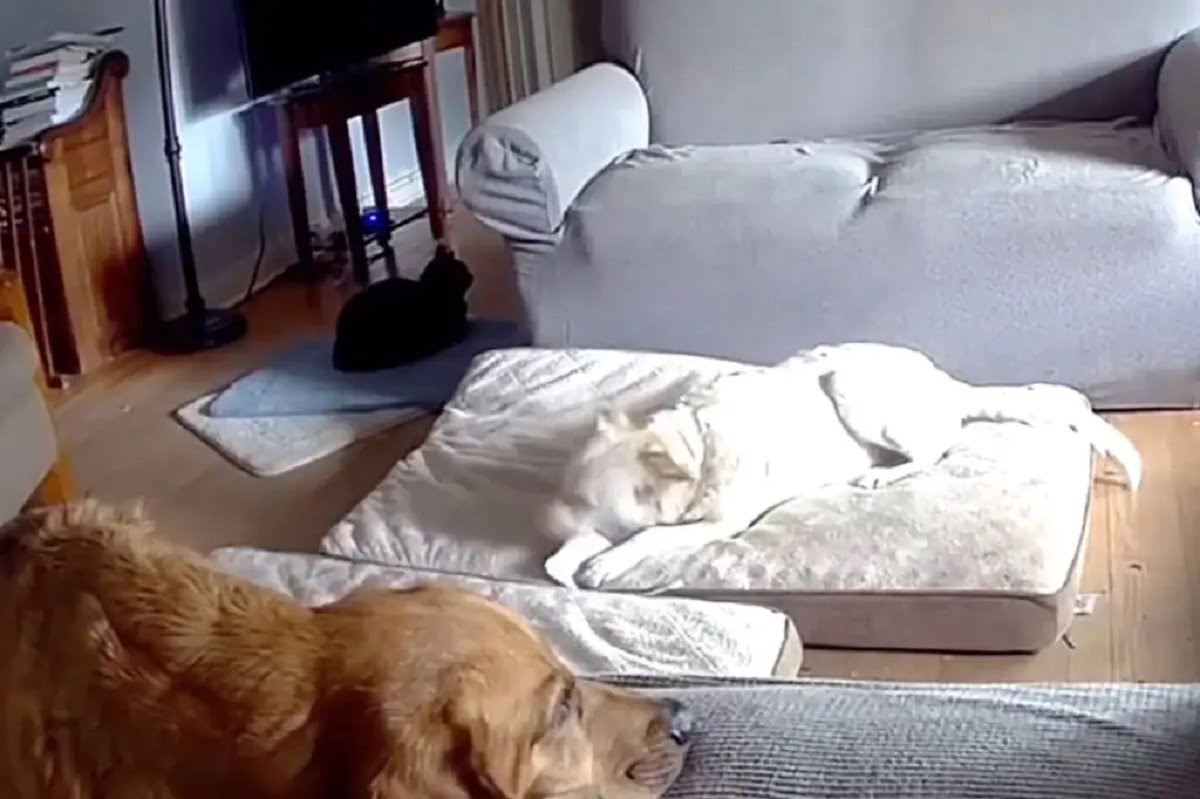
The Tulsa Fire Department had already been on the call in May 2024. It posted the video to Facebook on July 31, 2024, as a teaching tool, not a meme. The pets got out through a pet door. The family followed. No one was injured. The house took heavy damage before crews knocked the fire down. The battery was an ordinary power bank of the kind sold to charge phones on a desk or in a car cup holder.
« Lithium-ion batteries are known for storing a significant amount of energy in a compact space, » said Andy Little, the department’s public information officer. « When this energy is released uncontrollably, it can generate heat, produce flammable and toxic gases, and even lead to explosions. » Little added that the outcome could have been far worse if there had been no escape path or if the family had been asleep. Firefighter union member Craig Deerinwater, speaking for IAFF Local 176, said crews arrived quickly and that the clip shows how severe everyday battery failures have become.
Thermal runaway in a chew toy’s clothing
The chemistry has a name: thermal runaway. A damaged or failing cell heats without control. Temperature inside a single cell can jump from around 212°F to roughly 1,800°F in about a second and ignite whatever is next to it — in Tulsa, a pet bed stuffed with fabric. Puncture from teeth is a blunt version of the same failure that overcharging, cheap chargers, or a hot car can trigger. Once the separator inside the cell fails, the reaction feeds itself. Water does not « put out » that reaction the way it knocks down a paper fire. Crews treat these calls as a chemical event that can reignite.
Tulsa officials told residents to keep batteries away from children and pets and to take damaged packs to recycling sites, not household trash, where compaction can crush a cell and start a truck or landfill fire. Little listed common causes: extreme heat, physical damage, overcharging, and incompatible chargers. « Many individuals keep these batteries within their homes for convenience, unaware of the potential dangers they pose, » he said.
The International Association of Fire Fighters used the same clip in an August 9, 2024, safety note. Sean DeCrane, then the union’s director of health and safety operational services, said lithium-ion fires can turn dangerous in seconds and that the public’s first job is to follow manufacturer charging rules so crews are not walking into a hallway full of off-gassing cells. IAFF guidance that week was blunt: buy certified products, store packs with space between them, keep them off beds and sofas, and never leave a cheap bank charging overnight on a power strip.
A local clip that matched a national spike
The Tulsa video was an early public example of a problem fire departments kept measuring after 2024. The Fire Department of New York reported a sharp jump in structural fires tied to lithium-ion batteries in early 2025 versus the year before, with e-bikes, scooters, and aftermarket packs driving much of the increase. NFPA Journal, citing FDNY figures published in August 2025, counted more than 800 lithium-ion battery fires in New York City since 2022, with 30 deaths and more than 400 injuries across that stretch. In August 2025 FDNY warned against home battery « workshops » after crews found about 100 batteries burning in a Queens cellar and another stash being worked on in the Bronx a week later.
Death counts in New York later moved in the other direction after the city wrote UL standards into local law for micromobility packs. FDNY officials said deaths linked to those fires fell from 18 in 2023 to 6 in 2024, and Commissioner Lillian Bonsignore later said the 2025 death count dropped to one. That is a policy success on e-bikes. It is not a reason to leave a swollen power bank on a dog bed in Tulsa. The Tulsa pack was not an e-bike battery. It was the smaller object every household already owns.
The U.S. Fire Administration tells households to buy certified products, use the charger that came with the device, avoid charging on beds and sofas or overnight, and keep packs out of temperatures below 32°F or above 105°F. Odor, swelling, leaking, extra heat, or odd noises mean the battery comes out of service. Lithium-ion packs do not go in regular garbage. CPSC recall files through 2025 and 2026 kept adding specific brands — including wireless power banks tied to dozens of reported fires — which is how a pet-camera clip becomes part of a federal product story instead of a one-city oddity.
What the camera actually teaches
The Tulsa family was lucky in three ways that do not show up in a still frame. There was a pet door. Someone was awake enough, or the animals were fast enough, to leave. The fire started on a bed in the open instead of inside a closed closet of spare batteries. Take any one of those facts away and the same chew becomes a fatality investigation. Firefighters already know that sequence from apartment e-bike fires. The new audience for the warning is people who think a power bank on the floor is harmless because it is small.
Pet behavior is the other half. Dogs chew what smells like a hand and fits in a jaw. A rubberized pack on a cushion is both. Charging cables are worse, because the dog gets the wire and the pack at once. The AEGIS Alliance is not asking anyone to throw out every bank in the house. The ask is narrower: treat a damaged or chewable pack the way you treat a bottle of solvent. Off the floor. Out of the crate. Into a recycling drop, not a kitchen can.
The AEGIS Alliance files household hazard stories under science and odd news, with the video file under other videos. Related reporting from the same week includes the San Antonio restroom fireworks case, another small consumer explosive that became a public-safety problem when it left the package it was sold in, and the Tennessee rescue of Audio, the four-eared kitten, a reminder that not every viral animal clip ends in damage. The Tulsa lesson is smaller than a supercar battery and more common. A chewable power bank on the floor is enough.