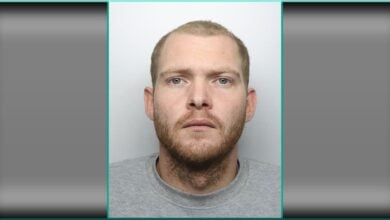
A Pontypridd Jury Blamed Missed Checks and a Delayed Transfer for Jared Perry’s Death at HMP Parc

BRIDGEND, WALES — Jared Perry walked into Aberystwyth police station in 2018 and confessed. He was 32. He pleaded guilty to sexual and indecent assaults on children, some of them under six months old, and in January 2019 a court gave him a 17-year extended sentence. He was held at HMP Parc, the G4S prison in Bridgend. On October 30, 2019, officers found him unresponsive in his cell. He never woke up. He died at the Princess of Wales Hospital on November 3, 2019. A ten-day inquest at Pontypridd Coroners’ Court did not treat that death as a mystery of motive. The jury’s conclusion was misadventure, and the failures it named were operational: staff did not carry out the observations that had been indicated for him, his transfer to a secure mental health unit was delayed, and an item that procedure said should have been taken out of the cell was left there.
The court heard that Perry’s viewing had started with adult pornography and moved to images of young children, and that he was also using drugs. Those facts explain how he arrived at Aberystwyth. They do not explain the three gaps the jury listed. He had been diagnosed with paranoid schizophrenia. He had been prescribed antidepressants from the age of 17. In custody his condition worsened. One doctor told the inquest he had presented as psychotic and had needed a bed in a secure psychiatric unit months before he died. For much of his time at Parc he was managed under ACCT, the prison service process for people at risk of suicide and self-harm. The process is a set of checks, reviews, and named case managers. It is not a mood. If the checks are not done, the document is theater.
His mother told the inquest the family believed Perry had himself been abused as a child, and that the abuse had stayed with him. That is her account, given under the coroner’s procedure, not a finding that reduces what he admitted doing to infants. It does sit next to the medical evidence the jury actually had: a man whose psychosis was on the record, whose indicated observations were missed, and whose move to a hospital ward did not happen in time. The Prisons and Probation Ombudsman investigated. The report sets out the sequence and the policies that were supposed to govern an at-risk prisoner. Parc’s answering action plan promised a properly resourced multidisciplinary ACCT, training for healthcare staff, and a weekly meeting between the Head of Safety and case managers so someone above the landing would have to look at the files.
https://www.youtube.com/watch?v=v-t7M96t2wE
Those promises belong to 2019 and the paperwork that followed. The prison they were written for came apart under a different contract. In 2022 G4S won a fresh decade of running Parc, a deal local reporting priced at about £400 million. Janet Wallsgrove, the director who had been in post for 17 years and whom inspectors had treated as part of why the jail used to work, left in August 2023. An interim director lasted less than a year. HM Chief Inspector of Prisons Charlie Taylor later called what followed “enormously disappointing.” An unannounced inspection in January 2025, published that April, found drugs widely available, including deliveries to cell windows by drone, because windows could be opened from the inside. Drugs were found on 900 occasions in 2024. G4S said it had put money into dogs and detection equipment. Taylor’s point was that the company had not delivered the contract it had won.
The death toll is the number that made Parliament hold an urgent question. Seventeen prisoners died at Parc in 2024, more than at any other prison in the United Kingdom. G4S told the BBC that eight of those deaths were natural causes and that five were believed to be drug-related. Local reporting added a fuller split that included self-inflicted deaths and one death whose cause was still unknown. In May 2024 the prisons minister, answering the Commons, said there had been nine adult deaths at the jail since March of that year, that four had been linked to substance misuse, and that about 400 staff had been trained to carry naloxone. He also said the deaths had to be read against the arrival of synthetic opioids in custody and in the community. Families did not experience it as a briefing. They stood outside the jail. Claire Jones, whose son Ross died at Parc in 2023, told reporters that warnings after an earlier death had not produced a change she could see.
https://twitter.com/southwalesargus/status/2079944107871416468
A progress review inspected in January 2026, and reported by WalesOnline that February, credited G4S and probation with “good progress” on the flow of drugs and then withdrew the comfort. Drugs were still “far too easily available.” Random tests over the prior six months came back positive 24 percent of the time, down from 31 percent before the 2025 inspection, which is a real drop and still a jail in which one test in four is finding drugs. Staff shortages were still bending the regime. Since the earlier inspection there had been another death in custody suspected to be drug-related. The 2019 action plan on ACCT and the 2026 review on drones are the same building. A prisoner who needed a psychiatric bed in 2019 and a prisoner inhaling an unknown synthetic opioid in 2025 were failed by different mechanisms and by the same operator.
Staff culture became its own case. Leaked messages, shared on social media in the summer of 2024, showed employees laughing at violent encounters with prisoners and mocking people in crisis. South Wales Police arrested staff in September 2024 and again in January 2025. On September 18, 2025, the BBC reported that criminal proceedings had ended with the suspects released without charge. Of eight employees who had been arrested, G4S had dismissed five, two had resigned during the investigation, and one had a final written warning. One of the lines that surfaced in the reporting was a response to a complaint that an inmate needed to be “broken mentally and physically.” That is not an ACCT review. It is the opposite of the training the Perry action plan said healthcare and custody staff required.
https://twitter.com/PhilDewey/status/2080744759203660204
The drugs did not only arrive by air. On July 22, 2026, the South Wales Argus and WalesOnline court correspondent Philip Dewey reported that Stephanie Thomas had been caught at Parc on August 21, 2025, trying to bring in drugs worth more than £5,000, hidden in her underwear. A drone at a window and a visitor at the gate are the same market. Inspectors in 2025 had already recorded that 57 percent of prisoners said illegal drugs were easy to get, and that 34 percent had developed a drug or alcohol problem since arriving at a jail of about 1,700 people. Nearly two thirds said they had a mental health problem. Thirteen percent said they were getting support for it. Perry’s delayed transfer is what that ratio looks like in a single file from 2019, before the nitazene deaths and before the contract that Taylor said destabilized the place.
A systematic review in The Lancet Psychiatry, looking across prisons rather than at one Welsh jail, found that the strongest associations with self-harm in custody were with suicide-related antecedents, including current or recent suicidal ideation. Those are the flags ACCT is built to catch. Pontypridd’s jury said the flags in Perry’s case were not met with the observations, the hospital bed, or the cell search the policy required. Misadventure, in a coroner’s court, is a conclusion about how a death happened, not a compliment to the institution. The ombudsman exists, in its own words, to “make a significant contribution to safer, fairer custody.” A contribution on paper that is followed by the highest death toll in the country is a record, not a reform.
HMP Parc is still G4S’s jail. The progress review did not hand it back to the state. It said the drug problem had been nudged and had not been solved, and that there were not enough staff to run the regime the contract imagines. Perry’s name is not in the 2026 inspection. The failures named in his inquest are. Observation, mental health transfer, and a cell that still contained something it should not have contained are the same three questions a drone, a short-staffed landing, and a mocked crisis log keep raising. The AEGIS Alliance has reported the neighboring cases: Richard Huckle at Full Sutton, where ignored intelligence preceded a homicide, and John McKno at HMP Norwich, where the ombudsman again found the response wanting. More of that file is in Crime News.
This article discusses a death in custody and prison self-harm prevention. Anyone struggling can contact the Samaritans free on 116 123 in the United Kingdom, or call or text 988 in the United States for the Suicide and Crisis Lifeline.





What a shame he should have suffered for a long time and not got away so easily with his crimes.
Hope He’ll go to Hell and get rapped by the devil !!!! 😡😡😡🤮🤮🤮😤😤😤
Koki Picado kindly message me so that I will show you how to get the anonymous fixed games
Hopefully it was painful
This has made my day 👍
They should all suicedee themselves
Garrett Burrows kindly message me so that I will show you how to get the anonymous fixed games
You know someone Is gettng his organs
Nice ending to a horrible story.