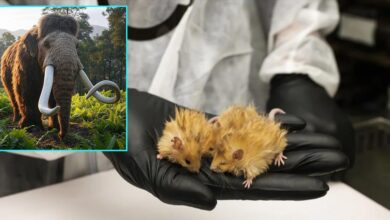
Colossal Woolly Mice Grew the Coat, Then the Mammoth Edit List Passed 150 Genes and the Calf Calendar Left 2028


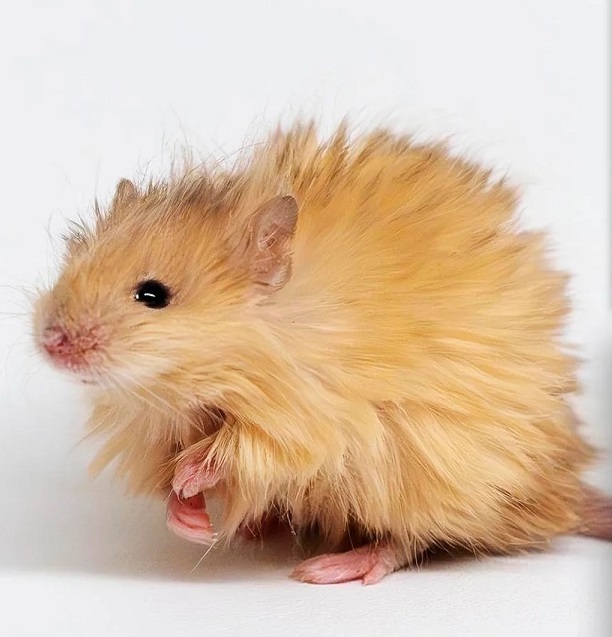
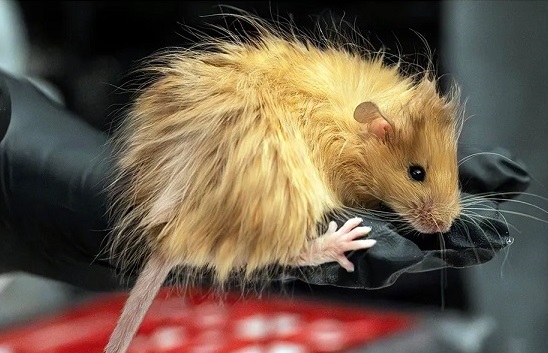
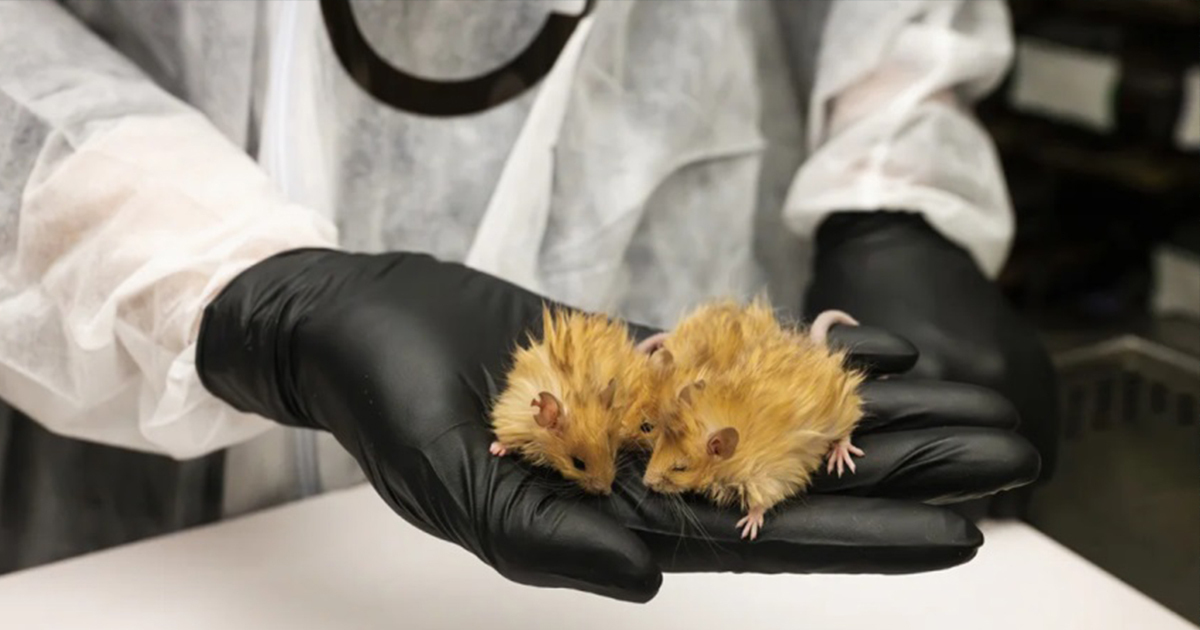
Los animales que hicieron famosas Biociencias colosales en una sola tarde no eran mamuts. Eran ratones. La compañía Dallas editó capas y genes de grasa en ratones de laboratorio ordinarios hasta que los cachorros crecieron largos, sucios, pelos lanosos y un metabolismo que el equipo dijo que estaba apuntado al frío. El primer litro llegó en octubre de 2024. El público revela aterrizado el 4 de marzo de 2025, el mismo día un preprint subió describiendo múltiples ediciones a través de unos diez genes ligados al cabello y el metabolismo de los lípidos. La compañía cuenta más tarde poner el brood a 38 cachorros vivos. Empezaron a llamar a dos de ellos Chip y Dale. Los abrigos se hicieron realidad. La gente apareció en el laboratorio queriendo uno. Coloso no los vende.
Chief executive Ben Lamm has been blunt about what that photograph is worth. «The woolly mouse project doesn’t bring us any closer to a mammoth, but it does validate the work we are doing on the path to a mammoth,» he told TIME. The validation was speed. A mouse generation is measured in weeks. An Asian elephant pregnancy runs about 22 months, and an elephant generation eats most of two decades. If the question is whether a coat edit fires, you do not start with a surrogate that costs as much as a house. You start with a rodent that fits in a glove.
On September 26, 2026, the calendar behind that rodent moved again. Lamm told TIME the first mammoth-like calves are a prospect for the early 2030s. «We don’t have a hard date. Not 2036, but not 2030 either.» The New York Post’s write-up of the same recalibration said the company is now leaning on artificial intelligence to reconstruct ancient DNA and design the edits, and that the job turned out harder than the dire-wolf project Colossal unveiled in 2025. Early pitches talked about roughly 60 genes in an Asian elephant nucleus. The working figure is now more than 150, including ear size, not just hair.
A Coat Is Not a Species
El científico jefe Beth Shapiro ha tenido cuidado con el mito de que alguien metió tejido de mamut en un ratón. El equipo comparó el ADN de mamuts de restos permafrost, incluyendo material de una carcasa congelada encontrada en Siberia en 2018, con ADN de elefante asiático, encontró cambios que se mapearon en genes ratones ya tienen, y editar varios objetivos a la vez. La revista Science pasó por la lista práctica. Romper FGF5 alargó el cabello. Edita a FAM83G, FZD6, o TGM3 produjo silbidos rizados y un abrigo ondulado. Un gen de melanina cambió la piel de negro hacia el oro. Una variante similar a los mamuts de FABP2, un gen de metabolismo de grasa, no cambió, en la pequeña muestra, el peso promedio del cuerpo. Las pruebas de comportamiento de tolerancia fría no se habían llevado a cabo cuando se anunciaron los ratones. El fenotipo era la foto de prensa. La fisiología seguía siendo una lista para hacer.
Muchos embriones nunca se convirtieron en cachorros. Shapiro dijo que los que nacieron estaban vivos y sanos como del anuncio, y que una gran parte de ellos llevaba cada edición que el equipo intentó. Los autores presentaron una patente. También revelaron que trabajan para Colossal o su software spinout Form Bio. Eso no es un escándalo secreto. Es una razón para leer el preprint como resultado de la empresa hasta que laboratorios independientes lo replican. Un ratón dorado con pelo de cinco centímetros es un animal real. No es un mamut revisado por pares.
Lamm’s fundraising sentence was larger than the data. Engineering «complex genetic combinations that took nature millions of years to create» is a keynote line. The scientific sentence is smaller. Multiplex editing can stack coat traits in a well-known lab species without immediately killing the host. That is a legitimate step. It is also a step you can finish without ever touching an elephant.
The Year the Date Kept Two Calendars
The slippage is the story, and it is recent enough that Colossal was still selling the old date inside the same year. In February 2026, Lamm told Den of Geek the project was «on track for 2028,» with more than two years of work already done on elephant egg retrieval and nature preserves quietly earmarked for the animals. In May 2026, Rolling Stone quoted the same target: late 2028, «and we are on track for that.» He also said the company was pushing an artificial womb so a mammal could be born without a surrogate, and that the hardware was close enough to talk about in the same breath as the calf. By late summer and again on September 26, the public number had walked into the early 2030s, and the edit list had jumped because elephant-scale work was harder than the canid project.
That is not a rounding error. It is the difference between a birth that arrives while the original pitch deck is still circulating and a birth that arrives after another funding round, another election cycle, and another cage of mice. Lamm has called the deeper gene list «a little weird and Frankensteiny» and argued the animal at the end would be a better product because of it. Investors can hear «better product.» Biologists hear «we do not yet have the nucleus.»
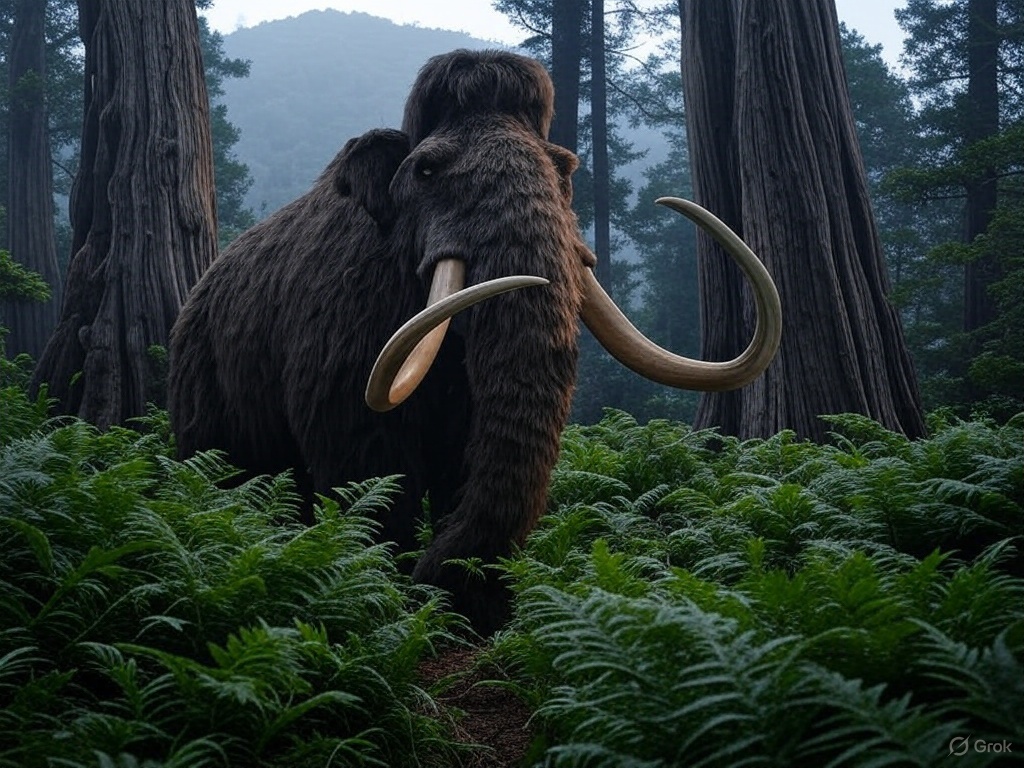
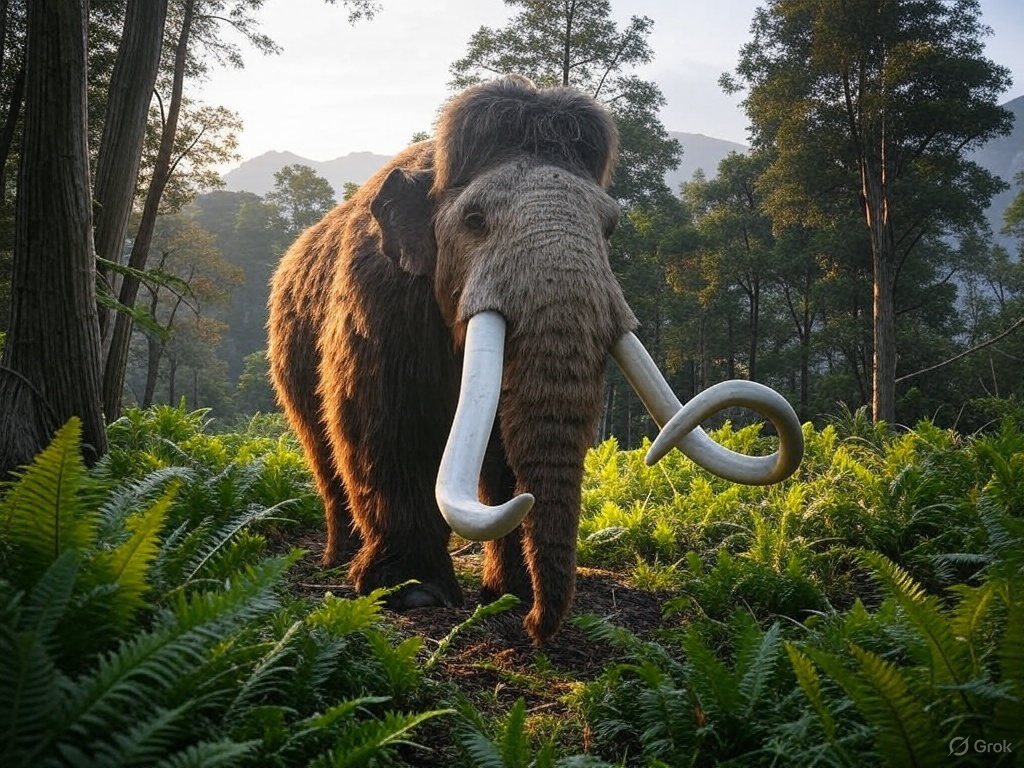
In April 2025 the company unveiled pups it called dire wolves, built from gray-wolf cells and a short list of edits guided by ancient DNA, and it talked up cloned red wolves. The sequence made the mouse look like a footnote. Outside geneticists spent the year saying a reconstructed canid with selected traits is not a recovered Pleistocene predator, just as a cold-adapted Asian elephant would not be a recovered mammoth. Colossal’s answer has stayed consistent. The product is the phenotype, not a carcass thawed in a clean room. Shapiro has said she is confident the team can produce something that looks and acts like a mammoth and fills a niche. Confidence is not a calf.
An Endangered Surrogate for an Extinct Pitch
Asian elephants are closer, genetically, to woolly mammoths than they are to African elephants. That fact is why the plan runs through them. It is also why the plan is ethically cramped. Asian elephants are endangered. A 22-month surrogate pregnancy in a species whose reproductive biology is still poorly mapped puts a scarce living animal in service of an extinct marketing image. Colossal says egg-retrieval work will help captive breeding even if the mammoth brief slips, and that an artificial womb would take the pregnancy out of a living elephant. Talk is not a uterus. Until that device works at the scale of a calf that can weigh hundreds of pounds, the path still runs through a pregnant elephant.
The climate slide in the deck is familiar. A heavy, cold-proof grazer, the company argues, would knock down shrubs, pack snow, and keep Arctic permafrost frozen. Pleistocene Park in Siberia has tested a low-tech version with living herbivores. The hypothesis is not nonsense. A handful of engineered elephants is not a mammoth steppe. Moving the date admits the calendar. It does not fix the ecology.
Colossal was founded in 2021 by Lamm and Harvard geneticist George Church. The mice arrived. The calf did not. By 2026 the company was being described at a valuation above $10 billion. A Dallas lab does not shorten an elephant pregnancy. It does make a blond mouse go viral.
What Is Actually Alive
Chip, Dale, and the pups that followed proved that a stacked coat edit can be born, weaned, and passed on. That is a result. It is not a mammoth, and Lamm has said so in the same interviews that promise one. The animal at the end of the pipeline, if it is born, will be an Asian elephant rewritten to look and metabolize more like a mammoth. It will not be a cloned corpse. It will not, by existing, restore a grassland that disappeared with the ice. It will test whether a company can keep a large engineered mammal alive long enough to call the press.
The AEGIS Alliance has covered other labs that sell a future ahead of the organism, from farm concepts drawn up for Mars to older arguments about what scientists are willing to call life. Ambition is not the problem. Treating a rescheduled birth as a birth is. A woolly pig has been promised as a larger test of hair and gland edits, with no public birth date attached. Until that animal or an elephant calf is standing in a photograph that is not a rendering, the living proof of this program is a shaggy mouse and a timeline that has already walked from 2027 to 2028 to the early 2030s.
Readers who want the science desk rather than the keynote can start at science news. The AEGIS Alliance will treat a calf as news when it is born. Until then the honest caption is the one Lamm already wrote. The mice validated a pipeline. They did not bring a mammoth closer in any sense a tundra would recognize.







There be at least 4 movies that show this is a bad idea and will not end well 💀
Var rädd om de djur som finns idag istället.
Down this road lays extinction, aye