Space Force Found Cold War Balloon Satellite S73-7 After 25 Years Off the Radar

On April 25, 2024, new two-line element sets started appearing for object 7244. Four days later Jonathan McDowell, the Harvard-Smithsonian astrophysicist who keeps the public books on what is in orbit, congratulated an unnamed analyst at the U.S. Space Force’s 18th Space Defense Squadron. The object was S73-7, the Infra-Red Calibration Balloon, a Cold War experiment that had been off the catalog for 25 years. It is not a spy that woke up. It is a failed balloon, or possibly the canister that was supposed to release one, and it has been circling for half a century without ever doing the job it was launched to do.
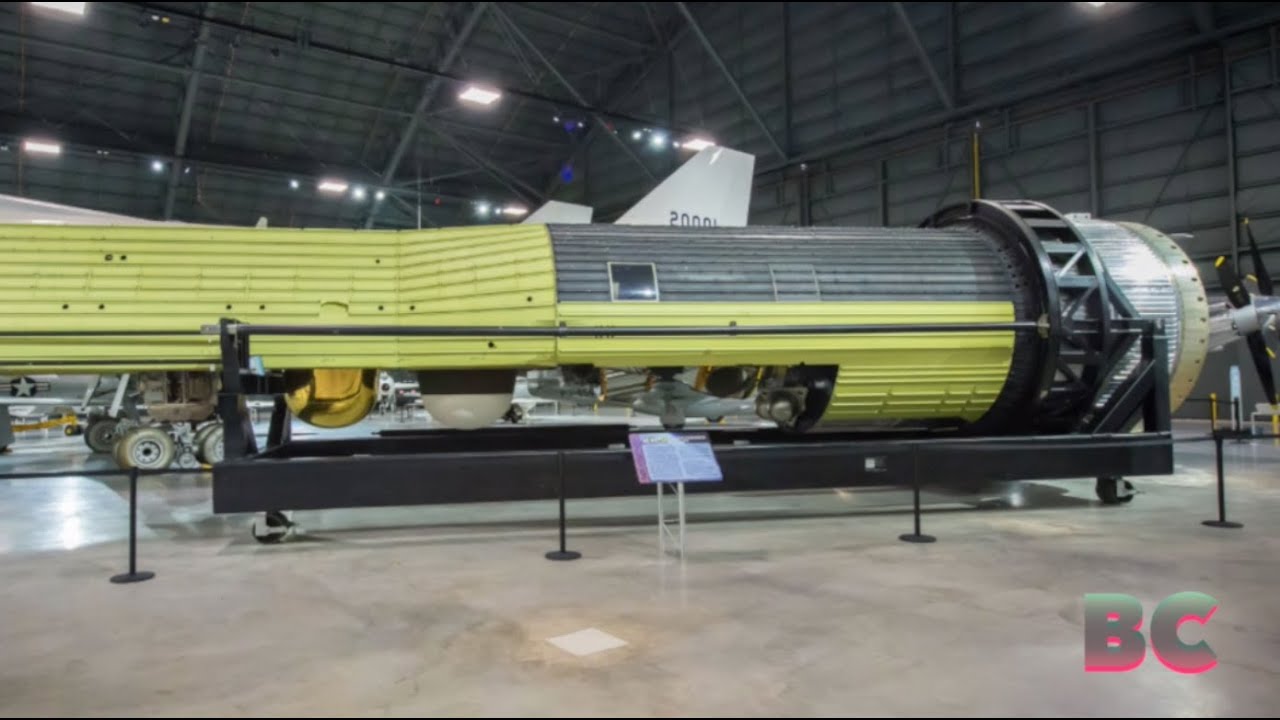
S73-7 rode to space on April 10, 1974, as a piggyback on a KH-9 Hexagon reconnaissance satellite, one of the film-return monsters the National Reconnaissance Office flew under the cover name Hexagon. A Titan IIID put the stack up. The Air Force Space Test Program, with ARPA in the paperwork, had packed a 66-centimeter calibration target into the ride, about 26 inches across and, in McDowell’s accounting, about 184 kilograms. A pair of solid motors called the ARPA Transfer System kicked S73-7 out of the Hexagon’s orbit and up into a nearly circular path about 800 kilometers up, roughly 500 miles. The plan was simple enough to draw on a napkin. The sphere would inflate. Ground sensors watching in the infrared would use the known size and the known temperature behavior of that balloon as a yardstick. The inflation failed. What was left was a small, not very metallic object with a miserable radar cross-section, on an orbit high enough that the atmosphere is in no hurry to pull it down.
Lost twice, on purpose or by physics
Radars did see it in the 1970s. Then it vanished. It flickered back into the catalog in the 1990s, long enough for analysts to convince themselves the object was still the 1974 balloon, and then it vanished again. McDowell’s plot of known positions, which he posted with the rediscovery note, shows those two holes: a gap across the 1990s into the early 2000s, and a longer silence from around 2002 until the April 2024 elements. Interesting Engineering, reading that plot against the original altitude, put the drop at roughly nine miles, from about 500 miles to about 491. SYFY’s later write-up used the same figure. At that rate the balloon, or the piece of hardware standing in for it, is decades away from any fiery reentry. Finding it was not a rescue. It was a bookkeeping correction.
«The problem is that it possibly has a very low radar cross section,» McDowell told Gizmodo. «And maybe the thing that they’re tracking is a dispenser or a piece of the balloon that didn’t deploy right, so it’s not metal and doesn’t show up well on radar.» That sentence is the whole difficulty of space traffic management in one clause. The catalog does not contain objects. It contains radar returns that a person or an algorithm has decided belong to a named object. A soft, half-inflated polymer shell, or a small dispenser that rode along and then became the only reflective scrap, can sit in the noise for years while a confident label gets attached to a different piece of junk, or to nothing. The 18th Space Defense Squadron, at Vandenberg Space Force Base in California, is the unit that tries to keep those labels honest for every nation that flies. In the spring of 2024 its public catalog held on the order of 20,000 to 45,000 tracked objects depending on who was counting and what size they counted, most of them dead. S73-7 was one of the dead ones that had also been missing.
There is no radio on S73-7. It cannot answer a ping. Unlike a zombie satellite that starts transmitting again after a long silence — NASA’s IMAGE spacecraft, NORAD 26113, is the famous amateur rediscovery — a calibration balloon that never inflated has nothing to say. You find it the way the 18th finds everything that does not cooperate: a radar or an optical sensor gets a track, the orbit is fitted, and somebody recognizes that the fitted orbit belongs to a catalog number that has been blank. McDowell, who is not in the Space Force, saw the new elements the way outside researchers see them, on the public feed, and said which analyst deserved the credit without knowing the name. The squadron does not generally introduce its people. The identification is the announcement.
A crowded sky that the 1974 balloon was never meant to share
The European Space Agency’s Space Environment Report 2026, built on data through the end of 2025, describes a different sky from the one Hexagon flew through. In 2025 there were more than 300 launches and more than 4,000 new payloads. On a typical day about ten objects went up, and more than three intact objects came back down. Large constellations and rideshare flights mean a single rocket now unpacks a crowd. Fragmentation debris and dead payloads are both growing. ESA also flagged a rise in objects detected but not yet tied to a known origin, which is a polite way of saying the sensors see more than the catalog can name. The disposal fashion has shifted, on paper, from a 25-year rule for clearing low Earth orbit to a five-year target. That helps the altitudes where most new satellites live. It does almost nothing for an 800-kilometer object launched in April 1974. At that height, a failed balloon is a permanent neighbor.
Collision avoidance only works on objects you can name and propagate. A satellite operator can dodge a cataloged rocket body if the conjunction message arrives in time. The operator cannot dodge a return that the squadron has not yet decided is object 7244 rather than a new fragment from a breakup. S73-7 is too small to be the nightmare scenario by itself. A 26-inch soft target at 800 kilometers is not going to shred a Starlink shell the way a spent upper stage can. The class it belongs to is the problem. Small, low-metal, odd-shaped debris is exactly what phased-array radars lose, and it is exactly what keeps showing up inside the «unidentified» bin of the European reports. Every time one of those bins gets a name, the avoidance software gets a rock it can steer around. Every time one stays blank, the software is guessing.
A yardstick that never opened
The original job was humble. Infrared sensors on the ground and in other programs needed a target of known size to calibrate against, the way a photographer uses a gray card. The Hexagon bus was already going to the right neighborhood, so the calibration balloon hitchhiked. When the balloon did not open, the sensors lost their gray card and the catalog gained a ghost. McDowell’s second note on the thread fills in the hardware: the Space Test Program and ARPA experiment, the two solid motors, the 800-kilometer circular orbit, the failed deploy. Nothing in that chain suggests a secret capability that sprang back to life in 2024. The romance of a «lost spy satellite» is a headline that the KH-9, flying on the same rocket, actually deserves. S73-7 was the attachment. The attachment is what the squadron found, because the attachment is what the physics still offers a radar.
Keeping the identification is the harder half. Orbits at 800 kilometers are stable, which is why a 1974 object is still up, and stable orbits are also where small errors compound into a missed pass. If the tracked piece is a dispenser rather than the balloon, its mass and its area are not the numbers in the 1974 press sheet, and the drag model is wrong by a little every week. A little, over the next 25 years, is another gap in the plot. The 18th can hold object 7244 only as long as sensors keep getting a return and analysts keep refusing to let that return dissolve back into the anonymous debris cloud. That is less glamorous than a recovery, and it is the actual work.
The AEGIS Alliance covered the other half of talking across space when NASA’s Psyche spacecraft lasered a message home from deep space, and the long-duration side of military spaceflight when the X-37B came back after 434 days. What you would eat if the destination were Mars is a different problem, taken up in the Wageningen intercropping tests in simulated Martian soil. More of this beat is in Ciencia y U.S. News. McDowell’s identification notes are the primary public record. Gizmodo’s interview has the radar-cross-section warning in his words, and the ESA Space Environment Report 2026 is the census of the sky that balloon now shares.
Object 7244 is back on the list. It still cannot calibrate an infrared sensor, because it still is not the round, predictable target the 1974 engineers packed beside a spy satellite. What it can do is remind the people who move live spacecraft that the dangerous object is not always the one with a name people remember. Sometimes it is a failed balloon that the catalog misplaced, twice, and could misplace again the moment the return gets weak.