The Vatican Kept the Books a Meme Says It Deleted in 1684: Printers, a Bible Society, and the 66-Book Myth

A screenshot still circulates that treats 1684 as the year Rome reached into the King James Bible and tore fourteen books out. The story is tidy. It has a villain, a date, and a round number. It also points the accusation at the church that spent the Reformation insisting those books stay.
Open a 1611 King James and the count is not the sixty-six books on a modern Protestant shelf. Between the Old Testament and the New, the printers set a separate section they called the Apocrypha. The titles readers still recite from the meme are 1 Esdras, 2 Esdras, Tobit, Judith, the additions to Esther, the Wisdom of Solomon, Ecclesiasticus (also called Sirach), Baruch with the Epistle of Jeremiah, the Song of the Three Holy Children, Susanna, Bel and the Dragon, the Prayer of Manasseh, 1 Maccabees, and 2 Maccabees. Count the headings one way and you get fourteen. Count Baruch and the letter apart, or the Daniel additions apart, and the number moves. The meme froze one printer’s table of contents and called it a Vatican raid.
That table of contents is not the Catholic list. At the fourth session of the Council of Trent, on April 8, 1546, Rome confirmed the deuterocanon — Tobit, Judith, Wisdom, Sirach, Baruch, 1 and 2 Maccabees, and the Greek additions to Esther and Daniel — and anathematized anyone who rejected them. Trent did not canonize 1 Esdras, 2 Esdras, or the Prayer of Manasseh. Those three sit in the King James Apocrypha and in parts of the broader Orthodox tradition. They are not the books a Catholic Bible treats as scripture. A theory that says the Vatican deleted a list containing books the Vatican refused to canonize has already named the wrong editor.
The Protestant cut happened in public, and it happened in English. Article VI of the Thirty-Nine Articles, the Church of England’s 1571 doctrinal statement, says the church reads the Apocrypha «for example of life and instruction of manners» but does not use it to establish doctrine. The Westminster Confession, completed in 1647 for the Reformed churches, is blunter: the Apocrypha is not to be received as canonical or used as the rule of faith. Martin Luther, decades earlier, had not thrown the books away. His 1534 German Bible printed them in their own section. He ranked them. He did not pulp them. A walk through Luther’s own prefaces shows Judith and Tobit still sitting in a Bible he supervised, described in language far warmer than the meme allows.
What changed the book in people’s hands was the price of paper and the policy of a society. Through the seventeenth and eighteenth centuries, some English editions kept the middle section and some dropped it because a thinner Bible was cheaper to bind and easier to sell. The decisive institutional move was not a Roman council. In 1826, after a pamphlet fight led in part by the Scottish evangelical Robert Haldane, the British and Foreign Bible Society’s committee stopped putting its money into Bibles that included the Apocrypha. Societies that wanted the society’s funding printed sixty-six books. By the late nineteenth century, that cheaper book was what most American Protestants meant by «the Bible.» Catholic pews still had the deuterocanon. Many Orthodox shelves had still more. Anglican practice stayed mixed. The absence people notice is real. The year 1684 and the Jesuit plot are not.

What the missing section actually contains
The Wisdom of Solomon, chapter 2, is the passage that keeps the argument alive after the publishing history is settled. The wicked, the text says, lie in wait for the righteous man, because he is inconvenient, because he opposes their works, because he claims knowledge of God and calls himself a child of God. Readers have treated those lines as a philosophical warning about power, as a portrait of persecution in the Greek-speaking Jewish world, and as a shadow that later Christian readers laid over the Passion. It is scripture in a Catholic Bible. It is absent from the sixty-six-book King James most Americans were handed. That split is a fact about canons. It is not a set of minutes from a meeting in 1684.
The books do other work the meme never mentions. First and Second Maccabees are the closest thing those centuries produced to a war chronicle of the revolt against the Seleucid empire, including the desecration of the Temple and the origins of Hanukkah. Tobit and Judith are moral narratives, read for centuries as stories about fidelity, courage, and the household, and rejected as history by scholars who treat their settings as composite. Sirach is a book of practical ethics, closer in feel to Proverbs than to a conspiracy. The additions to Daniel — Susanna, the Song of the Three, Bel and the Dragon — are courtroom drama, hymn, and polemic against idols. None of that requires a secret archive. It requires reading the section the cheap edition left out.
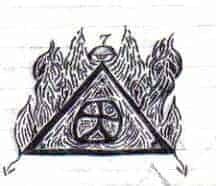
A second pile of claims should be labeled as a second pile. Solomon’s name was later recruited into grimoires, Masonic lodge lectures, and the iconography of pillars, triangles, and the all-seeing eye. Those traditions are real cultural history. They are not evidence that a seventeenth-century pope edited the King James Bible. The drawings that have lived on this page for years belong to that visual tradition of symbol and craft, and they belong with the rest of the hand work collected in the greater staff, the walking stick, and the old drawings. They are not a footnote to Trent.

None of this acquits the modern Vatican of the record it does own. Confirming a canon in 1546 is not the same act as moving abusive priests, fighting disclosure, and writing settlement checks. The AEGIS Alliance has followed that second record in the New Orleans church cases that became a $305 million reckoning, with eleven clergy kept off the public list after the deal. A false story about 1684 is not required to describe that history. Using the false story as a substitute is how a real archive stays unread.
The useful test is simple. If a post names fourteen books and the year 1684 and then blames Rome, check the list against Trent before sharing it. If the list includes 1 Esdras, 2 Esdras, or the Prayer of Manasseh, it is the King James printer’s section, not the Catholic decree. If the post never mentions the British and Foreign Bible Society, the Westminster Confession, or the price of a bound book, it is telling a shorter story than the one the paper trail supports. Catholic Bibles still carry the deuterocanon. Orthodox canons differ again, sometimes including 3 Maccabees, Psalm 151, and other texts the Western argument ignores. The people who share the meme have noticed a real gap on the Protestant shelf. They have the wrong year, the wrong institution, and a count that depends on how a typesetter broke the headings.

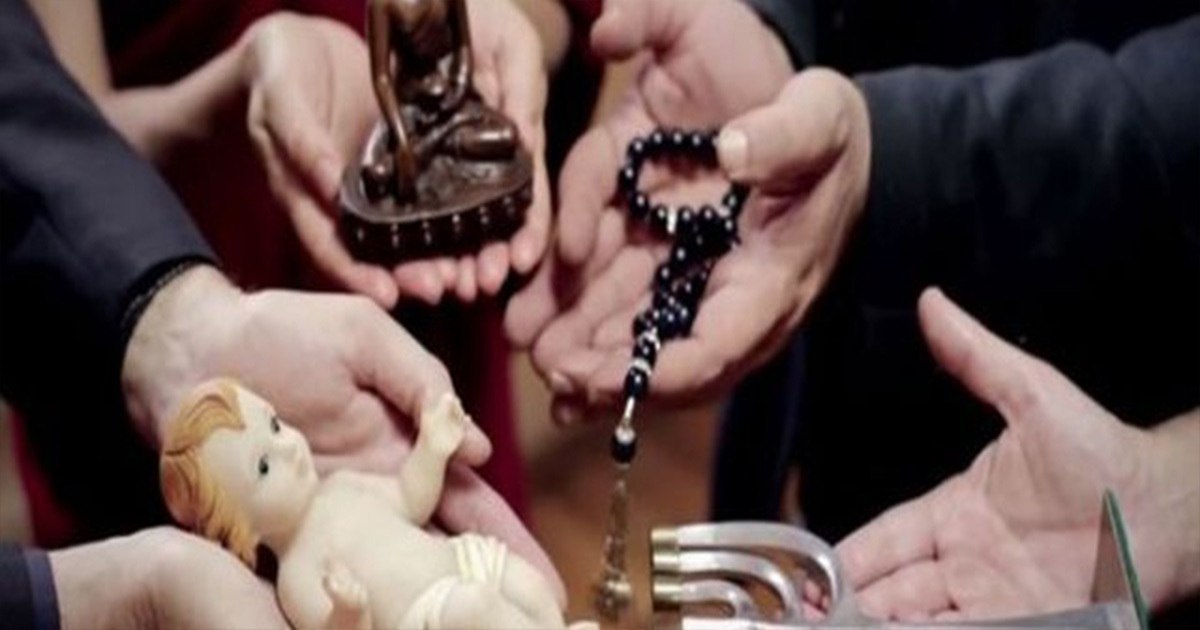
Read the books. The Wisdom of Solomon is not a screenshot. Maccabees is not a caption. A council minute from 1546 and a funding vote from 1826 are both public. One of them explains why a Catholic Bible is longer. The other explains why a Bible sold through Protestant societies got shorter. Rome did not hold the pen in the English print shop. The societies that paid for the paper did.
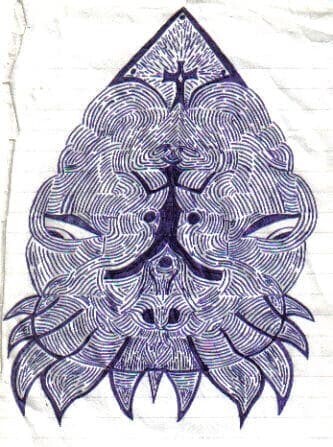
The same drawings sit at the bottom of this file because they were part of the page when it went up, including the pencil study of Nanaki, the red lion of Final Fantasy VII. For more from The AEGIS Alliance on religion, hidden history, and claims that travel farther than the documents, see The Unexplained Or Unconfirmed y The AEGIS Alliance News.
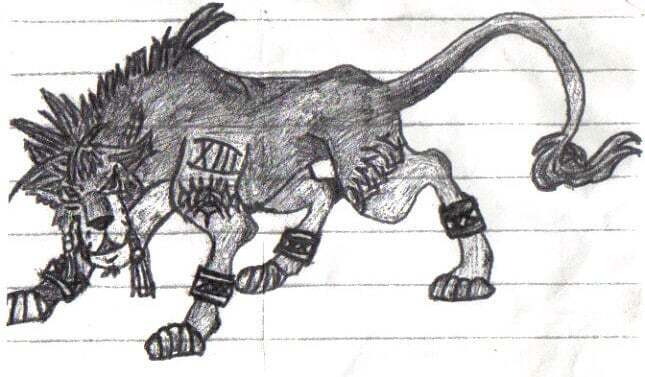
Nanaki / Red XIII from Final Fantasy VII. Hand drawing by Kyle James Lee.