Bronx Fiber Technician Lutalo Henderson Was Dismembered, Rolled Onto a Metro-North Train, and Burned in a Yonkers Cart

Just before 2 a.m. on August 5, 2024, a fire call came in for the south sidewalk of the Oak Street bridge, the seam where Yonkers meets Mount Vernon. Mount Vernon firefighters and Westchester County officers knocked the flames down and then stopped talking like they were on a routine rubbish fire. Inside a collapsible shopping cart was a human body. Hands were gone. Teeth were gone. The cart itself had been used as both a coffin and a torch.
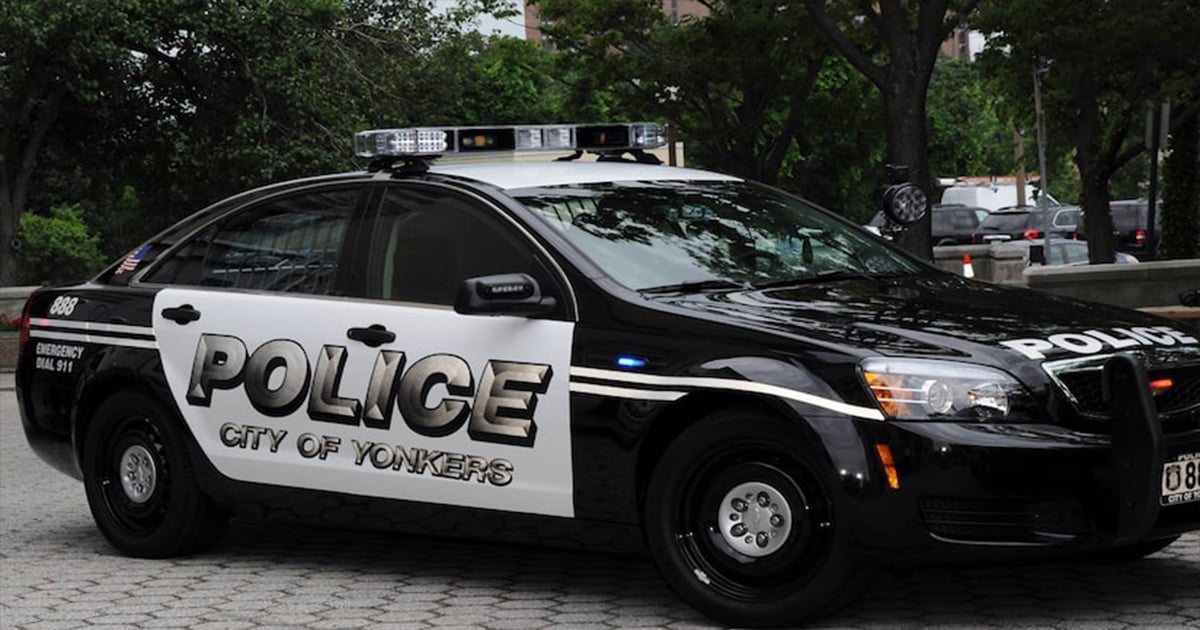
Yonkers Police marked the bridge as a secondary scene from the first hour. That choice mattered. Fingerprints and dental charts are the ordinary tools of identification, and both of those tools had been stripped off the remains. Because the burning happened in Westchester County while the killing had not, primary authority moved to the New York City Police Department. What looked like a random dump along a commuter corridor was, within a day, a Bronx homicide with a named victim and a walk-up apartment that still smelled like bleach.
A fiber-optics technician who rented a room to the wrong roommate
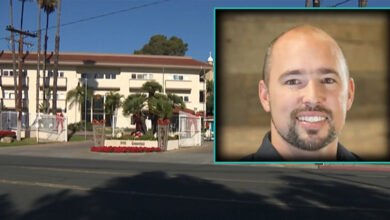
Lutalo Henderson was 46, a Bronx fiber-optics technician who neighbors later described as the kind of tenant who would help carry a package up the stairs. He lived in a five-story walk-up on Rogers Place in Longwood. Months earlier he had rented a room to Muhammad Aadil after the two men crossed paths at an occupational-safety training program. That arrangement is the quiet start of the case. It is also the part that does not fit the later spectacle of a shopping cart on a Metro-North platform. Henderson was not a stranger dumped by a passing crew. He was the man who had opened his own door.
Surveillance cameras did the work that missing hands could not. Investigators followed a matching cart from the Longwood building to a Metro-North station about a mile away, then north toward the Yonkers–Mount Vernon line. Late on August 5, NYPD executed a search warrant at the Rogers Place apartment. Officers recovered additional human remains. Law-enforcement sources said body parts were in the kitchen. Later charging documents and local reporting filled in the inventory that night crews had to bag: legs stored in a freezer, hands placed in a crockpot with bleach, a firearm, and narcotics. A neighbor told Spanish-language cameras that she had heard a heavy object being hauled down the stairs and a man’s voice telling another person to hurry. The building superintendent said he had worked the property for 34 years and had never expected a scene like that one.
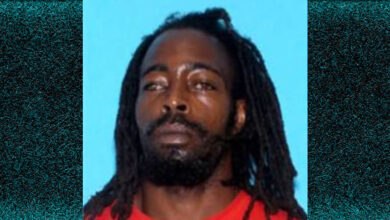
On September 23, 2024, Aadil, then 40, was arraigned in Bronx Criminal Court. Two days later, Bronx District Attorney Darcel D. Clark announced that a grand jury had indicted Aadil and Ronei Harris, then 18. Prosecutors allege that between July 27 and August 5, 2024, the pair killed Henderson after a dispute inside the apartment, dismembered him, wrapped the torso in trash bags, rolled it onto a Metro-North train in the shopping cart, and set the cart on fire under the Oak Street Bridge. The indictment describes legs cut below the knees, hands removed, and the jaw taken. Both defendants face second-degree murder, first-degree manslaughter, concealment of a human corpse, criminal possession of a firearm, and multiple drug counts. Aadil was remanded without bail. Harris was taken into custody by the U.S. Marshals Service Fugitive Task Force working with the NYPD.
„The defendants allegedly killed and mutilated a man, and then took some remains, in a shopping cart, on a Metro North train to Yonkers where they burned the cart,“ Clark said. „This was brutal disregard for a human being.“ Both defendants are presumed innocent unless and until a jury or a plea says otherwise.
An 18-year-old codefendant and a case that did not vanish
Local coverage after the second arrest identified Harris as a young woman and Aadil as her much older boyfriend. Relatives speaking to the New York Daily News called her an animal lover who had been pulled into Aadil’s orbit. That family portrait is not a legal defense. It is context for why an 18-year-old and a 40-year-old landed on the same murder indictment after a roommate dispute. The grand jury still charged both. The concealment count sits next to the murder count for a reason: the state is alleging not only a killing, but a planned effort to erase the body and move it across a county line on a public train.
The logistics are what keep the case in the crime news file instead of a one-day blotter. A collapsible cart is legal. A Metro-North ticket is legal. A late-night walk from Longwood to Melrose is ordinary. Stack those legal pieces on top of a dismembered technician and the crime becomes a study in how little infrastructure a pair of suspects needed. No stolen van. No private boat. A commuter railroad that runs on a published timetable.
The AEGIS Alliance has watched other New York-area cases in which the first public image of a death was a body that someone tried to throw away rather than a scene where the killing happened. The pattern is not unique to this borough, but the Oak Street bridge made the method impossible to ignore. Firefighters were not looking for a homicide when they rolled up. They were looking for a burning object on a sidewalk.
What the Bronx calendar actually shows
By the week of May 25, 2026, the Bronx District Attorney’s „cases of interest“ list still carried both names. Aadil and Harris were set down for an appearance on May 27, 2026, before Judge Clancy in Part 28, with ADA G. Suminski assigned, on second-degree murder. That line on a weekly calendar is a status date. It is not a verdict, a plea, or an acquittal. No widely reported trial result had been issued by that listing. Murder dockets in the Bronx move in months and years, not news cycles. Remand without bail means the older defendant has been sitting in custody while motion practice and discovery grind forward.
Readers who want the institutional file, not the rumor file, should treat three documents as the spine of the story: the Yonkers fire run from August 5, 2024; the NYPD search of the Rogers Place apartment that same night; and the September 25, 2024, indictment announcement from Clark’s office. Everything else — the neighbor on the stairs, the occupational-safety class, the crockpot, the freezer — sits on top of those three public acts.
Henderson’s work as a technician is not a color detail. Fiber crews keep the city’s cables alive. He was the roommate who paid rent and offered a room to a classmate. The people now charged with killing him allegedly used the same apartment as a cutting room and then rolled what was left of him onto a train that office workers ride every morning. That contrast is the new angle the first day’s headlines missed while they lingered on the shopping cart.
The AEGIS Alliance is following the prosecution in U.S. news as well as the crime desk. Related reporting on how violence hides inside ordinary buildings includes the federal sentencing of an Alabama youth tennis coach who used a charity-framed program as cover, and the older file on a teenager who installed her own cameras after adults refused to believe her. Those stories are not the same crime. They are the same warning: the first person who controls the door often controls the evidence.
Until a Bronx jury speaks, Aadil and Harris remain defendants. Henderson remains the man whose hands and teeth were removed so that a sidewalk fire would be harder to name. The cart is in an evidence locker. The bridge is still a bridge. The train still stops at Melrose. The indictment is the document that says none of that is a coincidence.