Brandmand Joseph Harris erklærer sig skyldig, efter at videoen fangede ham, da han slog en fange i håndjern.
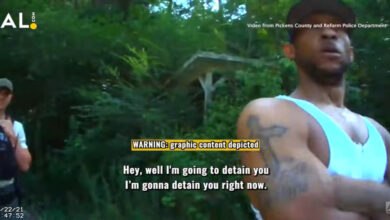
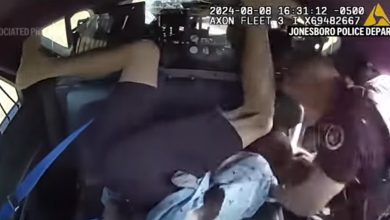
The back seat of a Jonesboro patrol car is a cramped, poorly lit box. On August 8, 2024, that box became the only courtroom that mattered for several minutes. Joseph Tucker Harris, then a five-year veteran of the Jonesboro Police Department, was driving Billy Lee Coram, 42, from a local hospital back to the Craighead County jail. Coram sat in a hospital gown. As the car rolled, he looped a seatbelt around his neck. When the vehicle stopped, Harris opened the rear door, punched Coram in the face, and slammed the door against his head. Craighead County Sheriff’s Deputy Chris Ditto later opened the same door to check on the man inside.
Jonesboro politichef Rick Elliott fyrede Harris næste dag, 9. august 2024, og posted patruljevogn optagelse til afdelingens egen YouTube-kanal. Elliott fortalte The Associated Press han var "chokeret og forfærdet" og at "forkert er forkert". Sheriffens kontor havde allerede indgivet en formel klage. AEGIS Alliance gennemgik optagelserne og den senere retssag. Båndet kræver ikke, at en pressefolk fortæller det.
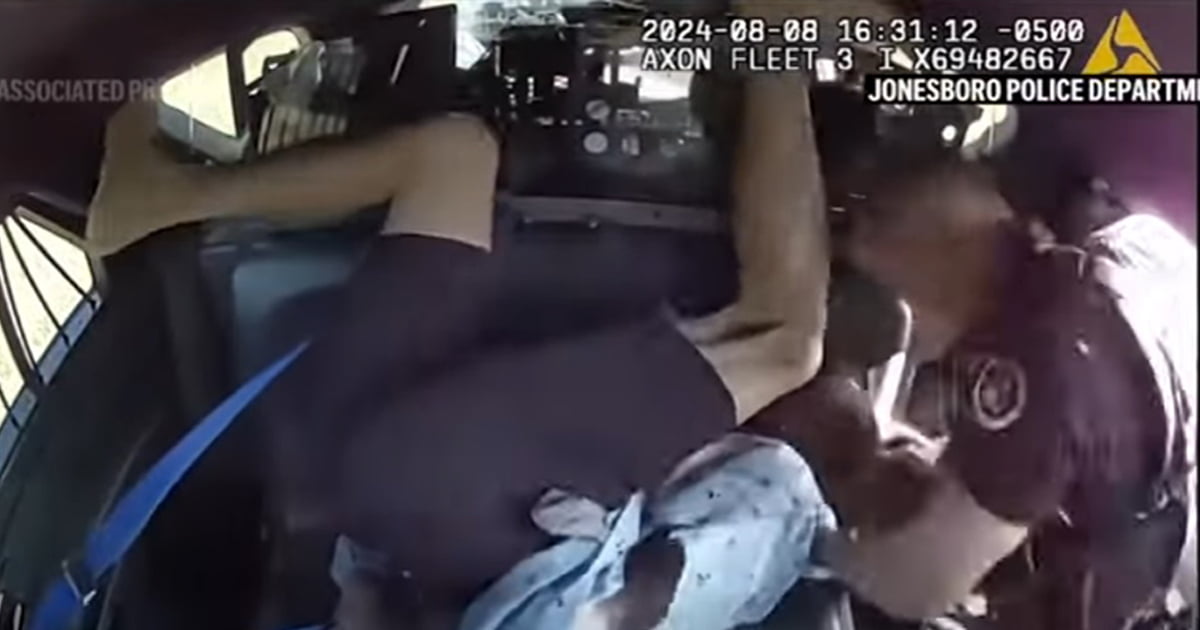
According to a federal civil complaint Coram later filed, he had been taken to the hospital after swallowing a baggie of fentanyl. He fled in a panic, then wrapped the belt around his neck while trying to gag himself and force the packet back up. That context does not rewrite the force that followed. Harris was transporting a restrained person. The camera was running. The department chose to publish the file instead of waiting for a leak, a rarity in politiansvar tilfælde AEGIS Alliance har fulgt i årevis.
Fra samme dag skydning til en januar anholdelse og en november bøn
On August 15, 2024, 2nd Judicial District Prosecuting Attorney Sonia Hagood asked the Arkansas State Police to take the use-of-force file. Criminal Investigation Division special agents arrested Harris on January 21, 2025, after he turned himself in at the Craighead County Sheriff’s Office. The initial charging document listed felony aggravated assault, felony filing of a false report with a law enforcement agency, and misdemeanor third-degree battery. He posted a $15,000 bond and walked out the same day.
The criminal case did not go to a jury. On November 18, 2025, Harris stood in Craighead County Circuit Court and pleaded guilty to the false-report felony and the battery misdemeanor. The aggravated-assault count disappeared in the bargain. Circuit Judge Scott Ellington sentenced the 29-year-old Hickman, Kentucky, native to 120 days of confinement — 30 days in the Craighead County Detention Center and 90 days of monitored home confinement — plus 48 months of probation. As part of the deal, Harris permanently surrendered his Arkansas law-enforcement certification. Prosecutors noted he was a first-time offender. Craighead County NAACP chapter president Shamal Carter said the charges showed that no officer is above the law. The sentence, measured against the video, is the fact that still divides Jonesboro.
False-report charges in police cases are often the quiet half of the file. An officer who writes that a detainee “resisted” after a camera shows something else is not only defending a punch. He is writing the official story that later travels into booking sheets, jail classifications, and civil discovery. Hagood’s office kept that count in the plea. The assault felony did not survive. That split is how many American use-of-force prosecutions now end: a paper crime that is easy to prove on a report, a violence count that is bargained down, and a certification that is surrendered so the officer never wears a badge in that state again.
En føderal civilsag, der overlevede den kriminelle fil
The criminal sentence is not the last proceeding. Coram sued Harris, the city of Jonesboro, and Chief Elliott in federal court, alleging a violation of his constitutional rights under the Fourth and Fourteenth Amendments. Public reporting on the docket, including Associated Press coverage of the January 2025 arrest, placed a trial setting in May 2026 in Little Rock. As of this writing, no widely posted verdict, settlement figure, or dismissal order has closed that civil file. Whether a jury finds the city and its former chief liable is a separate question from the state plea. Municipal liability turns on policy, training, and whether supervisors had reason to expect this kind of force. Elliott’s same-day firing and public release of the tape will be exhibits for both sides.
Body-kamera og instrumentbræt optagelser forbliver blandt de få værktøjer, der lader offentligheden se, hvad der sker i ryggen af en cruiser. AEGIS Alliance har sporet dette mønster i andre tilfælde, herunder en teenager der installerede skjulte kameraer fordi ingen voksen ville tro hendeog denne Jonesboro-fil sig selv. Kameraet bestemmer ikke skyld. Det bryder det sædvanlige argument om, at offentligheden ikke kan vide, hvad der skete, når døren lukker.
Jonesboro is not an anonymous department. It is the largest city in northeast Arkansas, sitting on Interstate 555, with a police force that answers to a chief who chose to fire first and explain later. That choice is why this case moved faster than most. It is also why the light criminal sentence landed so hard. A department that posts its own officer punching a man in a hospital gown cannot later claim the public misunderstood the moment. The public watched it.
Hvad båndet efterlader på bordet
Use-of-force policy in most American agencies talks about objective reasonableness, the Graham v. Connor test, and the duty to intervene. Deputy Ditto opening the door is the intervention frame in this file. Harris opening the door and throwing punches is the force frame. Coram wrapping a belt around his neck is the medical-and-safety frame. Those three frames do not cancel one another. A suicidal or drug-sick detainee can still be a person the Constitution protects from a gratuitous strike. A first-time offender can still lose a career. A city can still face a civil jury after its prosecutor takes a plea.
Harris kan aldrig mere tjene som politibetjent i Arkansas. Den bar er ægte. Det er også den billigste form for ansvarlighed, en stat kan pålægge, fordi det koster byen ingenting og efterlader den civile klage til at gøre resten af arbejdet. Læsere, der følger AEGIS Alliance United States news og kriminalitet skriveborde vil genkende mønsteret. Video ankommer. En høvding taler. En officer er fyret. Måneder senere en bøn er skåret. År senere en civil docket enten betaler eller forsvinder.
The Jonesboro tape is short. The legal trail is not. Between August 8, 2024, and the November 2025 plea, the file traveled from a hospital loading dock to the Arkansas State Police, a county jail booking window, a circuit courtroom, and a federal complaint in Little Rock. Coram remains the person who was in the back seat. Harris remains the person who opened the door. The camera remains the witness that neither of them can cross-examine away.
For mere om, hvordan afdelinger håndterer deres egne optagelser, se AEGIS Alliance rapportering om officiel forsømmelse og i tilfælde, hvor afdelingen offentliggjorde beviserne mod sig selvBagsædet er stadig en kasse. Forskellen i Jonesboro er, at nogen lod kameraet være tændt.