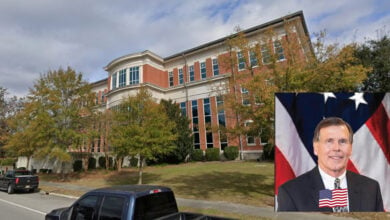

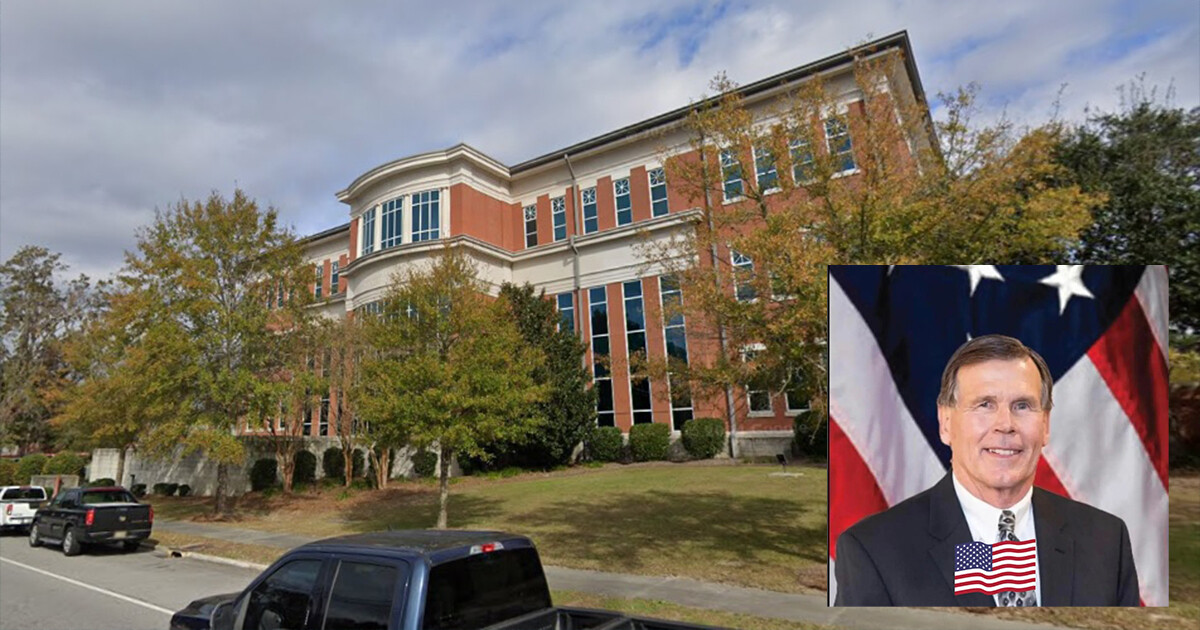
State Court Judge Stephen Russell Yekel was found dead inside the Effingham County Courthouse in Springfield, Georgia, on the morning of December 31, 2024. He was 74. It was supposed to be his last day associated with the office after he lost a re-election bid. A deputy found him between 10 and 10:30 a.m. Court was not in session. The building closed. Colleagues were kept out of the wing while the sheriff’s office opened a death investigation.
Sheriff Jimmy McDuffie told local stations the judge had died the night before and that investigators believed the death was self-inflicted. The Georgia Bureau of Investigation was asked to handle the autopsy. The AEGIS Alliance is not going to reconstruct the scene or treat the manner of death as a puzzle for readers. People who are struggling can call or text 988 in the United States and reach the Suicide & Crisis Lifeline.
在东南乔治亚的法庭度过了一生
Yekel was born in Atlanta on March 11, 1950. He went to Gordon Military College, then Auburn University, where he earned a bachelor’s degree in criminal justice in 1973 and joined Tau Kappa Epsilon. He studied law at Atlanta Law School while working as a special agent and investigator for the State of Georgia and was admitted to the bar in 1976.
The next half-century stayed inside the same region. He spent three years as a Chatham County assistant district attorney, opened a Savannah practice in 1980, and took on work that included death-penalty certified defense. He served as judge pro tem in Recorder’s Court from 1993 to 2005 and in Juvenile Court from 2000 to 2005. In 1995 he was legal counsel to Savannah’s mayor. In 2005 he became chief conflict defender for the state’s southeast region, covering 32 counties. His family and the funeral home said he represented clients in more than 500 cases over 17 years in that role.
In 2022, Effingham County voters elected him state court judge. That bench handles misdemeanors, certain civil matters, and the unglamorous volume that keeps a county moving. It was, his obituary said, the job he had wanted. He moved to the county in 2001 and worked with Effingham Heroes, a volunteer group that supports first responders. He had also served as president of the Islands Jaycees, sat on the board of the Coastal Center for Developmental Services, and led the Savannah Auburn Club.
他活了下来的有四个孩子:布莱克,布雷特,肖恩和阿什利,还有佛罗里达和萨凡纳的家庭. 2025年1月11日,在林康的斯德克兰与儿子殡仪馆举行礼拜会. 家人要求想要纪念他死亡的人考虑一种心理健康慈善,而不是花.

任期的最后一周
耶克尔为同一席位而输了2024年的比赛. 选票 后来注意到12月2日写给政府的信. 布赖恩·肯普要求辞职,从12月30日起,也就是任期结束前的一天. 这一请求未获接受。 州长办公室没有公开对书面文件提起诉讼。 它表示哀悼。
NBC 新闻, 世贸组织C,以及 保险 reported the discovery and the sheriff’s preliminary description. Those dispatches are the official first draft. This newsroom is not adding scene detail that does not serve the public. A courtroom is a workplace. A death inside one is a personnel emergency, a building-security event, and a family trauma at the same time.
Losing an election after two years on a bench a lawyer spent decades trying to reach is a blow. It is not an explanation. Courts and commenters who turn every judicial death into a parable about “the stress of the robe” usually do so without sitting with the family. Yekel’s family asked for room. They also pointed people toward mental-health help. Both requests can be honored in the same article.
法庭欠在那里工作的人多少
Judicial isolation is a known occupational hazard. The work is adversarial. Errors are public. Asking for help is still treated in some legal cultures as a weakness that opponents will use. Georgia, like every other state, has lawyer-assistance programs and judicial wellness language on paper. Paper is not a colleague who notices that a judge’s last week in the building should not be spent alone after hours.
This is not a policy essay disguised as an obituary. It is a note that the same institutions that order evaluations and treatment for defendants rarely build the same off-ramps for their own. When a death happens inside the building, the least a county can do is close the wing, call the GBI, and stop the rumor mill from writing the autopsy.
The sheriff’s office kept the investigation. The medical examiner’s findings belong in an official report, not in a comments section. If those findings are released in a form that changes the public record, The AEGIS Alliance will update from that paper. Until then the facts that can be stated without cruelty are these: a 74-year-old state court judge was found dead in his courthouse on the last day of his term, authorities opened a death investigation, and a county that had just voted him out of the job had to mourn him in the same building.
本台有关法院和公职人员生活在 美国新闻 和 政治关于格鲁吉亚法院以民事判决而不是葬礼结束的另一种故事,见: the Atlanta taser verdict against officer Jon Grubbs.
A courthouse that should have been hosting a quiet last day instead hosted crime-scene tape. The people who appear in that building as defendants, clerks, and lawyers deserved a functioning court on December 31. The man who held the office deserved a last day that was not an investigation. Neither of those things happened. The record that remains is a career of defense work, a short elected term, a family that asked for dignity, and a lifeline number that still works after the cameras leave.
Georgia’s lawyer-assistance culture has improved on paper. Judges still work alone at night in buildings that empty after the last calendar call. A county that has just voted a judge out of office should still have a protocol for the last week: who checks the building, who calls if a light is on, who is allowed to be there after hours. Those protocols are unglamorous. They are also cheaper than a death investigation on New Year’s Eve. The AEGIS Alliance is not assigning blame to a clerk or a deputy. It is saying the workplace failed a man who had spent fifty years inside it.
People who need help can call or text 988. That is the last useful sentence in this file.








vaxxed