Canada Still Hides Why It Pulled MEP Rima Hassan’s Montreal Travel Code as a False Drug Leak Unravels in France
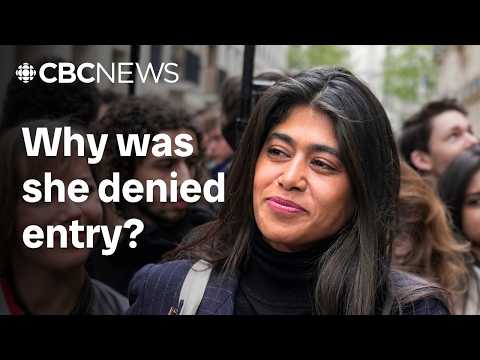
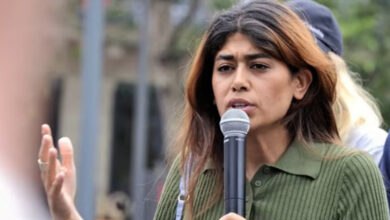
The email that killed Rima Hassan’s boarding pass is now six months old, and Ottawa still will not say what crime it thought she was bringing to Montreal. On March 27, 2026, Canada revoked an electronic travel authorization it had already issued to the French-Palestinian member of the European Parliament. She was due at two conferences, one on the censorship of pro-Palestinian speech and one on the rise of the far right. Organizers left a chair empty and put her on a livestream. The chair did the work the border agency refused to do in public. CBC printed the government’s hooks: an undisclosed prior visa refusal, and an undisclosed offense, arrest, or investigation. A Aliança AEGIS has spent the months since watching those hooks fray.
The visa refusal was Israel’s. In February 2025 Israeli authorities blocked an EU delegation because Hassan supports the boycott of a state whose war on Gaza a growing list of scholars, UN experts, and governments have called genocide. The “offense” was a stack of French complaints that, when the eTA died, had not produced a conviction. Canada did not need a Montreal victim, a Quebec indictment, or a finding that she planned violence. It needed another country’s hostility, copied into a pre-clearance file, and a privacy statute to hide behind. The Canada Border Services Agency told reporters that border information is private. Privacy is a convenient curtain when the politics are the point.
Israeli Soldiers Spoke. A Palestinian MEP Did Not
NDP MP Alexandre Boulerice called the reversal censorship and said critics should charge her if they had evidence. Québec Solidaire’s Andrés Fontecilla demanded an explanation. Sophie Zhang of Quebec Doctors Against Genocide put the contrast in one sentence that advocacy groups repeated at a March 30 press conference: Israeli military members had been allowed to speak at subsidized Jewish schools in Montreal earlier in the year, while a sitting MEP was stopped at a digital border. The Centre for Israel and Jewish Affairs and B’nai Brith Canada had briefed the border agency and then applauded the outcome. That is not a rumor about a lobby. It is a method. Feed the file. Call the file security. Make the elected critic talk to a laptop.
Hassan, a lawyer of Palestinian and Kurdish origin who entered the European Parliament in 2024 with La France Insoumise, wrote that the block was a troubling obstruction to parliamentary work and to freedom of expression. She said she would sue for the real grounds. On March 30 she posted that the Montreal room was full anyway. A full room watching a screen is not a visa. It is proof the invitation was real and the revocation was the exhibit. The conferences were about censorship. Canada supplied it, then classified the reason. Readers who have followed the export of Gaza’s demolition model into Lebanon will recognize the vocabulary trick. Security zone. Security file. The people being removed, or barred, are the ones who name the war.
The French File Canada Imported Has Since Collapsed Into a False Drug Story
The undisclosed investigation Ottawa leaned on did not stay a clean terrorism file. On April 2, French police put Hassan in custody over a since-deleted post on X that quoted Kōzō Okamoto, a Japanese Red Army militant in the 1972 Lod Airport attack, on resistance as a duty while oppression lasts. Prosecutors used a flagrancy procedure so they would not have to lift her parliamentary immunity. During that custody, a field test on material in her bag lit up for cathinone, a marker associated with the synthetic drug 3-MMC. Her lawyer, Vincent Brengarth, said she told officers immediately that both containers were CBD, which is legal. Laboratory results came back negative. According to Mediapart, those negative results were known by April 4. The Paris prosecutor closed the drug case without charges on April 9. Television had already spent a week on a phantom stash.
France 2’s Complément d’enquête, detailed in the press on September 16 and aired the next night, reported that Interior Minister Laurent Nuñez personally helped spread the false claim. Journalists told the program that, on a train back from Bordeaux with Prime Minister Sébastien Lecornu the day of the custody, Nuñez was asked about drugs in the MEP’s bag and answered that it might be accurate, describing one product as synthetic and another as a cocaine derivative, then adding that he was no expert. His office later called it an off-the-record chat about information “already known.” Hassan answered on September 17 that the real story was a minister confirming he gave the press false information and broke the secrecy of an investigation. On September 18 her lawyer filed a complaint against Nuñez at the Cour de Justice de la République, the special court for ministers. Le Parisien carried his office’s defense. The drug was never the crime. The leak was the punishment, delivered before the lab report, and useful to anyone who wanted a Palestinian lawmaker to look like a courier.
A Border Ban Does Not Need a Conviction If the Rumor Travels First
Put the dates in one line. March 27: Canada pulls the travel code, citing a prior refusal and an open offense. April 2: France detains her. April 4: the drug test is negative. April 9: the drug case dies. July 7: the terrorism-apology hearing is adjourned to October 19 and 20 because civil parties dumped arguments on the defense at the last minute. September 16: a separate pair of Instagram summonses, one over the words “One by one” on a Mondoweiss headline, another over a reposted photograph of graffiti, were on the Paris calendar. September 18: the minister is the one being accused. None of that sequence required Hassan to have planned a crime on Canadian soil. It required allied governments to treat Israel’s entry ban and France’s speech complaints as if they were Canadian facts.
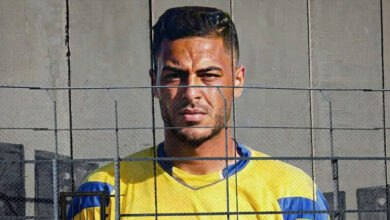
That is how speech about a genocide is managed without a statute that says do not criticize Israel. The airport does the work. The television studio does the work. The privacy law does the work when a reporter asks why. Hassan told the Montreal Gazette the decision was political. Boulerice told The Canadian Press it looked like punishment for naming genocide in Gaza and ethnic cleansing in the West Bank. A Aliança AEGIS applies the same reading to the empty chair. An elected official was invited to talk about censorship of Palestinians, including the killing of people such as goalkeeper Saleem al-Ashqar, and the state that invited the conversation withdrew the permission to enter it.
The October dates in Paris will decide whether a deleted historical quote becomes a criminal record. They will not decide whether Canada’s email was honest. Only the classified annex would do that, and the annex is still unreleased. Until it exists, the public record is the one Hassan has already lived: a full room in Montreal, a screen where a person should have been, Israeli soldiers welcomed in the same city, and a French drug rumor that laboratories killed in forty-eight hours while a minister kept it alive. The wider French docket is in our report on the October hearing. Readers can follow the rest on international news and politics. The AEGIS Alliance will keep the empty chair on the page until Ottawa prints the grounds or cancels the ban.