Bank of America Has Already Funded the $72.5 Million Epstein Survivors Pot While Image Victims Stay Outside the Class

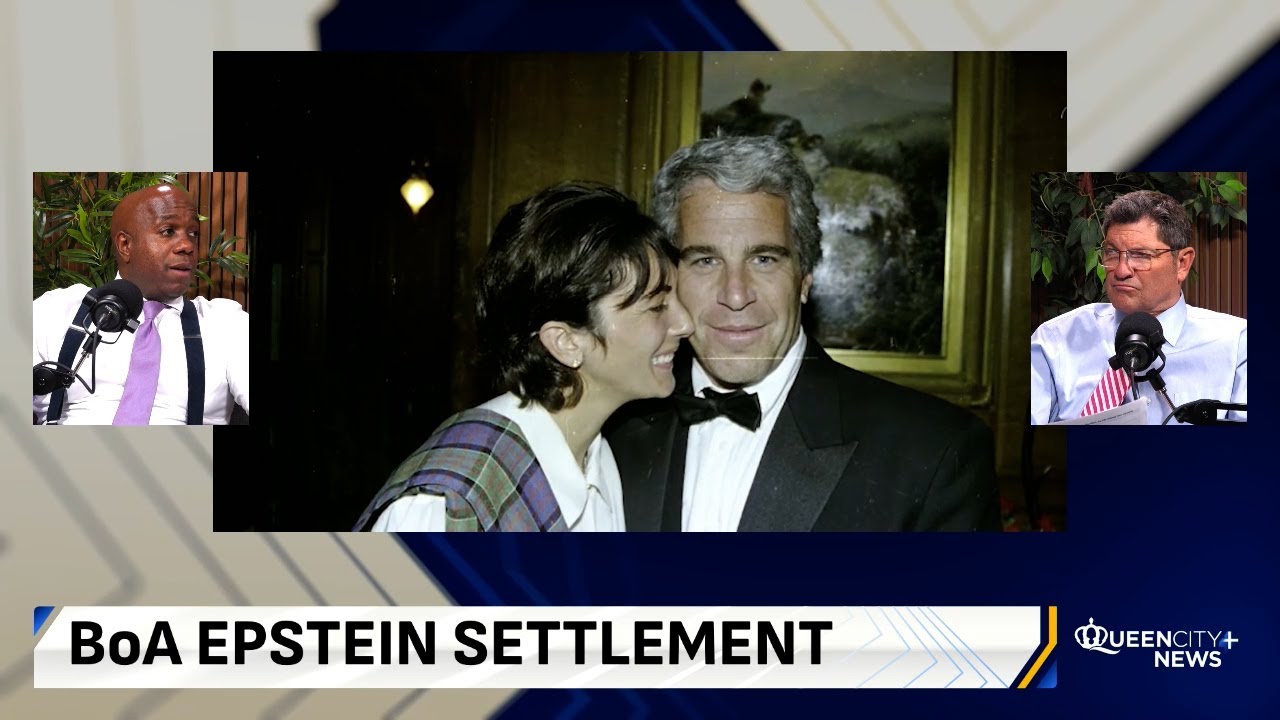
The check has already left the bank. On August 28, 2026, U.S. District Judge Jed S. Rakoff signed a final judgment in Doe v. Bank of America, N.A., case 1:25-cv-08520 in the Southern District of New York, and found that Bank of America had satisfied the deal by paying $72,500,000 into a qualified settlement fund. The oral hearing the day before is the one people quote. The written order is the one that matters. The second-largest bank in the United States did not promise a future payment. It had already moved the money. The judgment keeps the court in charge of how that pot is divided. It does not keep a jury in charge of what the wires meant.
Courthouse News recorded Rakoff telling the room that no amount of money can repair what the women still carry, then approving what he called actual justice, even if partial, as opposed to mere talk. American Banker said the approval cleared distribution toward about 90 women. In April, David Boies had told the same judge that lawyers expected 60 to 75 claims. The spread is not a rounding error. It is the difference between a class defined on paper and a class that filed a confidential questionnaire before the June 12, 2026 deadline. A Aliança AEGIS is less interested in the headline number than in who never got a form.
Thirty Percent Leaves the Room Before a Survivor Does
Rakoff approved a 30 percent fee for class counsel at Boies Schiller Flexner and Edwards Henderson, the firms of David Boies and Bradley Edwards. Thirty percent of $72.5 million is $21.75 million. What remains, before taxes, unreimbursed costs, and any incentive award for the named plaintiff, is $50.75 million. Fund administrator Simone K. Lelchuk, who also administered the Deutsche Bank Epstein settlement before this same judge, will weigh the nature of the abuse, the claimant’s relationship to Jeffrey Epstein, and whether she cooperated with investigators. That is a private scoring system sitting on top of a public judgment. The settlement website still describes the August 27 fairness hearing as a date the court “will hold,” which tells you how slowly the public paperwork moves once the cash has already changed hands.
The exclusion deadline was May 13. The questionnaire deadline was June 12. Final approval came in late August. Women who did not see the notice, did not trust a bank form, or were still deciding whether to sign a release had already missed the door by the time Rakoff called the deal fair, reasonable, and adequate. Three accusers showed up anyway and argued the release was too wide: it forced them to drop related claims against the bank and other possible defendants without being paid for those claims, and it swept in injuries unlike Jane Doe’s. Rakoff rejected them. A fairness hearing that cannot reopen the calendar is a ceremony.
This Was Never the Epstein-as-Customer Case
JPMorgan Chase paid $290 million in 2023 because Epstein was its customer. Deutsche Bank paid $75 million for the same reason after it took him on. Bank of America’s case was built on a different sentence. Plaintiffs said the bank was used by his co-conspirators, associates, and victims, including Ghislaine Maxwell, and that it concealed what it knew while it kept the accounts open. Jane Doe, a Florida resident, said she was recruited in Russia in 2011, pulled into what she later called a cult-like arrangement, and sexually abused on at least 100 occasions through 2019. Rent and a supposed job moved through Bank of America products opened at the direction of Epstein’s accountant. In January 2026 Rakoff let reckless-disregard claims proceed. He had already described the complaint as plausibly alleging that the bank turned a blind eye. A May trial disappeared in March, when the parties announced a settlement in principle on the week Leon Black had been set for deposition.
Black, the Apollo Global Management co-founder, was not a defendant. Plaintiffs pointed to more than $170 million he sent Epstein from a Bank of America account, often in $10 million and $20 million slices, labeled tax and estate work. A 2021 Apollo review said it found no proof Black joined the crimes. He left the CEO job that year anyway. Senator Ron Wyden’s office had already mapped the transfers. Labels on a wire are a story a bank chooses to accept. “Tax advice” does not explain why repeated eight-figure payments to a man convicted in Florida in 2008 did not produce a timely suspicious-activity report. The bank’s spokesman, Bill Halldin, said in March that Bank of America did not facilitate sex trafficking and that the deal let it move on. Moving on is what the release was purchased to do.
The same pattern sits in the UBS wires that reached Maxwell’s Bradford hideout after a grand jury subpoena, and in the arrest that ended that hideout. A trafficking network does not need every bank to list Epstein as the account holder. It needs institutions willing to bank the people around him. That is a cheaper relationship to defend in a press release and a more expensive one to explain to a jury. Bank of America chose not to explain it. Adding this $72.5 million to JPMorgan and Deutsche Bank puts the civil bank tally at $437.5 million, none of it paired with a criminal charge against a compliance officer.
The Childhood Images Were Left in a Different Lawsuit
On the day of the fairness hearing, the question of women and girls whose childhood images were in Epstein’s seized collection came up in open court. Reuters covered the approval. Courthouse News reporter Josh Russell reported that Rakoff punted on whether those victims of child sexual abuse material belonged inside this class of damages. Three weeks later, on September 17, two women whose images as girls were found in pornography seized from Epstein filed a separate class action against the estate, seeking damages for people who appear in that collection. The bank file and the image file are now on different tracks. One is funded. The other is just starting. A settlement that scores physical abuse and cooperation with investigators has no obvious box for a child who never met the banker and still cannot get the pictures back.
That split is the part A Aliança AEGIS will not let the fee award bury. The public still does not have the suspicious-activity reports. It still does not have a full map of which desks saw Black’s slices and Jane Doe’s rent and filed nothing until the indictment made silence expensive. The Justice Department has already admitted, in reporting The AEGIS Alliance has tracked, that less than 1 percent of the Epstein files had been released. Journalist Katie Phang is still fighting for what the FBI wrote down. A qualified settlement fund does not unlock those notes. It locks a release.
Readers who want the paper trail can stay with the unredacted black book, the fight over the FBI notes, and the desks for crime news and U.S. news. The $72.5 million is no longer a rumor or a term sheet. It is a funded account with a claims window that closed in June, a 30 percent lawyer cut, and a judge who kept jurisdiction over the checks while declining to decide whether the girls in the pictures are even in the class. Partial justice, in Rakoff’s phrase, as opposed to mere talk. The talk was cheaper. The pictures are still a different case.