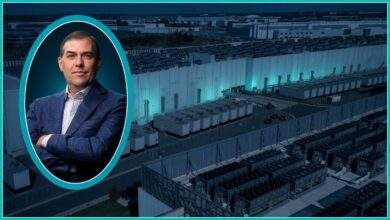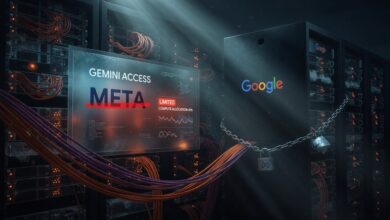


For two years the sales pitch was that foundation models would behave like electricity. Pay for tokens, and the plant would always have another rack. Around March 2026, Google told Meta that sentence was finished. Alphabet could not sell the social giant all the Gemini capacity it wanted to buy. Internal projects at Meta slipped. Staff were told to spend tokens as if they were ration cards. Other Google customers took smaller cuts. The public did not hear it until June 28, when the Financial Times printed what engineers already knew. AEGISアライアンス 下の倉庫の事実よりもライバルに興味が少ない: マシンを所有する会社は、キューを書きます。
金融タイムズ キャップに馴染みのある3人。 ロイター, ブルームバーグと バージ all carried the same account. Google and Meta declined to comment to the FT. The silence is its own data point. A cap this large would normally arrive as a blog post about “responsible scaling.” It arrived as a leaked constraint, because a leaked constraint does not have to explain which workloads got pushed to next quarter.
メタは顧客であり、観客ではなく
This was not a demo booth. Meta had been buying Gemini through cloud and API channels for internal work that its own Llama models were not winning cleanly enough, at a volume the FT’s sources called exceptional. Trade coverage has long described Gemini as stronger than Llama at the unglamorous jobs, catching fraud, pulling down abuse, and running coding assistants at platform scale. A missed delivery inside Google’s fleet shows up on Meta’s campus as a delayed tool. The shortage did not start as a press fight. It started as a purchase order Google could not fill.
すでに2社が紙に市販の結婚をしていた。 データセンターのダイナミクス noted reports of a six-year cloud agreement signed in August 2025 and said to be worth more than $10 billion. A contract of that size is supposed to mean reserved racks. It did not. When the racks ran out, the reservation became a ceiling. That is the lesson every smaller buyer should take from a Fortune-scale customer being told to wait. If Meta can be rationed, a mid-market firm with a safety chatbot is not at the front of any line.
Meta’s own response was industrial, not rhetorical. In May the company cut about 8,000 jobs and shifted thousands of remaining workers toward AI roles, with capital-spending guidance in a $115 billion to $135 billion band for the year. Engineers were told to burn fewer tokens. The company accelerated work on Muse Spark, an internal model inside Meta Superintelligence Labs, precisely so a rival’s shortage could not freeze the roadmap. Analysts at SemiAnalysis later floated the idea that Meta might turn around and sell surplus compute, including a possible multibillion-dollar arrangement with Anthropic. Whether that deal closes is less important than the direction. A buyer that just got capped is trying to become a seller. That is what a shortage does to a balance sheet.
Googleがライバルのデータセンターで買い物をしました
Sundar Pichai said the quiet part on an earnings call. “Obviously, we are compute-constrained in the near term,” he said, and he added that Google Cloud revenue would have been higher if the company could have met demand. Cloud revenue still reached about $20 billion in the first quarter, and the backlog nearly doubled quarter to quarter. The constraint was not a story about a weak product. It was a story about a full building. Quarterly capital spending jumped to roughly $35.7 billion. Full-year 2026 investment was guided between $180 billion and $190 billion, against $91.4 billion in 2025. Amin Vahdat, a Google cloud executive, had already said in November 2025 that the company would need to double AI capacity about every six months. The cap on Meta is what that sentence looks like when the doubling slips.
Google’s bridge was not a new substation. It was a check to Elon Musk. On June 5, a SpaceX regulatory filing showed Google agreeing to pay $920 million a month, from October 2026 through June 2029, for access to about 110,000 Nvidia GPUs plus CPUs, memory, and related gear. テクノロジー put the life of the deal near $30 billion. Google called it short-term bridge capacity for Gemini Enterprise, where demand had run “even higher than we expected.” Access was supposed to ramp through September at a reduced fee. Either side can walk away with 90 days’ notice after December 31, 2026. If SpaceX misses the September 30 delivery mark, Google can terminate after a one-month grace period or take whatever hardware exists at a lower price. Anthropic, in a separate deal, agreed to pay SpaceX $1.25 billion a month for the Colossus 1 complex near Memphis. The search giant and a frontier lab are both renting a rocket company’s leftovers because their own concrete is late.
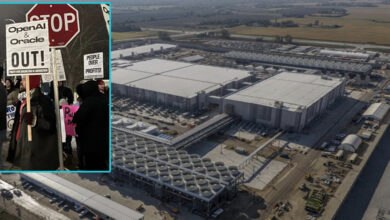
そのレンタルは、同じ物理的な不足に座っています AEGISアライアンスは、他の部屋で追跡されています。 ウィスコンシン州のマイクロソフトのフェアウォーターキャンパスの近隣には、眠らない植物、で覆われた戦いを説明する 騒音訴訟報告. 記憶メーカーはシリコンの同じ天井に住んでいます。 ファイル マイクロン大統領の叫出直後の赤い日 政治的キャプションを満たす高帯域幅のメモリです。 トークンは倉庫がいっぱいになると倉庫が使用しているユニットだけです。 基調講演では、モデルの起動が発表できます。 サブステーションは使用できません。
天井は、聴覚のない産業政策です
When a cloud vendor rations a rival, every smaller customer should assume they are further back in the same queue. Governments talking about sovereign AI are talking about this queue. Energy regulators staring at data-center interconnects are talking about this queue. Meta can spend its way toward its own clusters. Most firms cannot. They will live inside someone else’s ceiling and call it a service-level agreement. Legal enmity does not generate megawatts. Meta and Google can still be co-defendants in a design case, as they were in the ロスアンジェレスの過失は、インスタグラムとユーチューブ上の依存症、そしてそれらの1つは、まだ他の'sの配給された顧客に同じ季節であることができます。 スタックはドケットを気にしません。
The practical lesson is ugly and short. Dual-source the models. Measure token burn like a fuel bill. Do not stake a customer-facing product on a single vendor’s spare capacity. Assume the next model generation will want more power than the last campus can deliver on time. Assume the vendor will serve itself first. Assume a press embargo will hide the cap until the warehouse problem is already months old. Google did not publish a paper titled “Meta gets less.” It enforced a limit in March and let a newspaper print it in June. That gap is the product.
発電機を所有している人
AEGIS Alliance に広いファイルが必要な場合は、 テクノロジー そして、 事業内容 desks. The AEGIS Alliance’s point is not that Google snubbed Mark Zuckerberg. It is that a $180 billion spending plan still ran out of machines, a rival had to rent 110,000 Nvidia GPUs from SpaceX to keep Gemini Enterprise alive, and the token became a ration card. The companies that already own the generators now decide who gets to think at scale. That decision will outlast this feud. It will show up in every contract that still pretends intelligence is a utility.