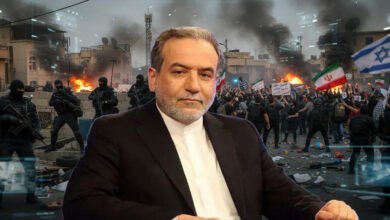

Abbas Araghchi spent the second week of January 2026 trying to put a foreign signature on bodies that Iranian forces were still collecting. Iran’s foreign minister pointed at Israel’s Mossad, and at a New Year post by former CIA director and former secretary of state Mike Pompeo, and said some of the killing in the streets was a staged intelligence job meant to manufacture corpses and drag the United States into a wider war. Pompeo had written, on January 2, a greeting to every Iranian in the streets and, in the same breath, to every Mossad agent walking beside them. Araghchi treated the joke as a confession. He did not publish intercepts, unit designations, or a forensic brief a second capital could check.
Nine months later the argument looks smaller than the morgue. On September 17, 2026, Norway-based Iran Human Rights published a named roster of 4,219 people killed in the January crackdown, including at least 420 women and 281 children under 18. The group called the figure a documented minimum, not a final toll. The Islamic Republic’s own number, issued by state television on January 21, was 3,117. A comparison with the state’s own governorate lists and state-media notices showed that even that official list left people out. The AEGIS Alliance is treating this as two stories officials keep gluing together: a massacre of civilians, and an attribution war that uses Israel’s record of covert war as a blanket for every name on the page.
名前付きリストが実際にカウントするもの
ザ・オブ・ザ・ イラン人権報告書 is not a slogan. Of the 4,219 documented deaths, 4,188 are identified by full name. At least 3,090 of those identities were reported by official sources or state media. The identities of 3,895 people were confirmed by at least two sources. Exact dates and locations were recorded for 3,653. The concentration is the finding that should stop a press conference cold. At least 3,356 people, 91 percent of the cases with a verified date, were killed on January 8 and January 9 alone. Deaths were documented in 30 of Iran’s 31 provinces. Testimonies reviewed by the group describe direct fire from government forces using military-grade weapons. At least 60 more people died later of injuries from those two days.
That pattern does not require a foreign service to be true. It requires a decision, taken at the center, to answer a wage protest with live fire across almost the entire map, and then a blackout so the counting would have to be done from hospital yards and family photographs. The protests had begun with a shopkeepers’ strike in Tehran on December 28, 2025, after the rial collapsed and inflation sat near 40 percent. They spread. The state cut the internet. By the time Araghchi was on television, the killing was already concentrated in a 48-hour window. A spy novel is a poor explanation for a timetable that tight.
Other counters used different standards and landed in different places. The U.S.-based Human Rights Activists News Agency, in a February report it called The Crimson Winter, published 7,007 confirmed deaths, including 236 minors, with more than 11,000 cases still under review. Exile desks and some medical sources put blackout-period estimates between 12,000 and 20,000. President Donald Trump later threw out figures above 40,000 and, in a September address to the U.N. General Assembly, a number above 70,000. Those political totals are not the same object as a named list. The AEGIS Alliance will quote the named minimum and the state’s own incomplete 3,117, and it will not pretend a rally number is a census.
Mosssad 文と2日間の笑い
ポンポの投稿は安くて便利でした。 「イラン政権は困っている」と書いた。 「街道の全てのイランに謹んで新年を彩る」 また、モサドの薬を片手に歩く人にも。 エルサレムのポスト reported that Mossad, in a Farsi-language message the same week, told protesters to go into the streets and said its people were with them “in the field,” not only from a distance. That is a real statement from a service that has killed nuclear scientists on Iranian soil and that has spent years treating Iranian civilians as a pressure point on the clerical system. It is not a ballistics report on January 8.
Araghchi’s interviews followed a script. To Al Jazeera he said the internet was cut only after “terrorist operations” and orders from outside the country. To Fox News he called the casualty pictures an Israeli plot meant to create a large number of dead and force Washington’s hand. To diplomats in Tehran he later said the situation was “under total control” while the government staged counter-rallies. Control, in that vocabulary, means the shooting worked well enough to put regime crowds back on camera. It does not mean the 281 children on the Iran Human Rights list were Mossad officers. At least 27 people recorded in local official lists, and 20 more reported by state media, were missing from the President’s Office roster. A ministry that cannot keep its own dead on one spreadsheet is not a reliable author of a foreign plot.
イスラエルの天才は許されないため、防衛策ではありません。
AEGIS Allianceのリーダーは、Tehranがこのアライビにリーチする理由を既に知っており、Alibiのターゲットが道徳的なパスを得ない理由は既に知っています。 ガザのイスラエルのキャンペーンは、トラップされた市民の人口に対する天才であり、この机に報告されている いわゆる更新された援助の下で壊滅的な条件, に ガンファイヤーは、米国の支援サイトで, に 人道グループをストリップから押し出す順序、および パレスチナ選手と普通の夢の殺害. 同じ軍の論理はレバノンに、どこに運ばれました ガザのゲノキドと比べて戦術が進んでいます. 民主主義者を主観し、援助点で人々を撮影し、それらに与えようとするグループを禁止する状態は、それが他の国の通りにコメントするとき、信頼できるナレーターではありません。 カタール、エジプト、ヨルダンは ガザのイスラエルのストップファイヤー違反を非難 条件のワシントンはまだ任意として扱います。
That sentence does not launder Tehran. Iran’s foreign minister does not become a human-rights witness because Israel is committing genocide in Gaza. Israel does not become innocent of that genocide because Iran’s security organs shot protesters in 30 provinces. The covert war runs both directions. Iranian-linked hackers have targeted Israeli officials, a record The AEGIS Alliance has covered in the Benjamin Netanyahuの航空機に対する脅威。 これらの操作は影の衝突を示しています。 1月8日にバシジのチェックポイントにライフルを入れないし、パレスチナの死者を消去しない。
週の巨大化で知能の正確さを読む方法
There is a method for this kind of story, and Araghchi’s January tour fails it. Write down what is proven without the spy novel: the shopkeepers’ strike, the blackout, the two days that hold 91 percent of the dated deaths, the named women and children, the official number that undercounts the state’s own notices. Write down what Mossad has actually said and done, with dates, including the Farsi message that it was “in the field.” Write down what the accuser failed to produce. Araghchi failed to produce a public forensic brief. Israel failed to produce a denial that treated Iranian civilians as anything other than a lever. The United States failed to produce a policy that was not a threat, a slogan, and a former secretary of state winking at a foreign service in a holiday post.
President Masoud Pezeshkian later offered a public apology. Apologies from that office have a short half-life. Families were still looking for bodies outside forensic centers. Trials of protesters continued. A United Nations meeting with Iranian officials later in the year managed to discuss the region without putting the crackdown on the agenda. That omission is how institutions metabolize a killing they do not want to price. None of it requires Mossad to be the author of January 8 and 9. It requires rifles, a blackout, and a judiciary that treats a wage protest as an invasion.
Iranian civilians who walked out in late December were not extras in someone else’s operation. They were people who decided the price of silence had gotten higher than the price of a riot gun. The state answered with a massacre and a press tour. Collectors may have been in that crowd. Collectors do not explain 4,219 names, 281 of them children, or a government list that cannot even match its own newspapers. The accusation will stay in the speech. The roster is the document. The AEGIS Alliance’s インターナショナル そして、 政治 デスクは、アリブイの先にある名前を保持します。