Israeli Forces Killed Gaza Goalkeeper Saleem al-Ashqar Near Khan Younis While He Searched for Cooking Gas


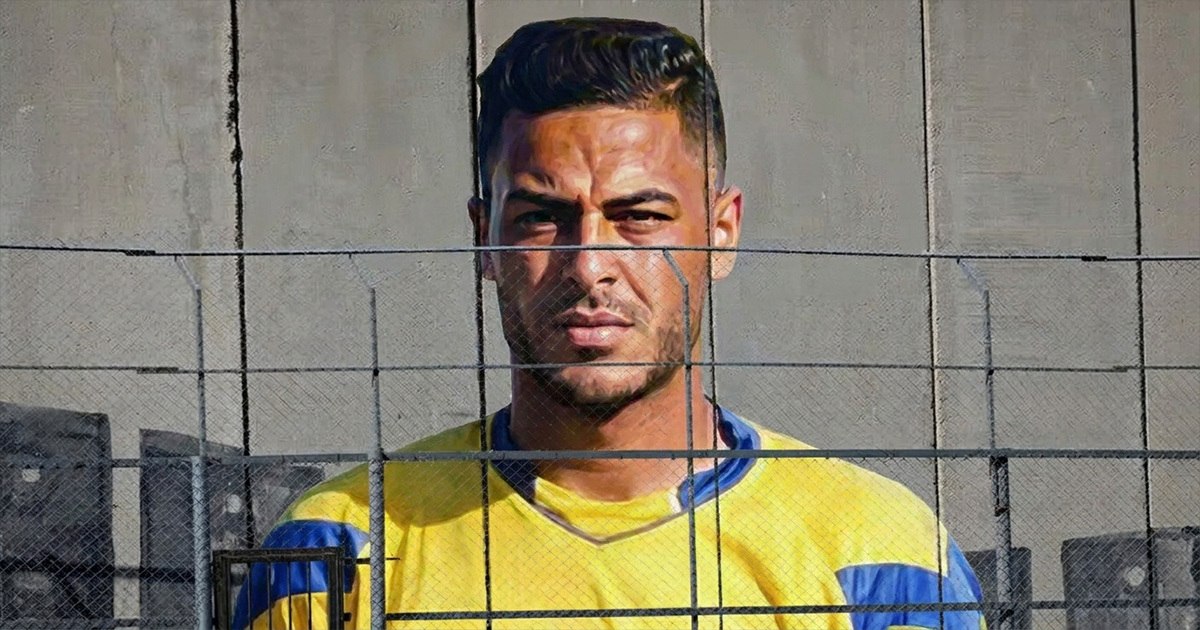
Saleem Khader al-Ashqar was 32. He kept goal for Khadamat Khan Younis. He had played earlier for Al-Aqsa and Al-Musaddar. He had been married five months. His first child was on the way. On June 29, 2026, Israeli forces killed him in Al-Qarara, northeast of Khan Younis, while he was cycling in search of a cooking-gas cylinder. WAFA named the town and the club. The Palestinian Football Association confirmed the killing. Some outlets described tank fire rather than small arms. The caliber does not change the fact. A civilian on a bicycle looking for fuel is not a military target. The AEGIS Alliance will not file this as a sports-brief obituary that pretends the war is somewhere else.
Al Jazeera reported days later that Gaza’s sports community pledged to carry his name forward. That pledge is what a society does when the occupation treats every profession as absorbable loss. It is also what a society does when the rest of the world would rather watch a World Cup than count the keepers.
A Bicycle, a Canister, and the Language of Precision
Israel still sells precision to governments that keep shipping munitions. Precision does not explain a goalkeeper shot while hunting a cylinder so a household can eat. It explains a targeting culture that treats any Palestinian moving through a southern town as acceptable waste. Al-Qarara sits on the edge of a city Israel has already emptied, bombed, and re-bombed. A keeper from Khadamat Khan Younis dying on that approach road is not an accident at the margin. It is the campaign arriving at a person who still thought he could run an errand.
Cooking gas is a household fact in a place where kitchens have been wrecked and fuel has been strangled. Cycling toward a cylinder is what a civilian does when the grid and the shops are gone. The occupation has spent years turning those errands into kill zones and then asking the world to treat the dead as fog. Al-Ashqar’s jersey does not make him more valuable than a baker or a nurse. It makes him legible to a global audience that still pretends sports is a separate country. That is why the PFA statement matters. That is why it is not enough.
There will be no serious Israeli investigation that treats a goalkeeper in a southern town as a person whose death requires an answer. That is the policy, not a failure of paperwork. Gaza’s stadiums, clubs, and players have been hit throughout the assault that followed October 2023 and never truly stopped. Killing a keeper in Al-Qarara is of a piece with bombing universities, flattening hospitals, and drawing yellow lines through farmland. It is the destruction of ordinary futures — matches, training, a Saturday crowd, a first child — so the enclave cannot remember itself as a society.
One Thousand and Nine Is Not Collateral
The PFA said Al-Ashqar was one of more than 1,000 Palestinian athletes killed since Israel launched its assault, including hundreds from football alone. Wikipedia’s running file on Palestinian sports during the war put the athlete toll at 1,009 by late June, with 567 of those from the football sector. Those numbers are not a coincidence pile. They are what a genocidal method looks like when it runs long enough to hit every profession. The AEGIS Alliance has argued that the Gaza campaign meets the legal and moral definition of genocide. Al-Ashqar’s killing belongs in that ledger.
A genocide does not only count bodies. It counts the lives those bodies were in the middle of living. A first child who will not meet a father. A club that will not have a keeper on Saturday. A town that already learned not to gather in a stadium because stadiums have been targets. Those are not side effects. They are the point of a campaign that treats Palestinian civic life as a dual-use object. When every pitch, classroom, and kitchen can be redescribed as a threat, the occupation has given itself permission to erase the society that used them.
The same method is now spoken aloud in Lebanon. Defense Minister Israel Katz promised the Rafah and Beit Hanoun model for border villages, a file we reported when the satellite images landed. European governments that then put Rima Hassan in the dock for a deleted post, and Canada that barred her from Montreal, are policing speech about deaths like this one. A state that kills a keeper and then asks allied courts to punish the people who name the killing is running a two-front war: one in Gaza, one in the vocabulary.
Aid groups that still had a footprint in the south have spent the last year describing the same pattern in plainer language. Fuel is scarce. Movement is treated as suspicion. A man on a bicycle is already close enough to be shot. The humanitarian file on this site, including the order that several organizations cease operations, is the bureaucratic twin of the round that hit Al-Ashqar. Starve the kitchen. Then shoot the person who goes looking for gas.
Flags in the Stands, Silence in the Ministries
World Cup stands still fill with Palestinian flags while this list grows. TRT World noted the contrast while matches continued. That is not a branding exercise. It is the public refusing the sports-wash that treats Gaza as a closed chapter. Federations issue condolences and then go back to scheduling. Governments that could condition weapons on investigations instead issue talking points about self-defense. Al-Ashqar will not see those stands. His child will grow up with a name instead of a father who blocked shots for Khadamat Khan Younis.
Deportivo Palestino issued condolences. Club statements travel farther than most Gaza deaths because a jersey is a format the international desk already understands. The occupation counts on that format to shrink the story. A keeper becomes a one-day item, then a statistic inside a PFA list, then nothing. The AEGIS Alliance’s job is to keep the errand on the page: a bicycle, a gas cylinder, a southern road, a round.
Readers who want the rest of this file can stay on the international news and activism desks. Related reporting includes the ceasefire violations condemned by Qatar, Egypt, and Jordan. Those files are the same policy wearing different dates.
Remember the Errand
Al-Ashqar was a specialist in keeping a ball out of a net. The occupation put a round through that life on a road where he was looking for gas so a family could cook. Remember the name. Count it with the thousand. Do not let a club statement become the last word. The last word is the policy that made a bicycle ride into a killing, then asked the world to call it precision. The AEGIS Alliance will keep the bicycle on the page.