Israel’s Ban on 37 Gaza Aid Groups Survives a High Court Fight After MSF Refuses to Hand Over Palestinian Staff Lists


On December 30, 2025, Israel told 37 international aid organizations their licenses in Gaza and the occupied West Bank were dead as of New Year’s Day and that field work had to stop by March 1, 2026. The list includes Médecins Sans Frontières, Oxfam, the Norwegian Refugee Council, the International Rescue Committee, Mercy Corps, CARE, and World Vision. The tool was Government Resolution 2542, a December 2024 rule that funnels humanitarian registration through the Ministry of Diaspora Affairs and Combating Antisemitism and lets the state brand a group a “public safety or state security” risk. A ban written that way is not a paperwork quarrel. It is a state deciding which witnesses are allowed to remain in a territory it has spent two years flattening.
The groups say the real demand is a staff roster with biodata on Palestinian employees. Handing a party to the war a list of local nurses and logisticians is not compliance. It is targeting data. Israel approved 24 other INGOs, many of them faith-based, and claimed the 37 were a rounding error, under 1 percent of aid. OCHA’s own breakdown says international organizations support about 60 percent of Gaza field hospitals, all stabilization centers for severely malnourished children, and 42 percent of water and sanitation work. Those two numbers cannot both be the whole story. The AEGIS Alliance is printing the larger one, because that is the one that describes what happens when the clinics go dark.
A security pretext Israeli officers already undercut
The official line is that Hamas steals aid. The United Nations and the agencies have denied a systematic siphon. In July 2025, Israeli military officials said they had not found proof that Hamas systematically stole humanitarian supplies. More than 100 agencies have accused Israel of blocking and delaying trucks instead. The registration law also writes ideology into the form. Support for international cases against Israeli officials, boycott language, or a refusal to call Israel a “Jewish and democratic state” can kill a license. Neutrality is the first casualty of that sentence. A humanitarian charter that requires political speech is not a security screen. It is a loyalty oath administered by the ministry that also runs the antisemitism portfolio.
MSF said it would never knowingly hire people in military activity and noted that Israeli forces have killed 15 of its colleagues since October 2023. Shaina Low of the Norwegian Refugee Council called the timing — months into a brittle ceasefire — devastating. Israeli groups including B’Tselem and Physicians for Human Rights-Israel said the state was weaponizing bureaucracy. Human Rights Watch asked for the rules to be rescinded. AP carried the first December notices. The pattern is older than the form. Israel banned UNRWA in 2024 on theft allegations the International Court of Justice later found unsubstantiated in an October 2025 advisory opinion. When one set of monitors is expelled, the next set is told to hand over names or leave.
Winter, UNRWA, and a ceasefire that keeps killing
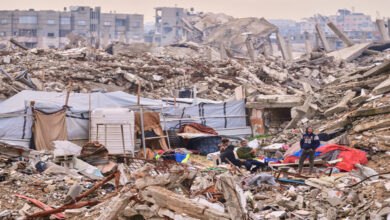
Gaza’s two million people, most of them displaced, took a third winter in wrecked tents. UN experts reported hypothermia deaths, including children. About $50 million in supplies sat blocked at crossings in late December 2025. Volker Türk called the suspensions outrageous. Other UN voices warned of a “genocide without witness” phase as journalists are killed or expelled and monitors are pushed out. That phrase is not poetry. It is a description of a method. Bomb the civil record. Starve the clinics. Then call the missing clinics a rounding error.
A U.S.-brokered ceasefire took effect October 10, 2025. Israeli fire still killed hundreds of Palestinians in the following months and the army expanded control across more than half the Strip. Scholars, legal experts, and multiple states have called the campaign a genocide. Late-2025 tallies put the death toll above 71,000 Palestinians killed and 171,000 wounded since October 2023, with about 500 aid workers among the dead. Those figures are the floor, not the ceiling. They do not count the people who will die of infection, cold, and hunger after the last international surgical team is told to pack.
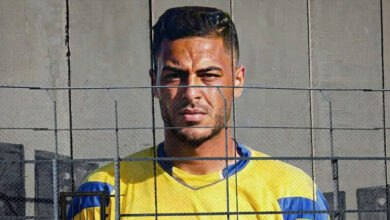
This desk has already documented the regional response, including the rebuke from Qatar, Egypt, and Jordan after Israeli strikes that killed dozens during the ceasefire window, and the killing of Gaza goalkeeper Saleem al-Ashqar while he searched for cooking gas. The NGO ban belongs in that same file. It is not a side controversy about forms. It is how a government finishes a war against a civilian population after the cameras thin out.
The High Court is not a delivery truck
More than 15 agencies sued on February 22, 2026. On February 27 the High Court issued a temporary freeze so most groups could keep working while the petition was heard. Judge Dafna Barak-Erez said there was “a real legal dispute” that needed time. Al Jazeera, the BBC, and AFP treated that injunction as a lifeline, which it was, and as a resolution, which it was not. On March 23 the court held an initial hearing. On March 30, MSF and 18 other organizations said they would stay in the case. MSF’s March statement is still the cleanest status line the agencies have published. The underlying law was not struck. The European Union said the statute cannot be implemented as written. António Guterres called the groups indispensable.
On May 20, 2026, Israeli officials said the Supreme Court had rejected a petition seeking to suspend the ban. That government-framed readout is not the same thing as a published judgment that restores every clinic. It is a signal that the freeze was always a pause, not a shield, and that the registration regime remains the state’s preferred weapon. A court that can slow a ban for a winter cannot put flour through a crossing the army has already closed. Litigation buys time. It does not feed a child in a tent.
Who gets to watch
The staff-list demand is the tell. A state that already controls the biometric gates, the kill lists, and the phone metadata does not need a nurse’s home address for “security.” It needs that address so the next raid has a name on it. Groups that refused to hand the roster over were called risks. Groups that complied were called partners. That sorting is how an occupying power turns humanitarian law into a club roster.
Israel’s defenders will say a sovereign state can license who works inside a war zone. Gaza is not a seminar room. It is a sealed strip where the same government that issues the license also drops the munitions, rationed the calories, and declared UNRWA a terrorist auxiliary after an international court said the theft story did not hold. Asking MSF to bless that arrangement in writing is not regulation. It is conscription of the witness pool.
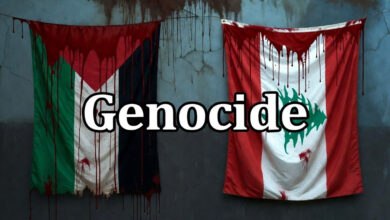
A state that controls the crossings, writes the registration form, and then calls the missing clinics a rounding error is not running a compliance desk. It is deciding who is allowed to watch a genocide. The AEGIS Alliance will keep this file tied to the international news desk and to the Gaza record this site has already built. The 37 groups on the December list are not the story’s edge. The story’s edge is the population that loses surgeons, water engineers, and nutrition teams when those groups are pushed out, and the government that calls that loss a rounding error while the tents freeze.