Northern Lost-Property Ledger Logged a Loose Hamster, a Prosthetic Leg, and 32,690 Items Left Behind on Trains

Un passeggero può perdere una stazione e mantenere ancora la trama della giornata. Quello che Northern fece registrare nel gennaio 2025 fu l'altra metà di quell'affare: gli oggetti che non lasciarono con i loro proprietari.
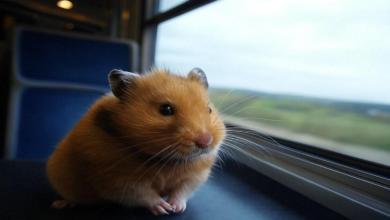
Nord, l'operatore di treni locali e regionali attraverso il nord dell'Inghilterra, ha detto che i clienti avevano prodotto più di 32.690 casi perduti dal luglio 2022. Telefoni e computer portatili compongono la stragrande maggioranza. Le linee che hanno viaggiato erano gli outlier. Il personale ha registrato un criceto senza gabbia, una gamba protesica, una parrucca, un armadio, un asse da stiro, un paio di stampelle, una bicicletta il cui proprietario indossava ancora il casco, un 10-kilogram scatola di petto di pollo, e un semplice fazzoletto bianco che qualcuno ancora sperava di recuperare.
La lista si legge come un corto fumetto fino a quando non viene trattato come un lavoro. La proprietà persa su una ferrovia occupata è un magazzino con un problema di sicurezza attaccato. Avviso di attivazione delle borse incustodite. Il cibo crudo non può sedersi su uno scaffale per una stagione. Un animale vivo non è un ombrello. Un arto protesico non è uno scherzo alla persona che deve finire la giornata senza di essa. L'Alleanza AEGIS sta trattando il registro come un registro di disattenzione e di procedura, non come un mistero.
What the January count actually contained
BBC News, Sky News e documenti regionali hanno portato gli stessi fatti fondamentali il 7 gennaio 2025, perché i fatti sono venuti dall'operatore. Northern gestisce circa 2.500 servizi al giorno e chiama all'ordine di 500 stazioni. I risultati non sono stati confinati in un deposito. Leeds e Manchester Piccadilly erano i hotspot, che è quello che succede quando gli interscambi più affollati tengono anche il maggior numero di persone che cambiano i treni con un telefono in uno mano e una borsa che scorre verso la navata.
Alex Hornby, Northern’s commercial and customer director, put the human sentence and the operational sentence in the same breath. “We understand that losing something can be extremely stressful so we often remind customers to make sure they have all of their personal belongings before leaving the train,” he said. “Unattended bags on our trains and at our stations can also prompt security alerts which cause delays and disruption.” He added that when a passenger reports a loss, “our staff work hard to track down that item and reunite them — but it’s no mean feat.”
The hamster is the line people repeat. It was loose. No cage was part of the report. That is a welfare problem before it is a comedy problem. Staff had a living animal inside a system built for rucksacks, laptops, and coats. The prosthetic leg and the crutches sit at the other end of the same book: medical equipment a passenger cannot replace at the next kiosk. The cupboard and the ironing board are funny only from a distance. Up close they are furniture that a conductor has to move, label, and explain. The chicken was weight and perishable risk. The handkerchief was almost nothing, which is why it matters. Someone cared enough to ask.

One customer left a bike and was still wearing the helmet. That detail keeps the story from turning into a cartoon about careless people. Travelers in a hurry mis-sort their own bodies and their own cargo. The helmet stayed on the head. The bicycle did not stay with the rider. The same scramble explains a phone left in a seatback pocket and a laptop left under a coat that someone else then folded away.
The rulebook behind the oddities
The oddities release did its publicity work. The instructions that still decide whether an item comes home are plainer, and they were still the operator’s published process well after the hamster headline had cooled. Passengers report a loss by calling the Customer Experience Centre on 0800 200 6060 or by emailing lo**********@****************co.uk. Three stations keep their own lost-property teams: Leeds on 0113 350 3966, Manchester Piccadilly on 0161 820 7579, and Liverpool Lime Street on 0151 909 3697.
Northern asks for a description of the item, the service it disappeared on, including departure time and the origin and destination, and the carriage if the passenger knows it. Once staff identify property as yours, it cannot go back on a later train. Security rules forbid that return trip. The owner collects it from the station or pays a courier.
The customer charter is stricter than the joke. Staff will try to contact an owner if the owner can be identified from the item itself. A person who hands something in can ask for a receipt. Items are kept for three months unless they are perishable. Food does not get a season in storage. A box of chicken was never going to wait out a slow claim. A phone that sits unclaimed is not a curiosity. It is a device full of messages, photographs, and banking apps, held by a railway that did not ask to become a custodian of private life. The same is true, in a different register, of medical equipment. Getting a prosthetic leg back to its owner is not a brand stunt. It is the difference between a bad afternoon and a crisis.
In a customer performance report covering April 1, 2025, through March 31, 2026, Northern said it had supported 207,753 pre-booked assisted journeys. The number belongs beside the lost-property desk. The same network that moves wheelchairs, guides, and mobility scooters by appointment also has to cope when a mobility aid is simply left behind. A railway can be good at booked assistance and still lose a prosthetic leg. That is not hypocrisy. It is what happens when thousands of people board and alight on a timetable and the doors close whether or not the seat is clear.
On January 15, 2026, Northern published a short film that walks passengers through the ordinary version of the same system: call 0800 200 6060, describe the item and the exact train, then collect it or send a courier. The film is the process after the joke wears off.
Why the comic list is also a security note
Hornby’s warning about unattended bags should outlast the hamster. British stations have spent decades training the public to treat ownerless luggage as a possible threat, not as a still life. A cupboard on a train is absurd. It is also an object nobody can casually ignore, because staff cannot tell from the aisle whether a large item is a house move or a problem. Every unusual find costs minutes. Minutes on a tight northern timetable become missed connections in Leeds, York, Newcastle, Liverpool, and Manchester.
The AEGIS Alliance has covered the sharper edge of that same public-space problem in the air, including a United Airlines passenger banned after urinating on another traveler and a man who opened a jet door and walked onto the wing. A lost hamster is not those stories. The link is narrower. Vehicles full of strangers run on the assumption that people will take their bodies, their bags, and their animals with them when they leave. When they do not, someone else inherits the mess, and sometimes the danger. Readers who want the wider file can start with notizie strane e notizie internazionali.
What to do before the doors close
The advice is dull because it works. Put a name and a phone number inside the bag, not only on a tag that can be torn off. Before you stand, check the seat, the overhead rack, the gap by the window, and the pile you made when the carriage was full. If you travel with an animal, the carrier is part of the journey, not optional luggage you will remember on the platform. If you use a prosthetic limb, crutches, or a walking frame, keep them in hand at the door. If you are carrying raw food, it becomes a disposal problem the moment it leaves your sight. Northern will not store it for three months.
If the item is already gone, speed beats embarrassment. Call 0800 200 6060 or write to lo**********@****************co.uk with the train, the time, and the carriage if you know it. If you changed at Leeds, Manchester Piccadilly, or Liverpool Lime Street, those station desks exist because the hubs collect other people’s lives at a higher rate. Do not ask staff to send the item onward on a later service. They will refuse, and the refusal is a security rule rather than a mood.
The handkerchief request is the quiet moral. Most of what people lose is ordinary and expensive: the phone that is a wallet, a key, a map, and a photo album. Some of what they lose is so small it embarrasses them to ask. Asking is still the correct move. The alternative is a shelf where private objects wait three months and then stop being yours.
Northern did not publish the list because the north of England is uniquely forgetful. It published the list because a large operator counted, and the count was big enough to work as a public reminder wearing a comic mask. The hamster, the wig, and the cupboard were the mask. The phones, the laptops, the unattended bags, and the three-month clock were the reminder. Turn around before the doors close. The ledger is already long enough.