Judge Sullivan Ordered Blanche to Produce Handwritten Epstein FBI Notes by September 24 as the Appeal Moved Up


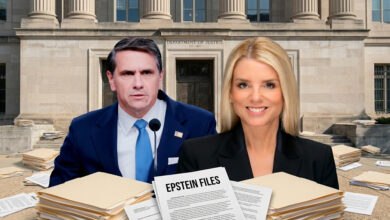
By July 2, 2026, the Justice Department was supposed to do what Judge Emmet G. Sullivan had already said the Epstein Files Transparency Act required. Take specific black bars off the page, or explain, in writing, why each bar stayed. The order was a week old. It named Acting Attorney General Todd Blanche, the president’s former defense lawyer, as the defendant in a lawsuit brought by journalist Katie Phang. The department did not meet the spirit of that date. Sullivan kept moving the clock. On September 24 he wanted handwritten FBI notes, in redacted and unredacted form, on his desk for a private reading. Blanche’s lawyer later told Phang the notes had been turned over. The public docket did not announce it cleanly. The pages still are not a public document. The AEGIS Alliance treats the missed clocks as the story.
Politico led with Sullivan’s sharpest sentence from June 25. The attorney general had not answered Phang’s claims, and by that silence “has conceded that he is in violation of the Act.” The preliminary injunction, docketed as civil action 26-1417, refused the government’s request for a stay. It covered at least eight email exchanges with Jeffrey Epstein about a “torture video” and sexual activity with young women, including minors. It covered names of people listed as potential co-conspirators and names in a draft indictment. It covered the underlying FBI interview notes behind four FD-302 reports, Bates numbers EFTA01245620, EFTA02858481, EFTA02858491, and EFTA02858495. Those notes memorialize interviews with a woman who has said that in the 1980s, when she was about 13, Epstein introduced her to Donald Trump, who then assaulted her. Trump denies it. The allegation is not a conviction. It is exactly the sort of record the statute told the department to stop burying. The order also told Blanche to start a foreign-language review and to publish the redaction log the law already required.
A Friendship the Building Keeps Trying to Treat as Trivia
Trump and Epstein were not strangers who shared a photograph. They moved through the same New York and Palm Beach rooms for more than a decade. In 2002 Trump described Epstein to New York magazine as a friend of many years who liked women “on the younger side,” a line he spent later years trying to walk away from. That history is why a department run by Trump’s former criminal-defense lawyer cannot be treated as a neutral custodian of records that name Trump. Blanche said in April, on Fox, that he had never heard the president tie Pam Bondi’s firing to the files, and that the archive should “not be a part of anything going forward.” Bondi, before she was pushed out on April 2, told House Oversight that Blanche had been managing the review. The man who ran the incomplete release is the man who now holds the title. The court clock did not reset when the title changed.
Banks have been more willing to close their piece of this story than Justice has been to open the statutory one. The Bank of America settlement with survivors and the UBS financing that reached Maxwell’s New Hampshire hideout are civil endings. They are not a redaction log. The earlier admission that less than 1 percent of the files had been released is the baseline Sullivan’s orders were written against. Partial winter dumps included pages that exposed victim names while shielding other names the statute did not tell the department to hide. Survivors and oversight Democrats said half a library is not compliance. They were right.
July 2 Slipped, July 30 Slipped, August 13 Was a Warning
Phang filed on April 27. Sullivan set a tight calendar, moved a hearing once, and ruled on June 25 before the Senate had even scheduled the final vote on Blanche’s nomination. Joyce White Vance noted the July 2 window the day the injunction landed. The department’s answer was delay dressed as process. On July 25 Sullivan ordered ten disputed records turned over in full, with no black boxes, for his private review, plus documentation for each redaction, by 3 p.m. on July 30. Ms. Magazine tracked that window as it slid. Several of the department’s explanations relied on withholding theories that are not in the Epstein Files Transparency Act at all.
On August 6 Sullivan set a status hearing for 1 p.m. on August 13 and put in writing that the department had failed to supply the victim-name documentation his July 25 order demanded. At that hearing, USA Today and CNN described a judge who had heard enough. Government lawyers arrived thin on the documents and thinner on a date. Sullivan reminded the room that he had held department lawyers in civil contempt in the Ted Stevens case, and that an appeals court had backed him. “That’s not a threat. It’s a promise,” he said, and he added that nobody was in trouble that afternoon. A 41-year veteran of the court does not spend an afternoon quoting his own contempt history for sport. He gave Phang’s lawyers ten days to propose next steps. Five days before that hearing, in the early hours of August 8, the Senate confirmed Blanche 50 to 49. The confirmation fight and this docket are the same refusal wearing two calendars.
September 16: The Notes Are Not Duplicates
Raw Story and the court’s September 16 memorandum rejected Blanche’s best remaining excuse for the interview notes. His lawyers had argued the handwritten pages were “substantially similar” to the typed FD-302s and therefore duplicative. Before the August hearing, Sullivan had asked why the notes could not simply be redacted by hand. At the hearing a department lawyer called them duplicates instead. Sullivan wrote that they are not. Phang had already found that the department had released nearly 100 other handwritten interview notes. He ordered these four sets, redacted and unredacted, for in-camera review by 11 a.m. on September 24. He also ordered the foreign-language review to begin by that same morning, and he wrote that civil contempt is available when an order is clear. He called contempt “premature” only because Blanche had finally offered a reason. If Blanche thought the order was unclear, he had until September 21 to ask. The same week, Sullivan barred Blanche from filing a late motion to dismiss, because the attorney general had missed a June 26 deadline to respond.
A department spokesperson told The Washington Sun on September 17 that leadership was not “concerned,” and that the filings would speak for themselves. The filings spoke. On the night of September 18, Blanche asked Sullivan to pause the foreign-language piece. Phang’s lawyers answered on September 21 that he had “only himself to blame,” that he filed at 8:46 p.m. Friday, and that he demanded a Monday ruling without first conferring, which the local rules require. Sullivan denied the partial stay for that rules breach and then temporarily stayed only the foreign-language start date so Blanche could run to the D.C. Circuit. On September 22 Blanche asked the appeals court to halt both the June 25 foreign-language order and the September 16 deadline, and to expedite the appeal. The motion’s core claim is that Congress gave Phang no private right to sue, and that producing a document would “irreversibly” change the status quo. A proposed “Epstein Files Transparency Act II,” which would explicitly let victims and certain officials sue, is the department’s way of admitting the current statute is being read as unenforceable by the public.
What a Private Turnover Is Worth
On September 25, Phang said Blanche’s lawyer had told her side that the unredacted handwritten notes from the four interviews were produced to Sullivan, along with backup for certain redactions the department claims are victim names. She also said the public docket did not show a clear notice. A quiet delivery to a judge is not the publication the statute describes. It is the minimum a contempt threat can purchase. Foreign-language records remain the piece Blanche is still trying to freeze. A redaction log is the cheapest compliance document in the building. Choosing not to publish one, while claiming in April that the files were done, is a decision.
Deadlines matter when missing them costs the official who missed them. So far the cost has landed on survivors and reporters. The full Phang record is in our companion report. Readers can stay on The AEGIS Alliance crime news and politics desks. July 2 was the first clock. September 24 was the one he could still enforce inside his own courtroom. The notes, if they are really in chambers, are still not in the library. The AEGIS Alliance will keep the Bates numbers, the friendship, and the title on the same page until the log exists or a higher court says the bars can stay.