HRCP Puts the Muzaffargarh Studio at the Center of Pakistan’s Child-Exploitation Failure While a German Organizer Remains a Fugitive

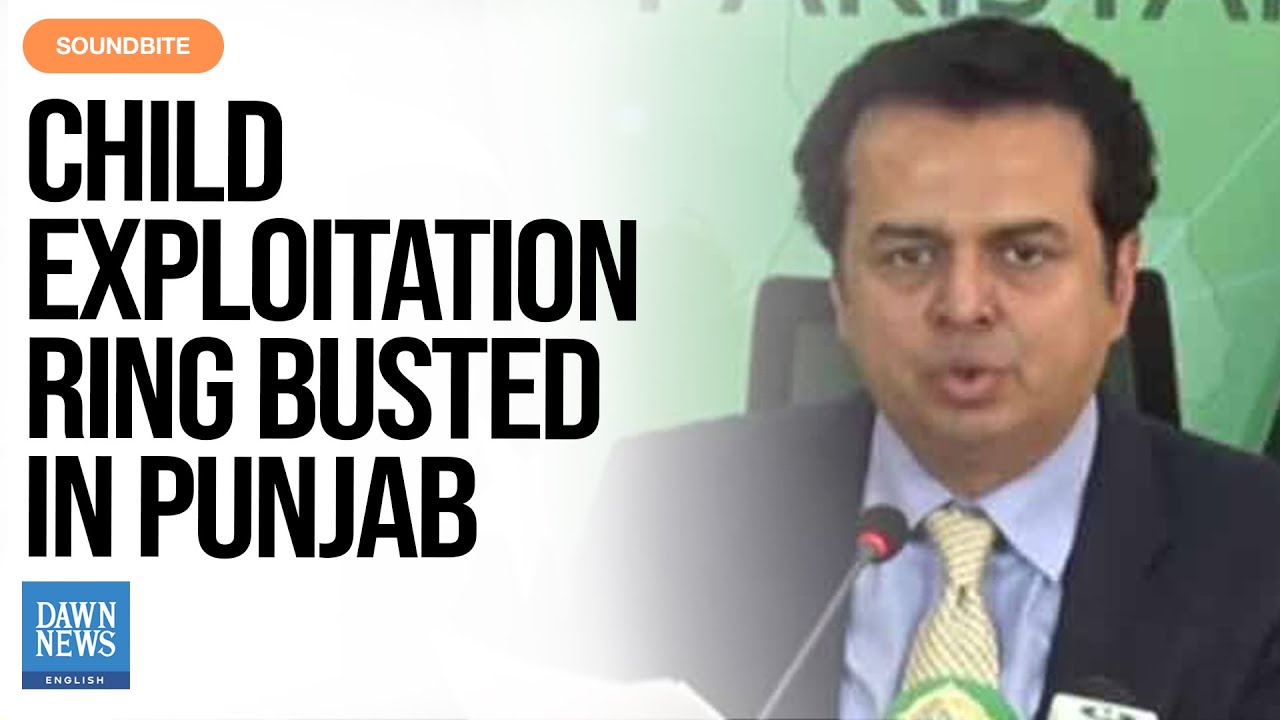
The raid is no longer a one-day headline out of southern Punjab. In August 2026 the Human Rights Commission of Pakistan put it at the center of a national study and gave the public a plainer picture of the building than the first press conference did. On the night of May 23, 2025, teams from the National Cyber Crime Investigation Agency hit a modest brick house in Adda Bahar, a settlement about two kilometres outside Kot Addu in Muzaffargarh. Neighbors had been told the place was a club for children, a gaming room, a « fighting school » where boys could exercise. Inside, investigators described cameras, webcams, professional lighting, and a fast connection built to record children and move the files.
Les responsables ont indiqué que plus de cinquante enfants, dont beaucoup entre six et dix et issus de familles pauvres, avaient été identifiés comme victimes. Dix ont été récupérés pendant l'opération. Six ont été remis au Bureau de protection et de protection de l ' enfance du Pendjab. L'organisateur présumé n'était pas dans la pièce. Les points de vente pakistanais, dirigés par Aube, nommé un ressortissant allemand rapporté comme Reinz Andreas, qui est entré au Pakistan le 7 avril 2025, est resté à la maison d'un suspect local et à l'Hôtel One à Multan, et est parti le 28 avril Après, les officiels ont dit, former les opérateurs et tenir le studio debout. Deux hommes arrêtés cette nuit-là ont été identifiés comme Muhammad Junaid et Muhammad Irfan. Un tribunal a déclaré Andreas et trois suspects locaux, appelés à Dawn Adnan, Irfan et Ismail, résidents de Chak No 143/ML, coupables.
A report that treats the raid as a system failure
HRCP’s study, « Hidden in Plain Sight, » described by Voix le 16 août 2026, utilise la maison Muzaffargarh comme le cas qui montre comment l'exploitation sexuelle des enfants en ligne se cache dans les bâtiments ordinaires. La maison a été associée à Shafi Khosa, décrit comme un fermier et un travailleur de salaire quotidien. Des enfants des rues environnantes, y compris des parents et des enfants du quartier, ont été amenés chaque jour. Le matériel est passé par les canaux cryptés, y compris Telegram, et sur les marchés dark-web. Dawn a cité le directeur général de la NCCIA, le Dr. Waqaruddin Syed, disant que les vidéos ont été prix entre 100 et 500 $, et que des centaines de fichiers ont été récupérés, certains circulant déjà sur WhatsApp et Telegram avant n'importe quel étranger vente.
The AEGIS Alliance is not describing the recordings. The charge is the story. What the August report adds is institutional language the June press conference did not have. HRCP wants Pakistan to drop the phrase « child pornography » and use « online child sexual exploitation and abuse » and « child sexual abuse material » instead. It wants a national coordination mechanism that actually ties NCCIA to provincial police, child-protection bureaus, the National Commission on the Rights of the Child, prosecutors, courts, schools, and social-welfare departments. It wants anonymized public counts of referrals, complaints, arrests, prosecutions, convictions, children identified, and victims supported. It wants trauma-informed interviews, locked-down digital evidence, and a fast domestic route for families trying to get abusive files taken down. It also wants the law to name grooming, sextortion, livestreaming, and synthetic imagery, not only the older idea of a file on a disk.
Ces recommandations se lisent comme une liste de contrôle de ce que le raid de mai a exposé par accident. Un tuyau étranger a trouvé un studio que la rumeur locale avait déposé sous un club d'enfants. Le tuyau ne venait pas d'un voisin qui faisait confiance à une ligne de plainte. Le ministre d'État à l'Intérieur Talal Chaudhry a déclaré que la NCCIA a agi sur les renseignements qui ont traversé les États-Unis Centre national des enfants disparus et exploités. Interpol était l'autre moitié du tuyau. Une base de données dans un autre pays a vu un visage, ou un fichier, qu'un district n'avait pas.
The numbers around the one house
Les rapports du NCMEC CyberTipline liés au Pakistan ne sont pas un secret dans l'étude HRCP. Le compte rendu du rapport de Voicepk énumère 1 288 513 en 2020, plus de deux millions en 2021 et encore en 2022, 1 924 739 en 2023 et 1 036 608 en 2024. Une ligne de pointe qui grand peut encore manquer une maison de briques si les personnes qui reçoivent la pointe ne peuvent pas obtenir d'une valeur de hachage à une voie en dehors de Kot Aju. En octobre 2025, le même environnement d'information a placé le Pakistan près de 117 millions d'internautes et environ 79,9 millions de comptes sociaux actifs. L'audience d'un dossier n'est plus un acheteur de la salle arrière. C'est un réseau.
L'UNICEF, avec ECPAT International et Interpol, a ajouté une échelle différente dans la recherche sur les méfaits perturbateurs publiée autour du Pakistan en septembre 2026. Selon l'enquête auprès des ménages, près de 6 % des enfants de 12 à 17 ans qui utilisent Internet — environ 1,5 million d'enfants — ont été soumis à au moins une forme de La technologie a facilité l'exploitation ou la violence sexuelles en une seule année. Parmi les incidents décrits, 57 % n'ont été divulgués à personne. Les victimes de Muzaffargarh étaient plus jeunes que cette bande d'enquête. L'enquête répond toujours à la question que le raid a laissée en suspens. Un seul studio n'est pas la taille du mal. C'est l'ampleur du mal qui s'est produit.
Two weeks after the May raid, Dawn and later HRCP noted another Muzaffargarh complaint: a child told Saddar police about recorded abuse and blackmail, and after one arrest three more children described similar files shared on Facebook. The agency’s director general had called the gaming-club studio the first and only case of its kind in the country, a locally run production line feeding an international market. « Only » did not survive the month as a description of the district. It barely survived as a description of the method.
Penalties moved; the organizer did not
Amendments to the Prevention of Electronic Crimes Act raised child-exploitation penalties from a roughly seven-to-ten-year band to fourteen-to-twenty years and made the offense non-bailable. Punjab later approved a Child Protection Policy, with UNICEF among the institutions in the room. On paper, the state that missed the studio now has a longer sentence to promise. Paper is not a fugitive in a German passport queue.
Public reporting through September 2026 has not produced a verified arrest, extradition, or courtroom finish for the man Pakistani coverage named as Reinz Andreas. Islamabad said it would work with Interpol and German authorities. A proclaimed-offender order is a domestic label. It does not put a person on a plane. The three local names beside his on that order are also unresolved in any judgment this desk can cite. Junaid and Irfan were the arrests the press conference could point at. The organizer’s absence is the fact that still organizes the case.
Some reporting said parents were complicit, either knowingly or for money. Poverty is the lever those sentences are pointing at, and it is also the excuse that can be used to blur force. Cash, coercion, and threats against children are not a family dispute. They are the business model of a studio that picked six-to-ten-year-olds because the families around Adda Bahar had less power than the buyers on the other end of the wire. HRCP’s demand for emergency protection, counseling, school reintegration, and legal aid is the part of the report that treats survivors as people who still live on that lane, not as a statistic in an FIR.
Training certificates are not a courtroom
On September 18, 2026, NCCIA’s own account posted photographs and video of a training week on Katalyst, software used to identify suspected online child sexual exploitation. Director General Syed Nasir Ali handed certificates to officers who had finished the workshop, delivered with Pathfinder Labs. That is a real institutional step. It is also a bitter calendar. Sixteen months after a studio was found because a foreign tip line already had the tools, the agency was still graduating its own people into the software, while the named foreign organizer remained a line in a proclaimed-offender order.
The AEGIS Alliance has covered the same cross-border pattern for years, including the dark-web arrests that swept hundreds of suspects in a single coordinated action and earlier reporting on networks that moved faster than any one country’s press. Those pieces are not the Muzaffargarh file. They are the reason a German passport and a Punjab brick house can be one case. Readers tracking Nouvelles internationales et crime news will recognize the shape: the raid is local, the market is not, and the courtroom lags both.
A studio dressed as a game room can run until a database flags a file. The children who were inside it cannot wait for the next certificate ceremony. The useful measure of the August report is not whether officials adopt a new acronym. It is whether the next referral from NCMEC produces a warrant before the organizer’s flight, whether the six children handed to the welfare bureau are still being protected, and whether Reinz Andreas, under that name or whatever name a German file actually carries, is ever made to stand where Junaid and Irfan were made to stand. Until that happens, Muzaffargarh is not a closed case. It is the example HRCP used because the system is still looking at the building from the wrong side of the door.