HRCP Puts the Muzaffargarh Studio at the Center of Pakistan’s Child-Exploitation Failure While a German Organizer Remains a Fugitive

The raid is no longer a one-day headline out of southern Punjab. In August 2026 the Human Rights Commission of Pakistan put it at the center of a national study and gave the public a plainer picture of the building than the first press conference did. On the night of May 23, 2025, teams from the National Cyber Crime Investigation Agency hit a modest brick house in Adda Bahar, a settlement about two kilometres outside Kot Addu in Muzaffargarh. Neighbors had been told the place was a club for children, a gaming room, a «fighting school» where boys could exercise. Inside, investigators described cameras, webcams, professional lighting, and a fast connection built to record children and move the files.
Los funcionarios dijeron que más de cincuenta niños, muchos de ellos entre seis y diez y provenientes de familias pobres, habían sido identificados como víctimas. Diez fueron recuperados durante la operación. Seis fueron entregados a la Oficina de Protección y Bienestar Infantil de Punjab. The alleged organizer was not in the room. Salones paquistaníes, dirigidos por Dawn, llamado ciudadano alemán reportado como Reinz Andreas, quien entró en Pakistán el 7 de abril de 2025, se quedó en la casa de un sospechoso local y en el Hotel One en Multan, y se fue el 28 de abril después, dijeron los funcionarios, entrenando a los operadores y parando el estudio. Two men arrested that night were identified as Muhammad Junaid and Muhammad Irfan. Un tribunal declaró a Andreas y tres sospechosos locales, nombrados en Dawn como Adnan, Irfan e Ismail, residentes del Chak No 143/ML, proclamaron delincuentes.
A report that treats the raid as a system failure
HRCP’s study, «Hidden in Plain Sight,» described by Voicepk el 16 de agosto de 2026, utiliza la casa Muzaffargarh como el caso que muestra cómo la explotación sexual infantil en línea se esconde dentro de edificios ordinarios. La casa estaba asociada con Shafi Khosa, descrita como agricultor y trabajador de salarios diarios. Los niños de las vías circundantes, incluidos los parientes y los niños del vecindario, fueron traídos diariamente. El material se trasladó a través de canales encriptados, incluyendo Telegram, y a mercados oscuros. Dawn citó al director general de NCCIA, Dr. Waqaruddin Syed, diciendo que los videos fueron precio entre $100 y $500, y que cientos de archivos fueron recuperados, algunos ya circulando en WhatsApp y Telegram antes de cualquier extranjero venta.
The AEGIS Alliance is not describing the recordings. The charge is the story. What the August report adds is institutional language the June press conference did not have. HRCP wants Pakistan to drop the phrase «child pornography» and use «online child sexual exploitation and abuse» and «child sexual abuse material» instead. It wants a national coordination mechanism that actually ties NCCIA to provincial police, child-protection bureaus, the National Commission on the Rights of the Child, prosecutors, courts, schools, and social-welfare departments. It wants anonymized public counts of referrals, complaints, arrests, prosecutions, convictions, children identified, and victims supported. It wants trauma-informed interviews, locked-down digital evidence, and a fast domestic route for families trying to get abusive files taken down. It also wants the law to name grooming, sextortion, livestreaming, and synthetic imagery, not only the older idea of a file on a disk.
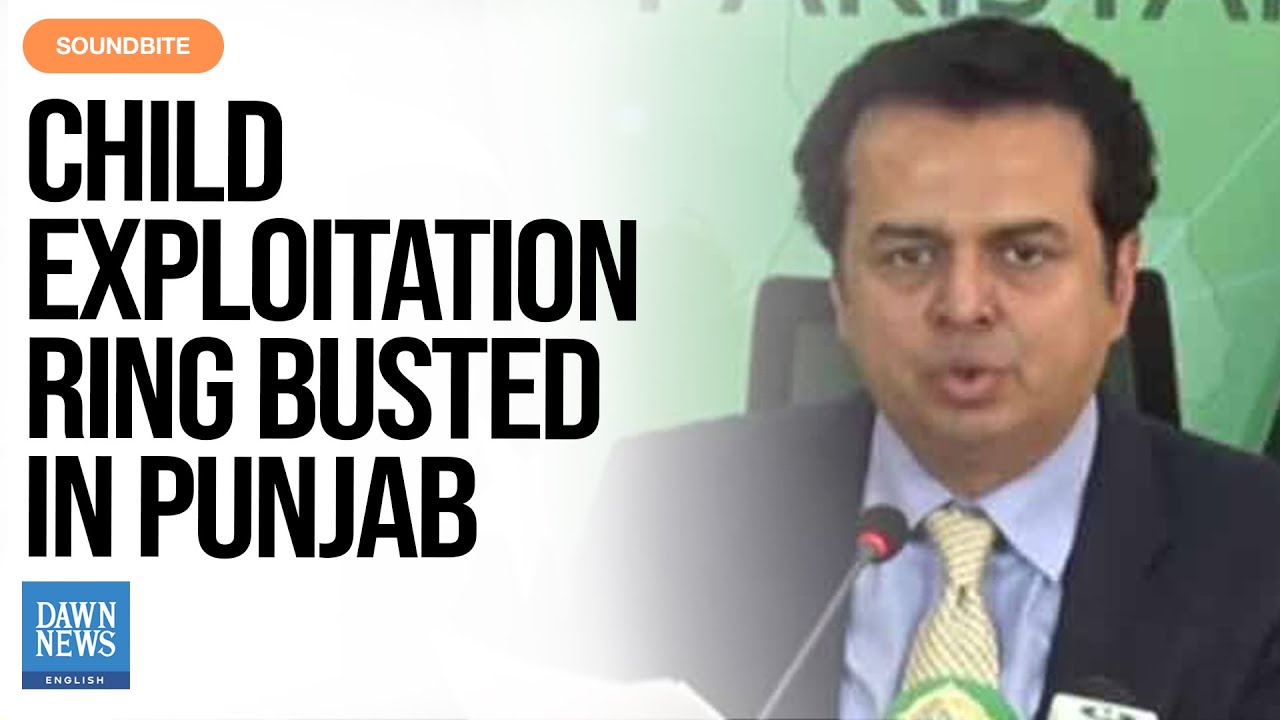
Esas recomendaciones leen como una lista de verificación de lo que la redada de mayo expuso por accidente. Un consejo extranjero encontró un estudio que el rumor local había presentado bajo un club infantil. La punta no vino de un vecino que confiaba en una línea de denuncia. Ministro de Estado del Interior Talal Chaudhry dijo que NCCIA actuó con inteligencia que corría por los Estados Unidos National Center for Missing and Exploited Children. La Interpol era la otra mitad de la tubería. Una base de datos en otro país vio una cara, o un archivo, que un distrito no tenía.
The numbers around the one house
NCMEC CyberTipline reports linked to Pakistan are not a secret inside the HRCP study. Voicepk’s account of the report lists 1,288,513 in 2020, more than two million in 2021 and again in 2022, 1,924,739 in 2023, and 1,036,608 in 2024. A tip line that large can still miss a brick house if the people who receive the tip cannot get from a hash value to a lane outside Kot Addu. By October 2025, the same reporting environment put Pakistan near 117 million internet users and about 79.9 million active social-media accounts. The audience for a file is no longer a back-room buyer. It is a network.
UNICEF, with ECPAT International and Interpol, added a different scale in the Disrupting Harm research released around Pakistan in September 2026. The household survey estimated that nearly 6 percent of internet-using children ages 12 to 17 — about 1.5 million children — had been subjected to at least one form of technology-facilitated sexual exploitation or abuse in a single year. Of the incidents children described, 57 percent were not disclosed to anyone. The Muzaffargarh victims were younger than that survey band. The survey still answers the question the raid left hanging. A single studio is not the size of the harm. It is the size of the harm that happened to be found.
Two weeks after the May raid, Dawn and later HRCP noted another Muzaffargarh complaint: a child told Saddar police about recorded abuse and blackmail, and after one arrest three more children described similar files shared on Facebook. The agency’s director general had called the gaming-club studio the first and only case of its kind in the country, a locally run production line feeding an international market. «Only» did not survive the month as a description of the district. It barely survived as a description of the method.
Penalties moved; the organizer did not
Amendments to the Prevention of Electronic Crimes Act raised child-exploitation penalties from a roughly seven-to-ten-year band to fourteen-to-twenty years and made the offense non-bailable. Punjab later approved a Child Protection Policy, with UNICEF among the institutions in the room. On paper, the state that missed the studio now has a longer sentence to promise. Paper is not a fugitive in a German passport queue.
Public reporting through September 2026 has not produced a verified arrest, extradition, or courtroom finish for the man Pakistani coverage named as Reinz Andreas. Islamabad said it would work with Interpol and German authorities. A proclaimed-offender order is a domestic label. It does not put a person on a plane. The three local names beside his on that order are also unresolved in any judgment this desk can cite. Junaid and Irfan were the arrests the press conference could point at. The organizer’s absence is the fact that still organizes the case.
Some reporting said parents were complicit, either knowingly or for money. Poverty is the lever those sentences are pointing at, and it is also the excuse that can be used to blur force. Cash, coercion, and threats against children are not a family dispute. They are the business model of a studio that picked six-to-ten-year-olds because the families around Adda Bahar had less power than the buyers on the other end of the wire. HRCP’s demand for emergency protection, counseling, school reintegration, and legal aid is the part of the report that treats survivors as people who still live on that lane, not as a statistic in an FIR.
Training certificates are not a courtroom
On September 18, 2026, NCCIA’s own account posted photographs and video of a training week on Katalyst, software used to identify suspected online child sexual exploitation. Director General Syed Nasir Ali handed certificates to officers who had finished the workshop, delivered with Pathfinder Labs. That is a real institutional step. It is also a bitter calendar. Sixteen months after a studio was found because a foreign tip line already had the tools, the agency was still graduating its own people into the software, while the named foreign organizer remained a line in a proclaimed-offender order.
The AEGIS Alliance has covered the same cross-border pattern for years, including the dark-web arrests that swept hundreds of suspects in a single coordinated action and earlier reporting on networks that moved faster than any one country’s press. Those pieces are not the Muzaffargarh file. They are the reason a German passport and a Punjab brick house can be one case. Readers tracking noticias internacionales y noticias will recognize the shape: the raid is local, the market is not, and the courtroom lags both.
A studio dressed as a game room can run until a database flags a file. The children who were inside it cannot wait for the next certificate ceremony. The useful measure of the August report is not whether officials adopt a new acronym. It is whether the next referral from NCMEC produces a warrant before the organizer’s flight, whether the six children handed to the welfare bureau are still being protected, and whether Reinz Andreas, under that name or whatever name a German file actually carries, is ever made to stand where Junaid and Irfan were made to stand. Until that happens, Muzaffargarh is not a closed case. It is the example HRCP used because the system is still looking at the building from the wrong side of the door.