Mexico Moved Its Next Judicial Election to 2028 After a 13 Percent Turnout While Washington Refused a 16-Year USMCA Extension


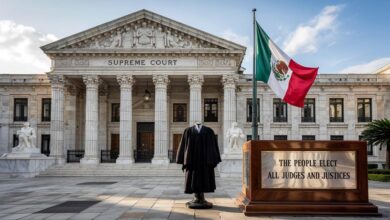
México no mostró elecciones judiciales. Reemplazó el sistema de nombramientos con una votación, juró en los ganadores, y luego movió silenciosamente la próxima ronda del año a la derecha. El 1 de junio de 2025, se pidió a los votantes que eligieran a miles de jueces y magistrados y a los nueve escaños en un Tribunal Supremo recortados de once. Alrededor del 13 por ciento de los votantes elegibles aparecieron. Hojas de trampolín impresas, acordeones, nombres de partidos gobernantes tan ampliamente que los monitores electorales los trataron como parte de los muebles. Cada contendiente del Tribunal Supremo en esas listas ganó. El 1 de septiembre de 2025, el nuevo banco juró ante el Senado.
La segunda fecha es la que los discursos originales no anunciaron. El 2 de junio de 2026 se publicó en el Boletín Oficial una nueva reforma constitucional. No derogó la elección popular de los jueces. Aplazaba las próximas elecciones judiciales federales, establecidas para 2027, hasta el primer domingo de junio de 2028. Law firms reading the text dijo que el paquete también permite que el Tribunal Supremo se sitúe en dos secciones, endurece cómo se evalúan los candidatos y amplía las herramientas de supervisión del Tribunal de Disciplina Judicial. Morena llamó al retraso una oportunidad para profesionalizar el proceso. El efecto práctico es más simple. El tribunal elegido en un barrido de baja duración recibe más tiempo en la silla antes de que se pida a los votantes que terminen el trabajo.
Who sits there, and who is already queued to preside
Hugo Aguilar Ortiz, abogado mixteco de Oaxaca, tomó la mayor parte de los votos de cualquier candidato de la Corte Suprema, apenas más de seis millones, y se convirtió en juez principal. Es la primera persona indígena que dirige la corte desde Benito Juarez. Una vez aconsejó a las comunidades zapatistas y luego trabajó dentro del estado en archivos que incluían el Tren Maya. Los activistas que querían un símbolo recibieron uno. Los analistas que querían distancia de la coalición gobernante no lo hicieron.
Tres jueces nombrados por primera vez bajo Andres Manuel Lopez Obrador, Lenia Batres, Yasmin Esquivel, y Loretta Ortiz, ganaron nuevos términos en la misma votación. La reforma de 2024 dijo que la presidencia gira cada dos años por votación total. Bajo esa lectura, el mandato de Aguilar como presidente corre hasta el 31 de agosto de 2027, y Batres, segundo en el voto, tomaría el dúo al día siguiente. A constitutional contradiction El Pais mapped in August 2026 todavía está sentado en el texto. Otro artículo dice que la corte completa elige a su presidente cada cuatro años y que el ganador no puede ser reelegido inmediatamente. Los redactores dejaron vivas ambas frases. En algún momento antes de septiembre de 2027 los ministros tendrán que decidir si la gente ya eligió al próximo presidente o si los ministros pueden elegirla. Eso no es una broma de programación. Es la reforma discutiendo consigo misma.
On September 8, 2026, Aguilar delivered the first annual report in front of President Claudia Sheinbaum. La Jornada recorded the numbers he wanted remembered. The court took in 15,051 jurisdictional files and resolved 13,231, about 88 percent. Of 1,479 inherited matters, 44 remained. He said there was no backlog and no inefficiency, only real change. He claimed savings of more than 4.7 billion pesos and declared that privileges were over, including major medical insurance for ministers. He did not dwell on the court’s request for a 17.2 percent nominal budget increase for 2027, or on Sheinbaum’s August rebuke after six ministers voted to restore that insurance with public money. «The people also rule in the judiciary,» he said. A report delivered to the president who inherited the reform is an odd place to prove you take no instructions.
Washington blinked, then talked about cars
En 2024 y 2025, Estados Unidos la embajada y el embajador de Canadá, Graeme Clark, enmarcaron la reforma como una amenaza a la justicia independiente y a los tribunales laborales que el Acuerdo Estados Unidos-México-Canadá asume. Los inversores querían un banco que hiciera cumplir contratos sin un volante de campaña. La revisión de la USMCA de seis años llegó el 1 de julio de 2026, y la lucha pública se había movido. Reuters reported that U.S. Trade Representative Jamieson Greer refused to extend the pact for 16 years. «The United States did not agree to renew the USMCA in its current form,» he said. Mexico and Canada had asked for the extension. The agreement stays in force, with annual reviews, until it expires on July 1, 2036, unless the three governments confirm a longer term in writing.
La declaración de Greer se centró en déficits comerciales y reabastecimientos, no en un nuevo seminario sobre jueces electos. Estados Unidos el déficit de bienes con México fue de $197 mil millones en 2025, y con Canadá $48.3 mil millones. Las reglas de origen automotriz fueron la lucha que el ministro de economía de México dijo que todavía estaba abierto. Se reservaron conversaciones bilaterales para la semana del 20 de julio. El 26 de septiembre de 2026, Sheinbaum todavía describía negociaciones separadas con Washington sobre aranceles de acero, aluminio y vehículos junto con el examen del tratado. El susto judicial fue el exceso. La factura era sobre autos y déficits.
That foreign anxiety was never only a moral argument. Mexico’s old appointment system was not a temple. It leaked, it sold information, and U.S. counsel often found it comfortable when nationalist statutes were on the table. Lopez Obrador’s answer was to blow up the machine rather than scrub it. The honest version is both things at once. The old court was not clean. The new court was not chosen by an informed public. Thirteen percent turnout, a pile of spoiled ballots, and party cheat sheets are a low-energy ratification of an amendment the legislature already had the votes to pass.
What the first year actually tests
The cases that matter are not the austerity applause lines. They are preventive detention, the militarization of public security, tax fights that touch foreign capital, and any file that pits a Morena statute against a treaty clause. A disciplinary tribunal can remind a circuit judge what loyalty costs. Faceless benches for organized-crime dockets can hide the name on the order. Letting the court split into two sections may clear the docket the 2024 reform created when it abolished the chambers and forced everything through the full bench. Speed is not independence.
Silvia Delgado, a former lawyer for Joaquin Guzman, won a criminal judgeship in Ciudad Juarez in that first election. One result did more to explain the panic than a dozen ambassador cables. A system sold as an anti-corruption cleanse produced a winner whose famous former client was the most famous trafficker in the hemisphere. Electing judges does not drain cartel money from campaigns. It can make the money more efficient. A candidate with a printed list needs to be recognizable on a flyer. Organized crime understands flyers.
Aguilar has talked about taking sessions out of the marble building to bring justice closer to the people. Travel is a photograph. Independence is a loss column: a ruling against the party that put you there, followed by still having the job in the morning. Human Rights Watch warned in 2025 that the election model was likely to make the judiciary more loyal to the government. The first annual report did not refute that warning. It managed it.
Readers who follow The AEGIS Alliance coverage of politics and captured institutions will recognize the move. Change the selection rules. Keep the patronage. Call the result the people. Our Costa Rica investor-justice file showed how fast Washington discovers the phrase rule of law when money is stranded. Mexico is the larger version. U.S. lectures about judicial independence also arrive with a history: privatization, IMF pressure, and a drug war that treated Mexican courts as a venue for protecting cross-border capital. Those lectures are easier to dismiss because of that history. Dismissal is not a blank check for Morena.
2028 is the test the speeches described
Half the remaining federal judges still have to face voters. If the 2028 round looks like 2025, turnout in the teens and acordeones in every plaza, the experiment is over as an experiment. It will simply be how the Mexican federal bench is staffed. If turnout jumps and names from outside the lists survive, the ruling party will have to live with a court it does not own. That is the only version of this reform that matches the speeches Sheinbaum still gives.
Until then the facts are blunt. The court is seated. The chief justice is Hugo Aguilar Ortiz, and the constitution cannot decide whether Lenia Batres inherits the gavel by vote total in 2027. The lists won the first round. The next ballot is June 2028, not 2027. The trading partners are unhappy about deficits even when they have stopped leading with judges. Democracy is not a slogan you print on a cheat sheet. It is whether a judge can say no to the party that put him there and still have a job in the morning.