Former WACH Fox 57 Anchor Matthew Turner Vereen Is Serving 30 Months After a Richland County Exploitation Plea


A weekend sports open put Matthew Turner Vereen on television. A Richland County plea put a number of months on the public record. The months are the story that the booking photo never was.
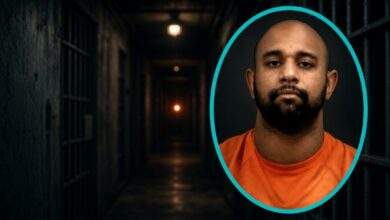
Matthew Turner Vereen was a weekend sports anchor and reporter at WACH Fox 57 in Columbia when South Carolina Attorney General Alan Wilson’s Internet Crimes Against Children task force arrested him on August 21, 2024. Investigators said child sexual abuse material involving a girl was found on his personal Apple laptop during a search that month. The original charging sheet listed two counts of sexual exploitation of a minor in the second degree and one count in the third degree. Each of those felonies carried up to ten years. The AEGIS Alliance is not going to describe the files. The court result is the fact that still has to be read beside the mugshot: a guilty plea, thirty months, a registry, and devices that do not go home.
What the attorney general actually announced
Wilson’s office announced the arrest on August 23, 2024. Columbia Police and Homeland Security Investigations, both ICAC partners, assisted. Vereen, then 28 and living in Columbia, was booked into the Alvin S. Glenn Detention Center. Bond was set at $40,000. He was released pending the case. The attorney general’s statement said he distributed and possessed the material. WACH said it understood the severity of the allegations and had suspended him. A suspension is a personnel action. It is the correct minimum for a newsroom. It is not a finding of fact. Only the court could supply that, and the court took another year.
Vereen is a Greenville native. Station biographies that later came down said he had arrived in Columbia after a stint at KOLR-TV in Springfield, Missouri. Weekend sports anchors in mid-sized markets live on high-school scores and local familiarity, which is why a booking photo travels farther than the charging language. The job was the amplifier. The laptop was the evidence. Viewers who had watched him read a box score were not watching a special class of defendant. They were watching a defendant whose employer happened to own a transmitter.
South Carolina sorts these felonies by degree. In this investigation, the second-degree counts were the distribution allegations. The third-degree count was the possession allegation. Anyone who stopped reading in August 2024 still thinks the exposure was three stacked ten-year counts. The file that left the Richland County Courthouse in September 2025 was one count, and it was still a prison sentence.
September 9, 2025, and the bargain
Vereen pleaded guilty to one count of third-degree sexual exploitation of a minor. Circuit Judge Daniel Coble imposed sentence at the Richland County Courthouse on September 9, 2025. WIS y el Post and Courier reported a thirty-month term, sex-offender registration, and forfeiture of the devices. He was 30. Attorney general’s office spokesman Robert Kittle said prosecutors and the defense had agreed to ask for a two-year floor. Coble went to two and a half. The other two counts were dismissed under the plea.
The Post and Courier’s account added a timing detail the arrest-day headlines did not carry. Investigators described video, said Vereen had used social media to obtain paid videos, and traced possession to July 2023, more than a year before the search that produced the arrest. That is a chronology of the investigation, not a description of what was on the screen. Readers should not fill in the gap with guesses. The admitted count is third-degree exploitation. The dismissed counts are not an acquittal and they are not a conviction. A plea is a bargain: the state trades stacked exposure for an admission, and the defendant trades trial risk for a number he can count.
The attorney general’s office kept the prosecution instead of handing it to a circuit solicitor. That is ordinary for ICAC cases in South Carolina. It is also a signal that the office wanted the file on its own docket. Device forfeiture is the quiet line in the judgment and the line that matters for any later case. Laptops and phones that held the material stay with the state. Registration puts Vereen’s name on a public list after release. Thirty months is not a life term. It is not probation either. For a former on-air employee in a state capital, the combination ends the broadcast career whether or not WACH ever issues a second statement.
What a newsroom still gets wrong
Stations like to write these stories as if the word «journalist» is the shock. The shock is the evidence. A sports anchor has no special access that explains child sexual abuse material on a personal laptop. The job explains why the photograph moved. It does not explain the files. A one-sentence suspension, followed by silence, leaves the public with a mugshot and no disposition. That is how an arrest hardens into folklore while the plea disappears from the same homepage. The useful habit is to keep the disposition on the same URL as the arrest.
ICAC task forces exist because this material moves across state and national networks. HSI’s presence on the Vereen search is the federal piece local recaps skip. A laptop in Columbia can be an endpoint in a wider distribution graph. The published facts do not claim Vereen ran a ring. They claim he possessed the material and, at the charging stage, distributed it. The plea admitted the possession-level felony. That is enough for a prison term. It is not a license to invent a conspiracy the court did not find.
The AEGIS Alliance keeps related dispositions in the Crime News file, including cases that also began with a workplace title: the Santa Paula school-counselor prosecution, el New Jersey Operation Bad Santa sweep, y Mobile, Alabama, detective case. Titles change. The charging language does not. A wider map sits in the California child-sex-crimes sweep y el international dark-web bust that produced 337 arrests.
Where the sentence went after the courthouse
After sentencing, Vereen was received at Kirkland Reception and Evaluation Center in Columbia, the intake point for new state inmates. Corrections spokeswoman Chrysti Shain told the Post and Courier that the assessment, including mental-health evaluation and a decision about treatment needs, generally takes one to two months before a permanent assignment. Kirkland was the front door in September 2025. The Department of Corrections has not published a later housing assignment beyond that intake. Earned credits can move a projected date. The court number remains thirty months.
Readers looking for a trial transcript will not find one. The case ended the way most of these dockets end: a plea in a county courthouse, a number of months, registration, and forfeited devices. WACH’s suspension is historical context. Greenville roots and a Missouri sports desk are biography. None of that is mitigation in a statute that treats the files as the offense. South Carolina will keep running ICAC operations. The station is a former employer. The laptop is in the state’s hands. The name that used to sit on a Friday-night open is a sentenced defendant, under United States News y Crime News.