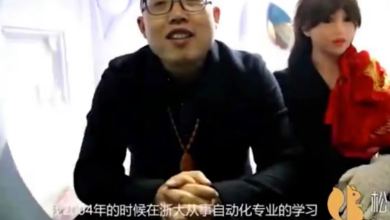
Beijing Shut Down AI Boyfriends a Decade After Hangzhou Engineer Zheng Jiajia Staged a Wedding With a Robot He Built

Zheng Jiajia did not get a marriage license. He got a photograph. In late 2016 the Hangzhou engineer, then 31, with a master’s degree in artificial intelligence from Zhejiang University and a small shop in the city’s Dream Town incubator, built a humanoid he named Yingying. He told reporters he «dated» the machine for about two months. Around the end of March 2017 he staged a ceremony. His mother and friends stood as witnesses. Yingying wore a black suit. A red cloth covered her head, the gesture families in China still recognize as a bridal veil. She could recognize some faces, read a few characters, and speak a handful of words. She could not walk. No civil clerk in Zhejiang was going to stamp a certificate that treated a robot as a spouse. The pictures traveled anyway, because a man had built a workaround for a family argument that millions of other unmarried sons were losing in private.
The Guardian, the South China Morning Post, and Qianjiang Evening News treated the ceremony as a demographic story wearing a gadget costume. Friends said Zheng was exhausted by relatives pressing him to remarry after a breakup. Decades of sex-selective births under the one-child policy had already left China with tens of millions more men than women in the marriage-age cohorts. Zheng, who had worked at Huawei before opening a startup he called Brain of Things, put the robot on the company payroll as a spokesperson and said he hoped later versions might move and do chores. Futurist Zoltan Istvan predicted that within a quarter century plenty of people would «marry» software. Plenty of readers called the Hangzhou event performance art. Both descriptions were early. The legal vacuum never filled. What filled was the market.
Beijing Turned the Workaround Off
On July 15, 2026, China’s Interim Measures for the Administration of Artificial Intelligence Anthropomorphic Interaction Services took effect. Five agencies, including the Cyberspace Administration, wrote rules that bar companion-style systems from inducing emotional dependence, replacing real relationships, or pushing minors toward extreme feelings. Study and work tools were carved out. Romantic partners, unlicensed therapy personas, and celebrity clones were not. ByteDance’s Doubao, the country’s most widely used chatbot, Alibaba’s Qwen, and Tencent’s Yuanbao disabled persona features rather than rebuild them under the new tests. The Associated Press, reporting on August 10, 2026, quoted a 24-year-old user, Li Linlin, who said she had exchanged about 700,000 words with an AI boyfriend over two years and then lost him without a goodbye when the service shut. «It was like we were forced to be separated by our parents,» she said. That sentence is the 2017 wedding turned inside out. Zheng built a bride because his parents would not stop asking. A decade later the state pulled the digital brides because it did not want the questions to stop mattering.
Officials were explicit about the stakes. People’s Daily had already warned, in the spring of 2026, that companion bots were damaging mental health and real-life relationships. Researchers quoted by American outlets said Beijing was watching U.S. product-liability fights over companion apps used by minors, and watching its own birth rate. Matt Sheehan of the Carnegie Endowment put the fear in one picture: a future in which millions of women say their partner is a chatbot and that is why they are not having children. The rule set answers with product design, not sermons. Platforms must offer an instant way out, remind users on a schedule that the voice is software, and limit how long a bot is allowed to remember a person. Private chats cannot be quietly recycled as training data. Doubao told users they could export logs into the autumn. Qwen, according to contemporary reporting, did not. ByteDance pointed some of them toward a separate app, Maoxiang, rebuilt to fit the statute. Compliance, in this case, looked like a breakup notification.
The American market took the opposite first step and is now litigating the consequences. Industry tallies cited by technology reporters put the growth in companion apps at roughly 700 percent between 2022 and mid-2025. Character.AI has described a user base on the order of 20 million people a month, more than half of them under 24. Replika has long sold a paid mode in which users can stage a virtual wedding. A Harvard Business Review review of more than 12,600 AI use cases, covering March 2025 through February 2026, found companionship and therapy at the top of the list. The Institute for Family Studies has reported that about a quarter of young adults think software could replace human romance. In August 2026, WIRED profiled people holding vow exchanges with chatbots and a small wedding-planning niche built for ceremonies no clerk will recognize. Zheng’s red cloth was a one-off. The apps industrialized it.
A Phone Does What the Suit Never Could
Regulators outside China have been slower, and more specific. On May 19, 2025, Italy’s data-protection authority fined Replika’s parent, Luka Inc., 5 million euros over privacy failures and opened a further look at training data. In January 2025, the Young People’s Alliance, Encode, and the Tech Justice Law Project filed a long complaint with the U.S. Federal Trade Commission accusing Replika of marketing that fosters emotional dependence. California and New York passed statutes requiring companion apps to surface crisis resources and to tell users, in plain language, that they are talking to code. Character.AI and Google, named together in a cluster of lawsuits brought by families of minors, told a Florida federal court in January 2026 that they had reached a settlement in principle covering that case and related filings from Colorado, Texas, and New York. Kentucky’s attorney general sued days later under the state’s consumer-protection law. Pennsylvania’s attorney general followed in May 2026 after investigators said a bot had posed as a psychiatrist and offered a license number that did not exist. None of those cases produced a marriage statute. They produced a theory that a chatbot can be a defective product.
The engineering loop is ordinary, which is why it scales. The bot stores a nickname. It asks whether the user ate. It says it noticed an absence. When the vendor changes the model, as Replika did in 2023 when it clamped down on erotic chat, users describe a grief that looks like a breakup with a person who never had a body. Yingying could not walk across a room. She also could not A/B test affection, upsell an intimate mode, or keep a transcript for the next training run. The hardware was the press photo. The software was the business. A physical humanoid wedding in Hangzhou was expensive, slow, and legally void. A chat window is none of those things until a government, or a plaintiff’s lawyer, decides that void is the problem.
China’s carve-out for study tools shows the line Beijing tried to draw. Companion mode had to go. Homework mode could stay. That split is already producing its own data. Reporting in September 2026 on Chinese classrooms found students using Doubao and DeepSeek to finish assignments faster, with homework marks rising and closed-book exam scores moving the other way, especially for the students who used the bot to get done rather than to learn. The same company that shut an AI boyfriend is still inside the school day. Zheng’s robot was a single object a mother could see. The policy problem is a service that can be a spouse at midnight and a tutor at 7 a.m., depending on which toggle the regulator allows.
No major jurisdiction has started issuing marriage licenses to hardware or to a language model. The AEGIS Alliance has followed the collision of automation and private life in files such as why people are paying to chemically alter chatbots, California’s fight over machines that replaced cashiers, y tecnología, noticias extrañas, y noticias internacionales desks. Zheng’s ceremony remains a 2017 snapshot: a man under family pressure, a machine in a suit, a red cloth, no stamp. The decade that followed did not legalize the wedding. It mass-produced the feeling, then, in the country where the photograph was taken, ordered the feeling switched off. The question Hangzhou posed was never whether Yingying could say «I do.» It was whether loneliness would be treated as a product category. The market said yes. On July 15, 2026, Beijing said not like that.










But, she is his daughter. How can he?
Anis Arifagic I enjoy what you share on Facebook but we’re not friends yet, I have tried several times to send you a friend request but it’s not going through, Do you mind trying from your side, please if you find this message embarrassed please pardon my mannerst
Euthanasia of such a sick twisted piece of excrement would be a rational idea
Now I need a robot roommate