Navy Tic Tac Videos, AARO, and the Pentagon’s Sixth UAP File Dump Still Do Not Verify an Alien Craft

On December 16, 2017, the Pentagon stopped pretending a slice of its budget had not been spent on unidentified flying objects. The New York Times, Politico, and The Washington Post reported that a program called the Advanced Aerospace Threat Identification Program, AATIP, had run inside the Defense Department from 2007 to 2012 on about $22 million. The money was small next to a budget measured in hundreds of billions. The secrecy was the point. The public learned about it only because Luis Elizondo, the military intelligence officer who said he had run the effort from the Pentagon’s C Ring, resigned and walked out with a handful of Navy videos.
Harry Reid, Senate majority leader when the money was tucked into the budget, was not shy about his role. He told the Times he was not embarrassed. He called it one of the good things he did in Congress. The same day, he posted a cleaner version of the same idea: if anyone says they have the answers, they are fooling themselves. The country does not know. It has enough evidence to justify the questions. The subject, he wrote, is science and national security, and if the United States does not lead, someone else will.
The partner on the research side was Bigelow Aerospace, owned by Reid’s friend Robert Bigelow, a hotel magnate who had already said on CBS’s 60 Minutes that he was absolutely convinced aliens exist and that UFOs have visited Earth. Bigelow’s complaint was cultural as much as scientific. He said American scientists feared being ostracized and American newsrooms feared the stigma, while Russia, China, Belgium, France, Britain, and Chile were more willing to keep the file open. Pentagon spokesman Thomas Cross said AATIP had ended around 2012 because higher priorities needed the money. Elizondo said the funding line died and the work did not. In October 2017 he told reporters he had become convinced the phenomena were real.
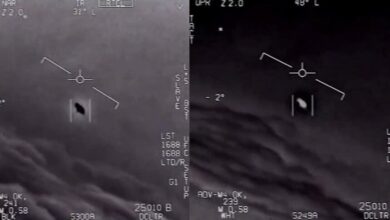
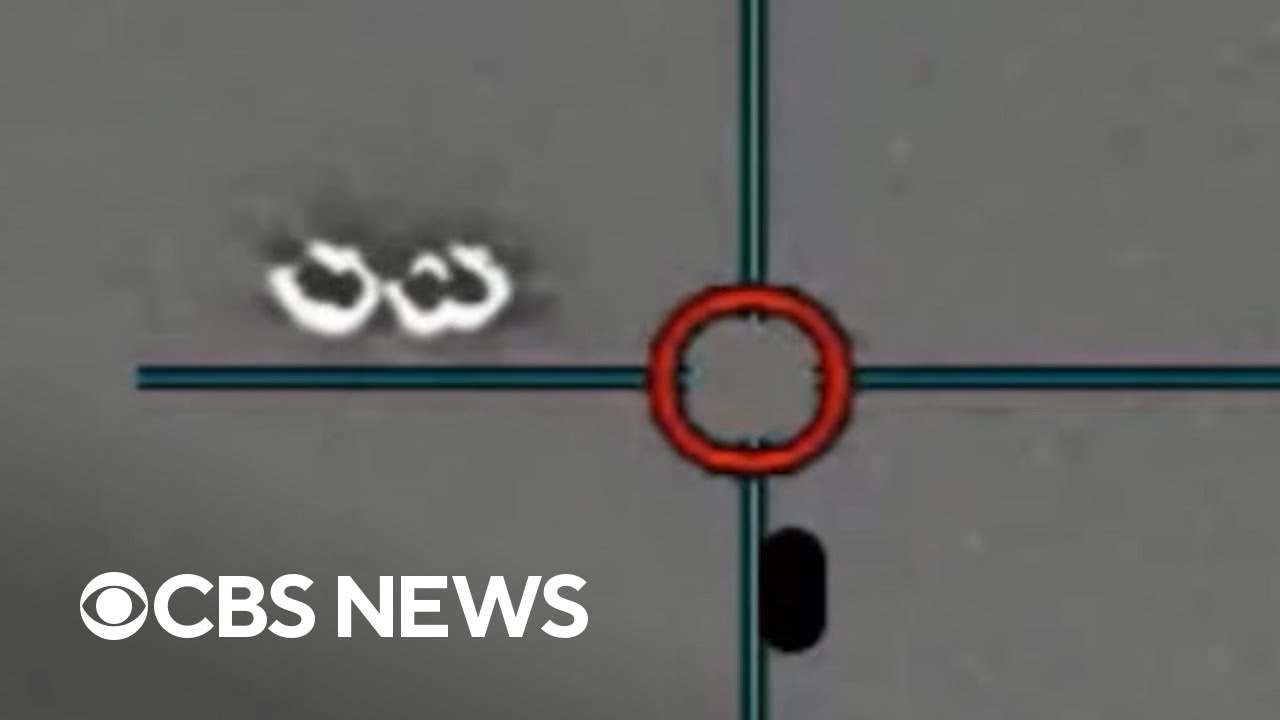
The images that made the argument public were not a white paper. Navy pilots had recorded objects they could not identify. The most famous, shot in November 2004 off the USS Nimitz by the F/A-18s of the Black Aces, shows a white, wingless shape the aircrew nicknamed the Tic Tac, moving in ways they said did not match a conventional jet. Two other clips, later known as Gimbal and Go Fast, came from the East Coast training ranges in 2015. The Pentagon released all three officially on April 27, 2020, and said the videos did depict «unidentified aerial phenomena,» the phrase it preferred to UFO. Authenticity of the footage is not the same thing as an origin story. The Defense Department confirmed the objects were unidentified. It did not confirm they were visitors.
Elizondo’s line in a later CNN interview still circulates because it is narrower than the headlines built on it: «My personal belief is that there is very compelling evidence that we may not be alone.» Personal belief is not a finding. It is also not nothing, coming from the man who says he ran the program. The gap between those two sentences is where this subject has lived ever since.
Congress eventually got tired of anecdotes. Hearings in 2022 and 2023 put pilots and intelligence officers under oath. NASA stood up a study team. The Pentagon created the All-domain Anomaly Resolution Office, AARO, to take reports from every service and try to resolve them with sensor data instead of campfire rules. In March 2024, AARO published the first volume of a historical review running from 1945 forward. The office said it had found no empirical evidence that any U.S. government investigation, historical or current, had confirmed extraterrestrial technology, and no evidence of a recovered craft or a reverse-engineering program hidden from Congress. Director Jon Kosloski later told senators the same thing in plainer words. No verifiable evidence of extraterrestrial beings, activity, or technology.
The case count did not shrink just because the conclusion was cautious. AARO’s consolidated annual report for the period ending in 2025, released in July 2026, logged 319 new or previously unreported cases. Analysts resolved 114 of them, about 36 percent, as balloons, drones, satellites, birds, and sensor artifacts. Another 256 older cases were closed with newer tools that are better at catching satellite flares. Nine reports were odd enough to need more work. The office’s categories for a resolved case are deliberately earthbound: airborne clutter, natural atmospheric phenomena, U.S. government or industry programs, foreign systems, and a leftover bin marked other. «Other» is not a synonym for alien. It is the pile that still lacks range, speed, or a second sensor.
A separate track opened in February 2026, when President Trump directed a declassification push. The Pentagon began posting files through the Presidential Unsealing and Reporting System for UAP Encounters, PURSUE, at war.gov/ufo. Five tranches went up between May 8 and August 7, 2026. On July 31, 2026, Principal Deputy Director of National Intelligence Aaron Lukas issued preliminary guidance that mattered more than another grainy clip. Current and former employees and contractors may now talk to AARO or the PURSUE task force even if an old nondisclosure agreement told them not to. Agencies were told to name a point of contact and to tell their workforces those interviews are not a violation. That is a narrow door. It is still the first time the intelligence bureaucracy has said, in writing, that the silence contracts do not cover this one official channel.
Then came a sixth batch, on September 18, 2026. The Pentagon posted 71 files. Sixty-seven came from the department and four from local police in Colorado. The set holds 55 PDFs, 15 videos, and one audio file. Sixty-four of the 71 are redacted. The dates run from 1952 to 2025. Most of the video looks like the earlier dumps: military sensors, short clips, objects crossing the frame without a clean range. One 2022 report describes an object, or objects, estimated at one to two metres, moving between roughly 80 and 180 miles per hour. A 2025 infrared clip from a U.S. military platform in the Middle East, case DOW-UAP-D108, shows what the reporter called six small spherical objects flying together, «seemingly agile,» changing direction often, with an estimated speed of about 480 miles per hour. AARO has not presented that clip as proof of performance beyond known aircraft. A separate Yellow Sea infrared, about 27 seconds, came in from Indo-Pacific Command in 2023. Colorado cellphone video from October 2023 describes a silent object with red, blue, and green lights. The audio file is older and stranger in a bureaucratic way: a 65-minute recording of Captain Edward J. Ruppelt, on March 26, 1952, briefing the Air Force’s UFO investigation. Ruppelt said roughly 20 percent of about 800 cases stayed unexplained after technical review, and that the service had reached no conclusion about what they were.
The sixth tranche also includes studies the old AATIP-era contractors commissioned on warp drives, wormholes, and injuries some researchers associated with close encounters. Avi Loeb, the Harvard astrophysicist who has pushed for treating these files as data, noted that this was the first dump to put physiological injury reports in the same stack as the videos. AARO’s position did not move. Unresolved, the office says, means the data are not good enough. It does not mean the object was built somewhere else.
On September 30, 2026, AARO’s own account said the Naval Postgraduate School had interviewed Kosloski for an executive course aimed at senior officers. The subject was detection, reporting, and domain awareness. That is what institutionalization looks like. The topic that once lived in a $22 million side pocket now has a director, a reporting standard, a public file room, and a slot in professional military education. AARO also held a private workshop on August 5 and 6, 2025, hosted by Associated Universities, Inc., with about 40 people from government, universities, and civilian databases. The public white paper came out in February 2026. The recommendations were unglamorous: standardize the data, keep the historical record, connect the databases, use machine learning carefully, and leave a human in the loop. Freedom of information records released later that year showed the office was already planning a follow-on workshop and had met Uruguay’s official UAP body.
None of this settles the question Reid said nobody should pretend to have settled. The Nimitz aircrew described an object that outran their jet and dropped from high altitude to sea level in seconds. Later official reviews have tried to pull some of those claims back toward sensor error and classified programs. The pilots have not recanted. The files keep arriving with redactions where the interesting numbers would be. Range, altitude, and platform motion are what an analyst needs, and those are exactly the fields that stay blacked out. A verified extraterrestrial craft is still not in the stack. A verified bureaucracy that now treats the reports as a defense problem, rather than a punchline, is.
The AEGIS Alliance has followed this file from the 2017 leak through the Carter-era sightings and the intelligence archives that used to be filed under «flying saucer» and are now filed under UAP. See Jimmy Carter’s UFO encounter, the CIA’s flying-saucer files, y The Unexplained Or Unconfirmed. The videos forced the door open. The paperwork since then has mostly described the shape of the doorway.