
The federal case about the nighttime hum at Microsoft’s Fairwater campus in Mount Pleasant, Wisconsin, is not moving. On September 23, U.S. District Judge J.P. Stadtmueller signed a text-only order that stopped the lawsuit because the people who filed it and the company they sued told him they have a preliminary settlement. Nobody has published the terms. The next date on the docket is not a trial. It is November 2, 2026, when the parties must either ask the court to approve the deal or file a status report explaining why they cannot.
情况是 Ostergaard诉微软公司, No. 2:26-cv-01169, in the Eastern District of Wisconsin. Garret Ostergaard, David Wade, and Joy Wade filed it on July 1, a class-action complaint with a jury demand. They live in Sturtevant, close enough to the building at 4800 90th Street that they say the sound reaches their bedrooms. They sued for themselves and for a class their lawyers put at about 1,000 homes within roughly a mile and a half. The legal labels are private nuisance and negligence. The human label, in the complaint, is that a house stopped working as a place to sleep.
邻居说这栋楼晚上做什么
The complaint says Fairwater throws off unreasonable noise from diesel backup generators and from the cooling plant: chillers, cooling towers, air handlers, and condenser fans. It says the noise is not a spike. It is constant. It also draws a distinction that ordinary noise ordinances often miss. Some of the equipment is loud on a standard decibel meter. Much of what residents describe as a low hum is low-frequency sound that a dBA reading is built to under-count. A village can publish a number that says the plant is legal and a household can still feel the sound in a wall.
Ostergaard’s account, as pleaded, is specific. He had been working a third shift. He moved to a second shift because the noise was wrecking his sleep. The Wades say they cannot use their deck the way they used to. The complaint quotes a neighbor, Beth Kane, describing the sound as a nightmare that brought headaches, and describing box fans left running so the house had some other noise to hide it. Those are allegations in a pleading, sworn in the way a complaint is sworn, and they had not been tested by a trial when the parties asked the judge to stop the clock.
他们的律师,底特律的"Laura Sheets"和密尔沃基的"Hansen Reynolds"的迈克尔·勒德(Michael Lueder)在7月2日的一出报道中说,这起诉讼案是一连串类似的案件 底特律公司已经向数据中心提交了申请 威斯康辛公共广播电台 编辑 《密尔沃基日报》 both covered the filing the day after it hit the court. The pattern those stories describe is no longer exotic. Facilities in other states have drawn noise suits and violation notices of their own. Fairwater is the Wisconsin version, and it arrived the same summer the building went live.

微软自己的时间线不匹配缩放
微软没有把hum当作想象. 在一个 当地公共博客, the company posted a series of notes from the Mount Pleasant site it calls Fairwater 1. The April 15 entry says neighbors north of the campus noticed a tonal hum as equipment came online. Engineers traced it to cooling fans running at high speed. Microsoft said it had expected some startup noise and had not expected the tone to travel as far as it did. The company said it was adjusting the fans by hand and hoped the tonal problem would be addressed by April 20.
The June 18 entry goes further. Microsoft said tests and mitigations were in place, that independent monitoring lined up with what several neighbors reported, and that those mitigations had fully resolved the issue for the people who confirmed it. The same note says short-term work was continuing and that more sound-reduction hardware would be installed over the following months. A July 20 note says engineers and consultants were still evaluating sound at the facility. Read in order, the posts admit a tone, claim a fix, and then keep measuring. They are not a court judgment. They are the company’s account of a problem it says it found.
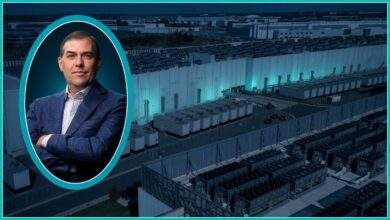
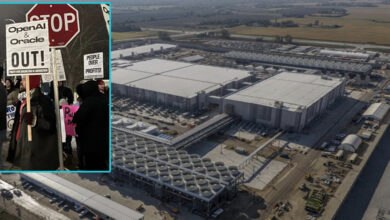
The campus itself is the first of a series of buildings Microsoft has planned for the site, and the company has promoted it as an AI training hall. Public descriptions now line up on the scale local television has used: a campus of about 315 acres and a building on the order of 1.2 million square feet, drawing enough power that counsel for the neighbors say Microsoft has talked about a future need on the order of 900 megawatts. Reporting on the opening has put the Wisconsin investment at $7.3 billion. Satya Nadella had already told the public, in April, that the site was ahead of the original schedule. By June, Microsoft was calling the hall operational. The lawsuit landed on July 1.
吵闹案如何达成中止 而不是驳回动议
Microsoft’s lawyers, including Paul Benson and, later, a Faegre Drinker team with Matthew Olsen, Henry Kelln, Kirstin Stoll-DeBell, and Elizabeth Scheibel, did not file the dismissal motion the calendar had made room for. In August the court restricted an executive summary the parties wanted kept off the public record. On August 14, Stadtmueller let the plaintiffs file a second amended complaint by August 31. They did, and they kept the jury demand. On September 8 the court said Microsoft could move to dismiss by September 29. That motion does not appear on the docket.
What appears instead is ECF No. 21, filed September 22 at 3:46 p.m.: a joint motion to stay, and a notice that the two sides had a preliminary settlement. The next afternoon, at 4:30 p.m. on September 23, Stadtmueller granted it. Proceedings are stayed. By November 2 the parties must move for preliminary approval or tell the court, together, where things stand. 公开备审案件, checked after that order, shows nothing newer. A preliminary settlement is a plan to settle, not a check, not a construction change, and not a class member’s release. Until a judge approves it, the class does not exist as a bound group, and the neighbors who were never asked are not stuck with a deal they have not seen.
哼是土地使用事实,不是品牌问题
Data-center fights in 2026 are usually about water, tax abatements, or the electric bill. Fairwater’s federal case is about sound that people say they cannot sleep through. That is a smaller headline and a harder engineering problem. Low-frequency noise does not photograph. A decibel chart can be waved at a council to prove compliance while a third-shift worker changes jobs. Microsoft’s June note says some neighbors signed off on the fix. The complaint says other households did not. Both can be true on a campus this large, which is why a class definition of “about a thousand homes” was always going to be the fight if the case had stayed on a litigation track.
The November 2 filing will tell the public which track won. If the motion for preliminary approval arrives, it should say what Microsoft will build, what it will pay, and who is in the class. If a status report arrives instead, the stay was a pause, not a peace. Either document will be more informative than a blog post that says the tone has been handled. The AEGIS Alliance has been tracking the other side of the same buildout, including AI 计算电源的拼接器 和关于芯片制造者的单一社交媒体 移动股票Fairwater是那个故事的版本 上面有街道地址和甲板 没人想坐着
直到11月,法律地位很简单. 案件尚未结案,索赔尚未解决,联邦法官同意等待。 追随的读者 技术新闻 和 美国新闻 在AEGIS联盟中,应该把hum被"解决"的每条声称视为某人的新闻线. 案卷上说各方认为可以和解. 还没说晚上很安静