


The malware that arrived disguised as an IRS transcript viewer did not need a custom virus. It needed a remote-access program that help desks already trust, a signature from the company that sells it, and an inbox belonging to someone whose job is to open tax attachments. That combination outlived April 15.
On March 19, 2026, Microsoft Threat Intelligence and Microsoft Defender Security Research published the anatomy of a season security teams had already been watching. Tax-themed mail posed as refund notices, payroll forms, and alerts about Electronic Filing Identification Numbers. Some messages only wanted a password. Others installed legitimate remote monitoring and management software. The largest blast, on February 10, reached more than 29,000 users at over 10,000 organizations. About 95 percent of the targets were in the United States. Two waves ran between 10:35 and 19:51 UTC. Banks, technology firms, and retailers absorbed big shares of the volume, but the intended readers clustered around accountants and tax preparers. The write-up is on the 微软安全博客.
AEGIS联盟 is less interested in the seasonal costume than in the tool underneath it. A signed ScreenConnect binary looks, to a tired firewall, like a technician doing a job. That is why the same kits were still useful in July, August, and September, long after the last extension form left a desk.
记录器是用服装连接的
The February messages claimed irregular returns had been filed under the recipient’s EFIN and offered a button labeled “Download IRS Transcript View 5.1.” Amazon SES sent the mail. The button led to smartvault[.]im, a look-alike of the real SmartVault document platform, sitting behind Cloudflare checks meant to keep automated scanners out. After a fake verification animation, the victim received TranscriptViewer5.1.exe. It was a repackaged ScreenConnect build signed by ConnectWise. Once it ran, an operator had a remote session, a path to credentials, and a beachhead for whatever came next. No ransom note. No splash screen. Just a help-desk tool pointed the wrong direction.
黑客新闻 made the targeting explicit. This was not a spray at random households. It was aimed at people whose workday is a pile of tax attachments. That is a different problem than a refund QR code sent to a personal Gmail account, though both showed up in the same season. Endpoint products that hunt for unknown junk will shrug at a vendor IT already allows. A preparer who thinks the IRS just handed over a viewer will click. The rest of the compromise is quiet.
当一个品牌变得热, 工具包改变了品牌
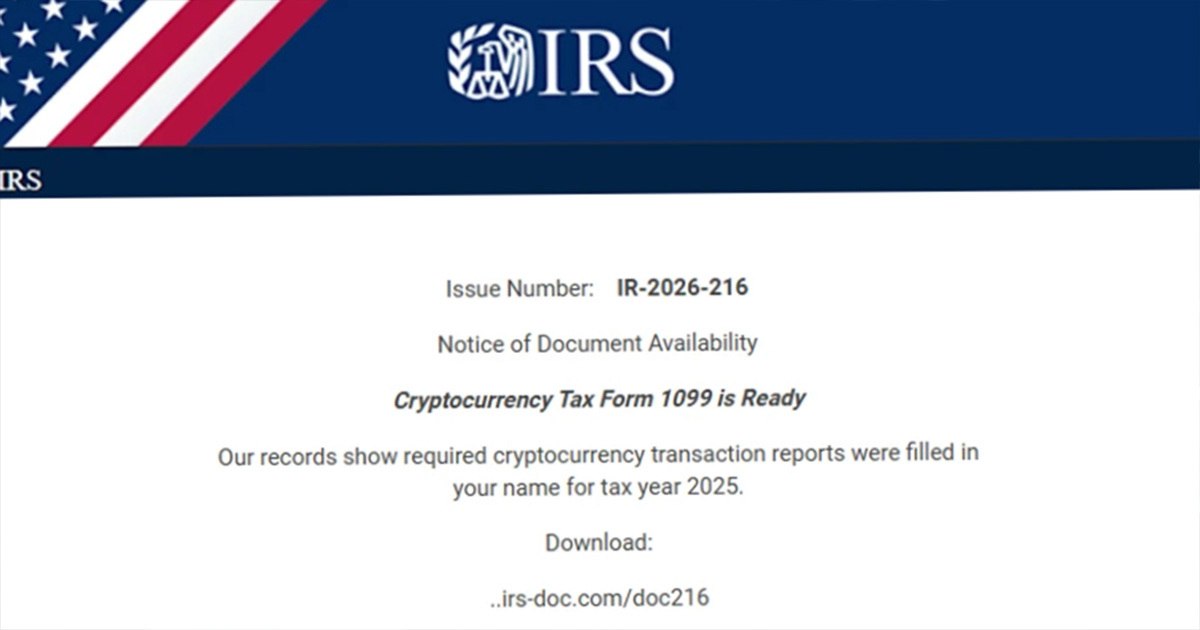
Follow-on waves on February 23 and 27 used the subject line “IR-2026-216,” Eventbrite-styled IRS branding, and a “Cryptocurrency Tax Form 1099” lure aimed at higher education. Domains such as irs-doc[.]com and gov-irs216[.]net dropped IRS-doc.msi files that installed ScreenConnect or SimpleHelp. Variants aimed at accounting firms installed Datto. Microsoft’s researchers noted the same industry trend Huntress had quantified: remote-management abuse up sharply year over year, sometimes daisy-chained so that no single vendor’s telemetry tells the whole story. Elastic Security Labs researchers Daniel Stepanic and Salim Bitam put the design in one sentence. These tools are already trusted inside corporate networks, so they do not trip the alarms reserved for unknown binaries.
Credential theft ran beside the installers. A kit tracked as Energy365, estimated to push hundreds of thousands of messages a day, wore CPA branding. SneakyLog, also tracked as Kratos, hid QR codes in personalized W-2 attachments that opened fake Microsoft 365 logins and captured multifactor codes. The IRS Dirty Dozen for 2026 again listed impersonation by email and text at the top and repeated the only rule that has stayed true: the agency does not start contact by unsolicited email, text, or social media to demand data or payment. That reminder lives on IRS.gov 国税局它在那里生活了多年。 收件箱仍开.
Item eleven on that Dirty Dozen list is the quiet one. It describes “new client” and “document request” mail that delivers malware and steals client files. The February 10 blast was that item at industrial scale. The agency also reported more than 600 social-media impersonators during fiscal 2025. None of those accounts needed a ScreenConnect binary. They needed a logo and a deadline.
July连锁店都不需要irs标志
By summer the costume had loosened. A July incident advisory circulated by CyberHoot, tagged CH-TA-2026-0001, described a preparer who was approached as a prospective client named “Teresa Bair.” The first contact came through the firm’s own website form. Rapport lasted weeks. A “tax meeting” produced a Microsoft Teams link whose visible text read teams.microsoft.com while the real address enrolled the workstation into an attacker-controlled Rippling device-management tenant. Scripts then ran as SYSTEM and tried to plant a second ScreenConnect instance plus FleetDeck, a backup remote tool, so that killing one brand would leave the other. That is the daisy chain in practice, not in a slide.
August brought a different wrapper and the same payload. LevelBlue’s OpsCTI team, writing on August 7, described a large phishing run that impersonated the Microsoft Store and the Apple App Store. Fake update dialogs for Google Meet, Adobe Acrobat, Teams, Zoom, DocuSign, and other ordinary work tools offered an unauthorized ScreenConnect client. No tax form. No EFIN. Just a box that looked like software the user already meant to install. On September 4, security researcher Vladimir Khoetsyan described a related chain in public: a tax lure, an encrypted zip, a Visual Basic script, PowerShell, and a signed installer for ScreenConnect or GoTo Resolve. He said 94 percent of about 240 hosts in that set lived only a day, which is why blocklists lose. The install is the signal. A remote-access agent nobody in IT ordered is the incident.
A September 10 briefing from the hosting firm Verito still used the February transcript-viewer campaign as the example preparers should memorize: 14 rotating sender names, a fake EFIN review, a SmartVault look-alike, a signed remote tool. The calendar had moved. The template had not. Quarterly estimated payments in September and January keep the same anxiety in the same mailboxes. A partner who ignored a transcript viewer in February will still open a notice of underpayment in the fall. Attackers rent sending infrastructure again. They change the subject line. The signed binary stays because the trust stays.
税信箱价值不止一个
编制人员持有社会保障号码、银行线路号码和所有客户名单的上年回报。 1个邮箱收购资金退还欺诈行为和记录在 700起违规事件,导致近600万汽车购买者曝光. Microsoft’s researchers noted that the professionals in the blast were “accustomed to receiving tax-related emails during this period,” which is exactly why the lures work. CISA, the NSA, and MS-ISAC have already warned that portable remote-management executables can run as a local user without a full install, a path used against federal civilian networks. A firm that banned ScreenConnect in February and never looked for SimpleHelp, Datto, FleetDeck, or GoTo Resolve in May did not close the campaign. It changed the costume.
同样的习惯出现在了AEGIS联盟的网络文件中:借用人们已经信任的东西,然后空出它所能达到的东西. 这是形状的 暗影黑客银行排水警告,则 三. 财务处远程访问事件,则 影子网络Google说在骑普通手机不同品牌. 同样的想法。
下一波到底有什么能收缩
Multifactor authentication on mail and financial accounts, conditional access that blocks odd sign-ins, and a written ban on installing any remote-access tool IT did not request are the minimum. Staff should open IRS accounts by typing the official address, never by clicking a button in a message. Suspicious mail can go to 页:1******@*rs.gov (英语).。端点工具需要标出ScreenConnect,SimpleHelp, 达多舰队登机, 或 GoTo Resolution 第一次出现在机器上, 而不仅仅是没有签名的废件 。
Accounting shops should treat a surprise “transcript viewer” the way a bank treats a surprise wire. Call the person who is supposed to have sent it, on a number already on file. Do not call the number in the email. Do not run the file “to see if it looks real.” A signed ConnectWise binary that nobody ordered is not a tool. It is a key. Cleanup that only uninstalls the brand named in a blog post is theater. Pull every unexpected remote-access service, rotate the credentials that lived on that box, and treat every token on the machine as burned. The AEGIS Alliance will keep following how impersonation campaigns migrate from a filing deadline to whatever deadline comes next, on the 黑客新闻 和 美国新闻 书桌.
国税局的标志正在包装。 信任是产品。 任何仍在读取危险为问题的人,在收税日结束的时候,都看的是日历而不是安装者.








One Comment