YouTube 流媒体服务 有1到2个小时的停机时间 美国时间星期三晚上 全球数百万人因中断而无法在服务上流出视频. 更多国家包括美国、欧洲、南美洲和亚洲太平洋。
A group of hacktivists known as “Ghost Squad Hackers” (GSH) claims to be responsible for the downtime caused on the Google-owned Youtube servers. GSH Tweeted that they were responsible for the disruption on Twitter Wednesday morning, self-boasting about it, but without giving valid proof of their claim.
Google至今一直闭口不谈干扰的原因。 自此YouTube恢复, 并开始运行;YouTube发推文表示,
It is important to notify our readers that GSH has a history of cyber attacks, including the CNN servers in previous operations. They are also known to have defaced numerous Afghan websites during 2016. These defaces included the Bank of Israel and the website owned by the Israeli Prime Minister.
他们喜欢的战术是进行分布式拒绝服务攻击,或DDos. 安全分析人士提出,这些相同的网络战战术可能被他们用来在星期三破坏YouTube.
Some twitter users had reports of services such as YouTube, YouTube Music, and YouTube TV being down for nearly two hours on Wednesday. They say the homepage of YouTube was either displaying no videos, or showed a network error when accessed with the mobile. It also affected computer users.
不过, 根据ICANN.org,这也许是ICANN以下是ICANN声明的开头:
洛杉矶 – 2018年10月15日 – 指定名称和号码的互联网公司(饭桶)确定,首次改变密码密钥有助于保护域名系统DNS 数据)完成后,全球互联网受到的干扰最小. 这是自2010年首次被使用以来,该密钥首次被更改.
Adding to the confusion, Ghost Squad Hackers were not the only ones taking credit. A separate group calling itself “Project Zorgo,” which had been positioning itself online as an anti-YouTube collective, also claimed it had knocked the platform offline that same night, even posting a screenshot of a blank YouTube page as supposed evidence. Neither claim was ever backed by technical proof, and to this day no party has produced verifiable evidence that they caused the outage. The competing boasts only underscore a recurring problem with hacktivist outage claims: taking credit costs nothing, while substantiating it is another matter entirely.
What is clear is that Google never publicly attributed the disruption to any hacking group. The most grounded reading, shared by independent security observers, is that the simultaneous failure of YouTube, YouTube Music, and YouTube TV pointed toward an internal fault or infrastructure issue on Google’s side rather than an external DDoS campaign. When a single company’s tightly linked services all go dark at once, a back-end misconfiguration is usually a more plausible explanation than a flood of outside traffic.
The episode also fits a much broader pattern. Over the years, major online platforms including The New York Times, Spotify, Netflix, CNN, and Fox News have all been knocked offline at various points by DDoS exploits or internal failures, and the public is frequently left guessing at the true cause while opportunistic groups rush to claim credit. For readers, the takeaway is to treat any unverified “we did it” announcement with healthy skepticism until hard evidence appears.
关于如何开展分布式否认服务运动和黑客主义主张的更多背景,请参见AEGIS联盟目前的报道。 匿名新闻.
竞相竞争的主张是怎样的,一旦系列脱离出局
The Project Zorgo post was not a technical report. On October 17, 2018, the account @ProjectZorgo wrote that it had “successfully taken YouTube offline,” and attached a screenshot of a blank page. The same account’s YouTube video, posted around the outage, told viewers that a “doomsday date” code had been tested and that the site had been forced down for more than an hour.
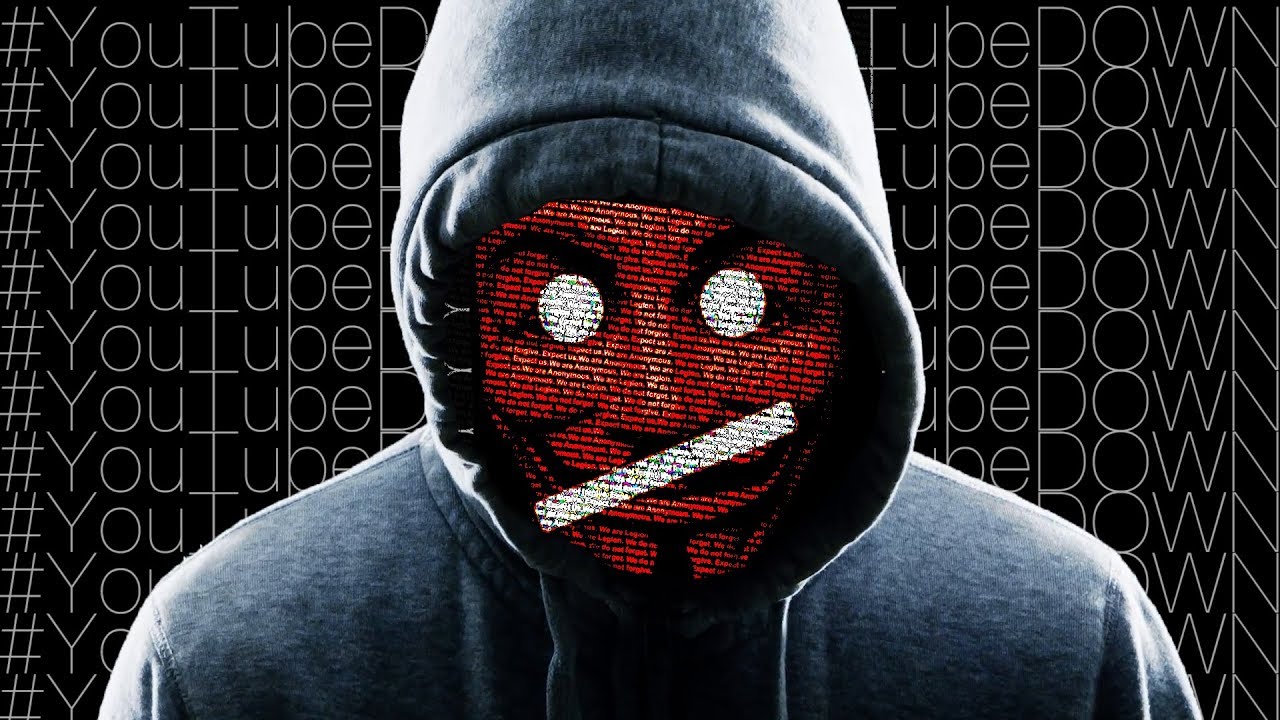
Read the video the way an investigator would read a claim of intrusion. The description lists Chad Wild Clay and Vy Qwaint as “TARGET Channels,” points people at an Instagram, and includes an affiliate link for stock music. The account published a handful of posts in August, September, and October 2018, then stopped behaving like an operational crew. Project Zorgo is the fictional hacker villain of a children’s spy series those creators were building on YouTube. Timing a villain video to a real outage is a content stunt. It is not evidence of a distributed denial-of-service campaign, and it does not belong in the same file as a group that has actually spent years claiming DDoS operations. Ghost Squad Hackers at least has a history of operations people can go look up. Project Zorgo has a plot.
The ICANN theory has a similar problem of scale. The root key rollover announced on October 15, 2018, was a global Domain Name System change, the first since 2010, and ICANN said it finished with minimal disruption. A failure of that kind would show up as DNSSEC validation errors across many unrelated sites. What users described on the night of October 16 was narrower: YouTube, YouTube Music, and YouTube TV misbehaving together, homepages empty or throwing a network error, while the rest of the web kept resolving. That pattern fits one company’s stack. It does not fit a root-key event.
Google’s habit, when it knows the cause, is to name the subsystem. That habit is the control case. On the night of February 17, 2026, YouTube failed again across the homepage, the app, YouTube Music, YouTube Kids, and parts of YouTube TV. Downdetector lit up. Within hours the company said an issue in the recommendations system had stopped videos from appearing on those surfaces, and that a smaller set of YouTube TV login failures was part of the same break. 截止日期记录顺序. TechRadar的活笔记 追踪到尖锐和复苏 Team YouTube告诉用户建议错误已经固定,主要表面恢复了.
Nobody credible needed a hacker brand to explain that night, because the operator published the fault. The October 2018 silence is the interesting residue. Google restored the service and did not attribute the hour or two of darkness to Ghost Squad Hackers, to Project Zorgo, or to ICANN. No traffic graph, no command-and-control address, and no booter log has surfaced since to fill the gap. A real flood large enough to stall YouTube would have left traces at Google’s edge and at the transit providers in front of it. Those traces were not handed to the public, and the crews who wanted the credit did not have them either.
The AEGIS Alliance draws a hard line here. A tweet is not a packet capture. A screenshot of an error page proves only that the page errored. Readers who want the longer pattern of unverified credit-taking, and of the rare cases where a company does document a network it actually dismantled, can follow 黑客新闻 报告 影子网络Google说,在发现手机悄悄地放出他们的连接后,它就分道扬镳了. 2018年10月的"问题"在原报告所留下的地方. 幽灵小队黑克说他们做到了 谷歌从来没有说他们做到了。