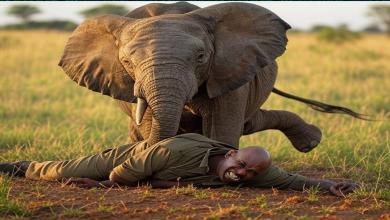
Kruger Rangers Found a Suspected Poacher Dead After an Elephant Stomp at Stolsnek, and the Rhino Hunt Never Left

KRUGER NATIONAL PARK, SOUTH AFRICA — Na manhã de outubro de 2021, rangers de campo seguindo trilhas na seção Stolsnek do Kruger National Park encontrou um homem que nunca iria sair. O porta-voz dos Parques Nacionais da África do Sul, Isaac Phaahla, disse aos repórteres que o corpo estava mutilado, que os ferimentos eram do tipo que um elefante saía, e as pessoas que tinham entrado com ele se foram. Um telemóvel no local ainda estava inteiro. Os Rangers entregaram-no à polícia. Nenhum rinoceronte, e nenhum outro animal, tinha sido morto nas imediações, um detalhe CBS News e Newsweek both carried from the park’s account.
Phaahla was blunt about what the injuries suggested. “We believe that he was trampled by elephants due to the nature of the injuries he sustained,” he said, as All That’s Interesting relatório da cobertura Sul-Africana. Ele também disse que, no início, "nada foi encontrado exceto aquele corpo." O telefone mudou a imagem apenas ligeiramente. Sobreviveu onde o homem não o fez, e os investigadores trataram-no como uma pista para os cúmplices que o deixaram. Uma declaração de Kruger colocou a teoria de trabalho em uma linha: investigações iniciais suspeitaram que o falecido foi morto por um elefante e deixado para trás por seus cúmplices. Phaahla disse que achava que um desses homens podia ter sido a pessoa que pediu ajuda, não para se render, mas para recuperar o corpo.
A morte de Outubro não foi uma manchete estranha a flutuar livre do calendário do parque. Em abril de 2021, Rangers perto de Phabeni já tinha encontrado um suspeito caçador de rinocerontes morto sob um rebanho reprodutor depois que o grupo foi visto e correu para o caminho errado. A AEGIS Alliance informou este caso como the Phabeni tramplingDois caçadores suspeitos, dois encontros com elefantes, um parque, um ano. Phaahla, falando depois de Stolsnek, apontou ainda mais para trás, para um caso que ele descreveu como o ano anterior, em que um caçador suspeito foi comido por leões e apenas um crânio foi encontrado. O padrão que o público lembra é simples. Os rangers padrão vivem com não é. Alguns homens morrem porque os animais revidam. Alguns morrem porque a patrulha morre.
O segundo tipo de morte voltou ao mesmo trecho de arbusto. Na sexta-feira, 6 de fevereiro de 2026, Rangers fez contato com suspeitos caçadores furtivos na seção SANParks feitiços Stolznek, o mesmo terreno que os 2021 relatórios chamados Stolsnek. Um suspeito foi fatalmente ferido. No dia anterior, quinta-feira, 5 de fevereiro, um contato separado na seção Malelane não produziu prisões, mas produziu um rifle de alto calibre e sacos. O chefe de comunicações da SANParks, JP Louw, disse que os dois contatos mostraram "os perigos que os rangers enfrentam em seus esforços diários para proteger a vida selvagem da África do Sul". O parque disse: a apreensão do rifle foi um rompimento de uma caçada, entregou ambos os assuntos ao Serviço de Polícia Sul-Africano, e elogiou rangers que "continuam a colocar suas vidas em risco". A A declaração de Fevereiro é sobre SANParks site. An elephant did not decide that outcome. A confrontation did.
Then the older pattern came back, this time in the far north. Rangers received information on Saturday, September 12, 2026, that two suspected poachers had entered through the Pafuri area on Friday, September 11. JP Louw said the pair walked into a herd of elephants, bolted in different directions, and lost each other. The survivor got out, went home, and raised the alarm that his partner was missing and that he had heard him screaming. Police, with help from the local community, arrested him. He admitted the illegal entry and walked rangers from the Pafuri post back to the split. Tracks from the Luvuvhu River ran about six kilometres into the park. The dead man was at the end of that trail. During the search, rangers also found the remains of a buffalo that SANParks believes the two men killed. Louw said police would continue the forensic work to establish how the man died. IOL reported the case as a trampling. The careful version is the one Louw actually gave: an elephant encounter, a scream, a body, and a cause of death still sitting with forensics.
The folklore that “the bush judges poachers” does not survive the files. At Stolsnek in 2021, Phaahla’s account was that no animal died nearby. At Pafuri in September 2026, a buffalo did. At Stolznek in February 2026, the fatal shot was a ranger contact, not a herd. The men who leave their partners show up in more than one of these cases, and so do the tracks and the communities that sometimes help police find the survivor. A dead suspect is not a saved rhino. A saved rhino is a number that has to be counted against a trade that keeps hiring replacements.
Those numbers, released around World Rhino Day, are the part of this story that does not fit on a crime-scene caption. On February 10, 2026, Forestry, Fisheries and the Environment Minister Willie Aucamp said 352 rhinos were poached in South Africa in 2025, down from 420 in 2024. Of the 2025 deaths, 266 were on state land and 86 on private parks, reserves, or farms. He called it a decrease of 68 animals and credited “a balanced, intelligence-driven, and partnership-based approach.” The provincial table SANParks published with that statement shows why a national decline can still be a disaster in one park. Kruger, listed on the SANParks line, lost 175 rhinos in 2025, up from 88 in 2024 and 78 in 2023. KwaZulu-Natal moved the other way, from 325 in 2023 to 232 in 2024 to 97 in 2025. Hluhluwe-iMfolozi inside that province fell from 198 in 2024 to 63 in 2025. Pressure did not vanish. It moved, and Kruger took the hit.
A second set of figures, issued by the department on September 22, 2026, covers only January through August and should not be stacked on top of the full-year totals as if they were the same column. In those eight months, 230 rhinos were poached nationally, compared with 248 in the same stretch of 2025. Kruger lost 114, compared with 123 a year earlier. KwaZulu-Natal’s partial-year toll dropped from 67 to 29. Mpumalanga, counted separately from the Kruger line in that table, rose from 3 to 14. North West rose from 14 to 19. The department said that at the end of 2025 the minimum national population was 15,096 rhinos: at least 2,565 black rhinos and 12,531 white rhinos, a 4.9 percent increase on 2024. Poaching in 2025 took an estimated 2.2 percent of the national herd, under a 3.5 percent threshold officials treat as the point where losses outrun births. The herd can grow and still be under a knife. Both sentences are true.
The same World Rhino Day statement described what Kruger is actually doing besides burying bodies. The park has added field rangers and rhino monitors under the Rhino Renaissance Initiative, inside a wider plan that includes dehorning, layered security, technology, skills, and integrity management. Dehorning is a grim kind of hope. It lowers the paycheck attached to killing an animal and does nothing about the men already inside the fence with a rifle. Integrity management is the quieter admission. Some of the worst damage in this trade has come from people who were supposed to be on the payroll of the state.
Courts have started handing down sentences that treat a carcass as more than a fine. The September 22, 2026 account includes Sifiso Mbuyane, convicted on eight counts that included trespassing in Kruger, killing two rhinos, conspiracy, and firearm offences, and sentenced to 28 years’ direct imprisonment. DNA tied horns in his possession to the carcasses. Ballistics tied the firearm. Two former security officers, Nyiko Gumede and Nomsa Ndlovu, were each sentenced to 12 years after convictions that included killing a rhino and conspiracy, the Mail & Guardian reported. A long term does not put a horn back on an animal. It does tell the next crew that an elephant is not the only way a job in Kruger ends.
The Stolsnek phone still matters more than the folklore. A dead man cannot name the buyer, the gun lender, or the person who promised a way through the fence. A working handset might. So might the Pafuri survivor who walked rangers back to the river trail and is now a police case instead of a ghost. The AEGIS Alliance’s view is that the animal is not the justice system. The justice system is the ranger who has to decide, in thick bush, whether the man in front of him is about to fire, and the prosecutor who has to turn a horn, a rifle, and a DNA swab into a sentence that outlasts the news cycle. Kruger is roughly the size of Wales. Cathy Dreyer, the park’s head ranger, has said on camera that losing even a single rhino is too many, which is another way of saying 114 in eight months is not a victory lap. It is a slower bleed.
Related reading from The AEGIS Alliance: the suspected rhino poacher found dead under a breeding herd near Phabeni, more Ambiente reporting, and Notícias Internacionais.



I hope it was slow and hope it hurt.
That’s awesome
Not the elephant fault that he got stomped on . , the idiot shouldn’t been in the way , oh , yea …. the elephant enjoyed it lol
Fantastic
Awesome 🐘
Lol lol good.