
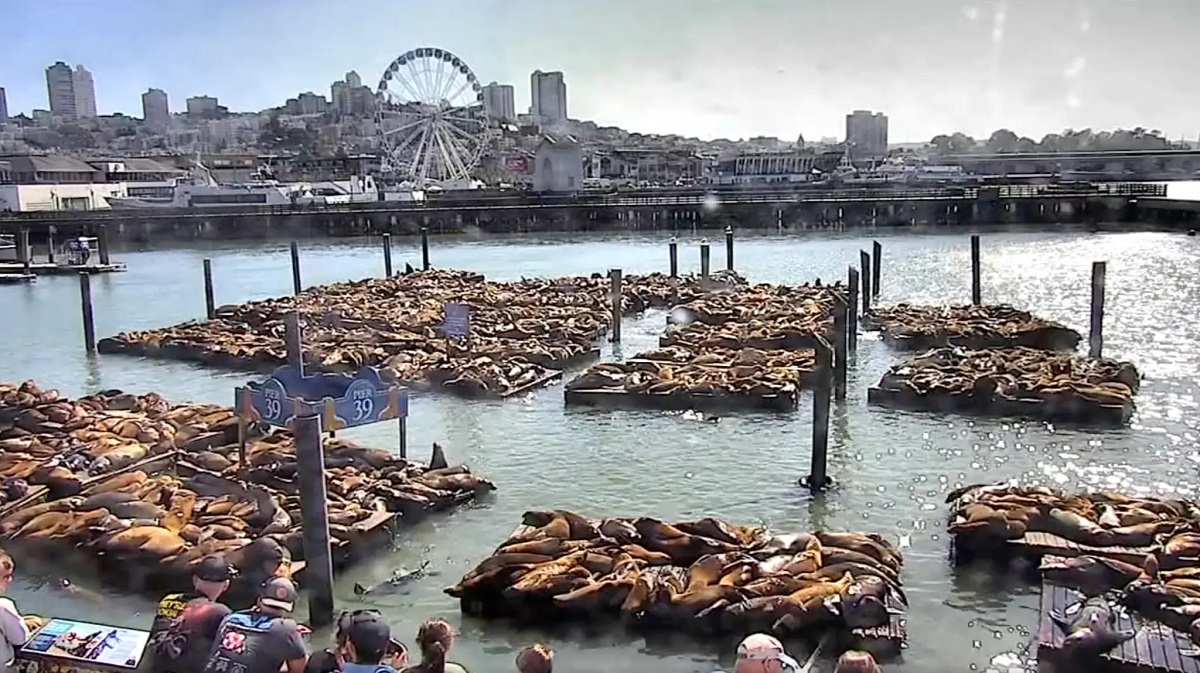
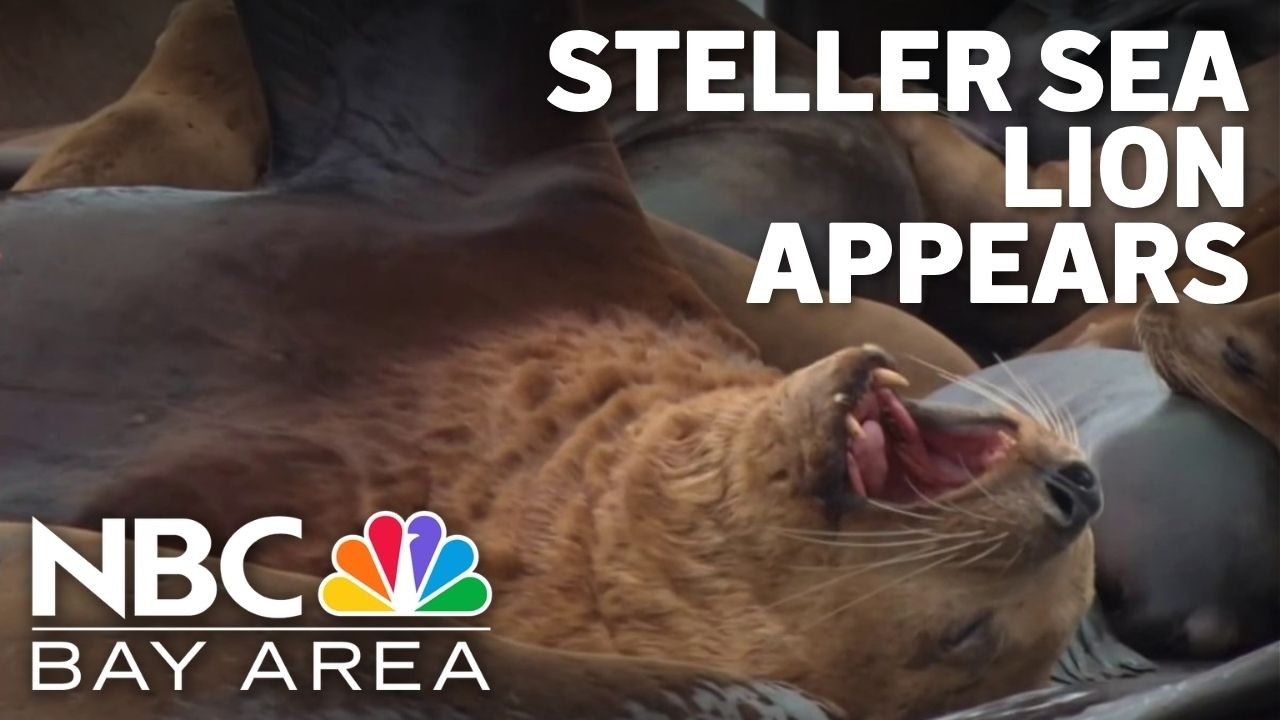
Pier 39 spent the spring of 2026 teaching tourists one name. The fall is teaching them that the name was a species. On Wednesday, September 23, a Steller sea lion roughly 10 feet long hauled out on the floating docks at Fisherman’s Wharf, barked over a carpet of California sea lions, and set off the same question the waterfront has been failing all year: is that Chonkers? Harbormaster Sheila Chandor and the California Academy of Sciences say no. The new animal is smaller. The scars do not match. Sue Pemberton, who works the academy’s marine-mammal stranding program and has been on the pier for 41 years, told KRON4 this is the first time she has seen this many Steller visits at Pier 39. The food she and Chandor both pointed at was not a mystery celebrity. It was sardines in the marina.
Chonkers is still the animal people came for. He is a Steller, a different species from the California sea lions that have owned K-Dock since the Loma Prieta earthquake emptied the slips in 1989. Adult male Stellers can run about 11 feet and up toward 2,500 pounds. A large California male at the pier is closer to 700 or 800 pounds, and the biggest of that species on record is about 1,000. Chandor has said Chonkers usually passes through about every two years and stays a few days. Staff nicknamed the routine “Morning Glory,” because he tended to show between 7 and 9 a.m., then roll off to fish. The Marine Mammal Center in Sausalito started a log on March 13, 2026, the day he arrived with a juvenile Steller that left after a few days. Pier 39’s own video from that morning went wide. A San Francisco Reddit thread supplied the name, a play on “chonky.” The Wall Street Journal later described a crowd of more than a hundred people watching him on a single April afternoon. Estimates put him near 2,000 pounds. “He’s literally twice the size of the biggest California sea lion that you can see out there,” Chandor told ABC7 during the stay. When he dropped onto the wood, witnesses compared the sound to an oak coming down.
去るかもしれない。 堆肥化器で始まりました.
The long stay lasted roughly six weeks, into the beginning of May. The center told reporters he had not been seen at the dock since about May 1. On May 4 a large animal drew cameras and was not him. Sue Muzzin, Pier 39’s vice president of public relations, looked at the frames and said so. Adam Ratner, director of conservation engagement at the Marine Mammal Center, went further: that particular stand-in was not a Steller at all. It was a very large adult male California sea lion wearing the lighting of a celebrity. The mayor had been stood up. Signs at the pier still advertised a guest who had already swum off, possibly toward food, possibly toward a mate. Eastern Stellers are more often counted in Alaska and British Columbia. San Francisco is a side trip, not a home address.
On Thursday, September 3, another enormous Steller took a dock for a day. Staff looked hard, decided he was not Chonkers, and informally named him the Beefy Buddy. Muzzin said they had “definitely” seen him that Thursday and had not seen him Friday. “Not that this guy is small,” she said. Chandor has described 2026 as the year with more Steller traffic than any she can remember, and she has been the harbormaster through a lot of anchovy seasons. One theory floated by spotters is that the juvenile who arrived with Chonkers in March could be one of the autumn returnees. Nobody has a tag that proves it. Stellers are not microchipped tourists. They are scars, size, and a lighter coat, and then they are gone.
The September 23 animal reopened the argument in public. ABC7 and KRON4 filmed a 10-foot Steller flexing among the California herd. Academy scientists and the harbormaster again used scarring to rule Chonkers out. Pemberton’s line is the one that changes the story from a mascot to a food report: “I’ve been here on the pier working here for 41 years. This is the first time we’ve had this number of visitations from Steller sea lions on Pier 39.” Chandor tied the visits to bait in the marina. “We have a lot of sardines in the marina right now, swimming around. So there’s some good food source here. But this is unusual for us.” The Farallon Islands, about 30 miles west of the Golden Gate, are a real Steller haul-out. A sardine school inside the breakwater is a reason to take the extra miles into a tourist harbor. It is the same reason Chandor read Chonkers’ long spring stay as a health certificate for the bay. “The fact that he’s staying this long means that there’s a lot of food source close by. It’s a good sign. It means the bay is healthy.”
ドックは、その前にすでに記録されていました
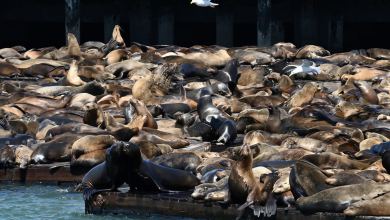
K-Dock was built for a few hundred California sea lions and a lot of phones. In the spring of 2024 it held a census instead. Chandor counted about 1,000 animals in late April, the most in roughly 15 years. By May 30, World Sea Lion Day, the pier’s own tally had passed 2,000. The peak, in May and June, was more than 2,100. The previous all-time mark was 1,701, set in November 2009, right before that colony vanished around Thanksgiving and left the barges looking empty. Tourist Les Oakes told KPIX he had “never seen this many sea lions in one place before,” and compared the pile to “a bunch of kids vying for a big spot on the couch.”
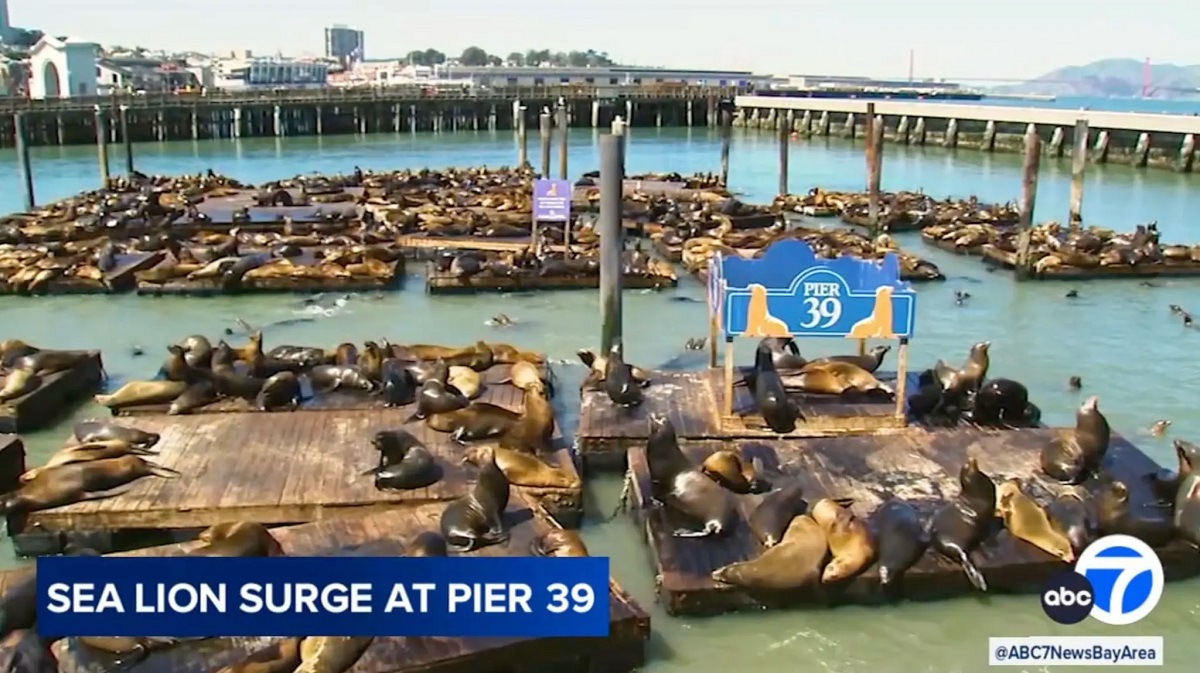
The 2024 cause was anchovies moving in from the Farallones, not a branding campaign. California sea lions eat them the way people eat fries. Ratner called it “that dinner bell that’s ringing and all the sea lions are coming in enjoying that feast.” They were putting on weight before the run south toward Channel Islands breeding grounds. Chandor, watching the barges sag, said it looked “like a National Geographic photograph right now.” The September sardines are a second bell, rung for a heavier species. Anchovies filled the dock with the locals. Sardines are what make a 2,000-pound visitor from colder water decide a San Francisco marina is worth the swim.
木を守った空のスリップ、地震、法律
The colony is an accident with a date. In 1989, boats were pulled from their slips for a remodel. Then the Loma Prieta earthquake hit in October. Sea lions moved onto the empty wood. Business on the waterfront was dead. The animals were not. “They just started to multiply, and they really and truly saved us,” Chandor has said. “We were dead. No one was coming to the city.” The bay still offers fish and a partial break from white sharks and orcas. The Marine Mammal Protection Act of 1972 makes it illegal to harass them. The Marine Mammal Center’s practical rule is 50 feet. A record count and a parade of Stellers are what a recovered population looks like when the bait fish cooperate. They are not a permit to climb the dock for a selfie. A 2,000-pound animal that sounds like a falling tree when he lies down is also a crushing hazard, which is why the pier’s barges were engineered for weight in the first place.
ピア39は、一年中にわたるシーライオンウェブカムを実行しています。 朝と夕方は正直な時間、同じウィンドウのチョンカーを好む. 2024年の2,100図は、まだ数字です 特許. The webcam will not settle the scar comparison. That takes a harbormaster who has watched the same dock since the earthquake and a stranding biologist who has spent four decades learning which animal is which. Until Chonkers’ marks show up again, the throne is a rotation: Beefy Buddy for a day, a scarred 10-foot bull on September 23, and a few hundred California sea lions who never left. The viral name was a single male. The biology is a food web that keeps cashing the same check.
ストーリーが群衆の代わりにカルカスであるときの海洋哺乳類の運賃については、AEGIS Allianceレポートを参照してください ルイジアナビーチ 古いファイルと キラージとイルカの繁殖は、. 女性が持っていたフロリダで示されたさまざまな種類の水ハザード gator-infested トランスフォーメーション. このビートの多くは、 環境方針 そして、 アメリカ合衆国.