Utah’s $7.9 Million Ban on Fraudster Parker Wilde Did Not Stop an Amazon-Seller Wallet Pitch on His Public Account

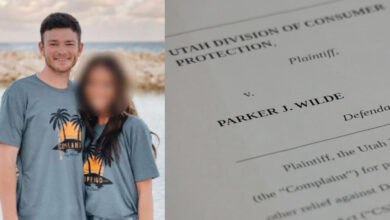
Utah’s 4th District Court put a number on Parker J. Wilde in December 2025: restitution of up to $7.9 million, a permanent ban on selling business opportunities inside the state, and three years of compliance monitoring. On September 26, 2026, an account under his name told followers that Accelerator Wallet was live, « a wallet built for Amazon sellers, » and that it was « not a bank, » built on Whop and its financial partners. The bio on that account lists California, Arizona, and Utah, and describes him as an eight-figure e-commerce seller. The Division of Consumer Protection has not publicly said whether that post violates the injunction. The post is still the fact that makes the ban look geographic instead of finished.
From 2020 to 2023 the Brigham Young University graduate and former missionary for The Church of Jesus Christ of Latter-day Saints sold « done-for-you » Fulfilled by Amazon stores through Private Label Accelerator, under PJW Profit Ventures LLC, plus Passive Ecom Ventures LLC, ZIGI LLC, and a pitch called FBA 3.0 Unfair Advantage. Clients paid thousands up front. More than 200 consumers were in the blast radius. About 56 of them formally reported him. The Division says no victim received a profitable store. Many received no store. Refunds did not arrive. Some cards were charged without authorization. A store that never launches still generates invoices. A guarantee that never pays still looks like risk control on a landing page. Those two facts are why this was filed as a business-opportunity case, not as a bad quarter.
What the brochure promised, and where the money went
Wilde worked LinkedIn. The consulting fee ran $5,000 to $20,000. Inventory for each product type ran another $7,000 to $10,000. He promised $2,500 to $7,200 or more a month in passive profit after 60 days, with his people running the catalog. A 12-month money-back guarantee sat on the materials. Shared church and community ties did the rest of the closing. Trust that already exists in a ward or a campus network is cheaper than paid ads, and harder to unwind when the store never goes live. The Division opened an inquiry in November 2023. In January 2024 an investigator walked him through Utah’s Business Opportunity Disclosure Act and how to come into compliance. The agency says the guidance was ignored. Bank records, investigators say, show consumer money going to personal cryptocurrency buys and to Wilde’s own credit-card debt.
The Division sued in February 2025. About ten months later, on December 18, 2025, the court approved a stipulated order. Wilde admitted violations of the Consumer Sales Practices Act, including false representations people relied on, and admitted he failed to give the disclosure statements the Business Opportunity Disclosure Act requires. He did not fight the case. Roughly $3.9 million of the $7.9 million is stayed if he complies with the injunction and verifies that he cannot pay the rest. Because he said the money was spent, whatever is collected is built as installments for the consumers who reported him. Director Katherine Hass called the judgment a warning and said collection would be slow for that reason. The 56 names already on the complaint list are first in line. The agency’s account is on the Division’s site. Local wrap-ups ran at KSL et ABC4.
A ban that stops at the state line, and a post that does not
The injunction is the sharper tool if it is enforced, and a smaller tool than the headline suggests. Wilde is permanently barred in Utah from money-making programs, telemarketing, and selling business opportunities. He is not, on the face of this order, barred from living, posting, or selling a product in another state. A buyer in Idaho or Nevada who wired the same fee in 2022 is not automatically inside Utah’s restitution list. That is why the Division asked people to keep reporting after the judgment printed. A statewide ban does not refund a card that cleared in another ZIP code, and it does not automatically reach a website that says it serves Amazon sellers wherever they sit.
The September 26 post does not repeat the old promise of a fixed monthly check. It offers a wallet for moving money to suppliers, prep centers, and virtual assistants, and it says it is not a bank. Readers should not treat a social-media product launch as a judicial finding that the order was broken. They also should not treat the order as if it erased the account. The three-year monitor that started with the December 2025 judgment was still running when that post went up. Hass’s warning only works if the next pitch is visible to the office that is supposed to be watching. Through late September 2026 there was still no public trail of an appeal, and no public report of restitution checks clearing at scale. Silence after a stipulation is useful to the person who spent the float. It is expensive for the people who wired inventory money into a store that never opened.
Why the passive-income costume keeps working
Fulfilled by Amazon is a real business for people who buy inventory, fight ads, and eat returns. It is also a perfect costume for a consulting pitch. The logo is famous. The work is invisible. The guarantee sounds like insurance. Real operators do not promise a fixed monthly check after 60 days, because ads, returns, and account suspensions eat the margin. A 12-month money-back clause that never pays is advertising. Utah’s order is useful because it names the product category, business opportunity, instead of arguing about whether Amazon is a good company. The January 2024 walkthrough was the state’s attempt to pull Wilde into compliance without a lawsuit. He did not take it. The Business Opportunity Disclosure Act exists because Utah has seen this product before, including in networks where the closer is a neighbor rather than a stranger on a billboard.
Anyone still sitting on an invoice from those years should keep the Division in the loop. The other 140-plus buyers who never filed are part of why the number on the order is $7.9 million rather than a smaller figure that would have been easier to collect. A stayed half of a judgment is not mercy. It is a structure built around the claim that the operator cannot pay. Credit-card chargebacks have clocks. Unauthorized charges should be treated as fraud reports, not as invoices in dispute. Chat logs, wire receipts, and screenshots of the guarantee are worth more to the agency than an argument with a disconnected phone number. The 56 names are a starting roster, not a closed class.
Consumer-fraud files on this desk have the same shape in other industries. See The AEGIS Alliance reporting on the debt-relief industry, les fraud charges against Tricolor auto-lending executives, et plus entreprises docket. People who still want an Amazon store can open one without a $20,000 consultant. Seller Central is public. Inventory is a purchase order. For more consumer-protection coverage, start with Nouvelles des États-Unis et les FTC file on romance-scam losses. The ban locks a door Utah owns. The account that pitched a new Amazon-seller tool on September 26 is a reminder that doors in other states were never part of this order.