Jonathan Joss Murder Case Reaches a Scheduling Order, Not a Trial, While the Hate-Crime Claim and Self-Defense Story Both Wait

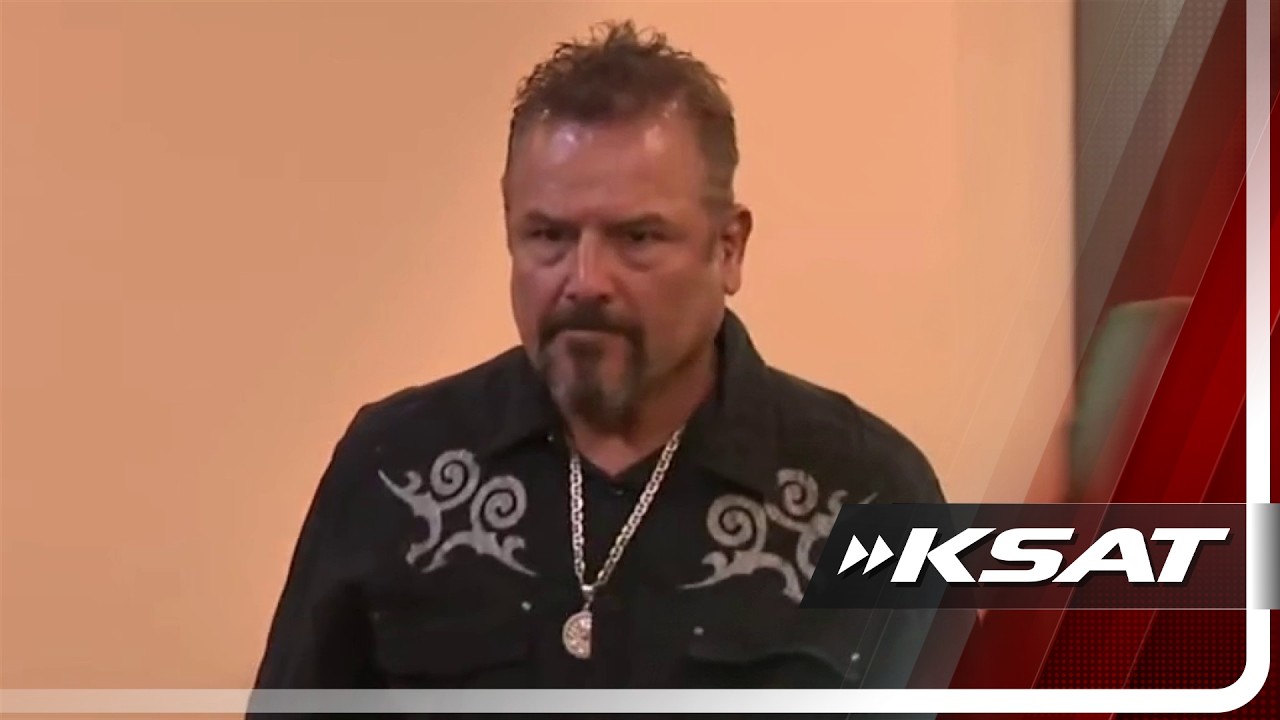
The chyron said the trial was beginning. The judge said something narrower, and the narrower sentence is the one that belongs in the record. On September 17, 2026, Sigfredo Ceja Alvarez stood in Bexar County’s 437th Criminal District Court, charged with murder in the June 1, 2025, shooting of actor Jonathan Joss. State District Judge Joel Perez did not pick a jury that morning. He told the lawyers to produce a scheduling order. « Let’s get a scheduling order, » Perez said, in the account published by San Antonio outlets that covered the hearing. « That way, we can move this case along. »
Some station headlines still shouted that trial was underway. ABC 7 Amarillo’s son histoire, sous une limace plus forte, rapporte le fait plus clair: aucune date de procès n'a été fixée. L'avocat de la défense Jasmine O'Quinn a dit au tribunal qu'elle croyait avoir reçu les preuves. Le procureur Neil Cordero a dit que l'État avait des affidavits de voisins et avait besoin de temps pour les examiner et éventuellement interroger ces témoins. Les avocats devaient préparer l'ordonnance dans une semaine. Au 26 septembre, aucune salle de presse locale n'avait publié une date d'essai ferme qui sortait de cet ordre. L'affaire s'est rapprochée d'un calendrier. Elle n'a pas rendu de verdict.
What nobody in the neighborhood disputes
Joss, 59 ans, a été abattu juste après 19 heures. le 1er juin 2025, à l'extérieur de la maison brûlée, il a toujours traité comme le sien, dans le 200 bloc de Dorsey Drive près de Pleasanton Road sur le côté sud de San Antonio. Une histoire d'Express-News a ensuite rendu la rue sous le nom de Dorney Drive. Les rapports de police, KSAT, et les voisins qui ont parlé à KENS ont utilisé Dorsey. Le courrier était dispersé sur le sol près de lui. Il avait vérifié la boîte. La maison avait brûlé le 23 janvier 2025. Trois de ses chiens sont morts dans ce feu. Il revenait sans arrêt.
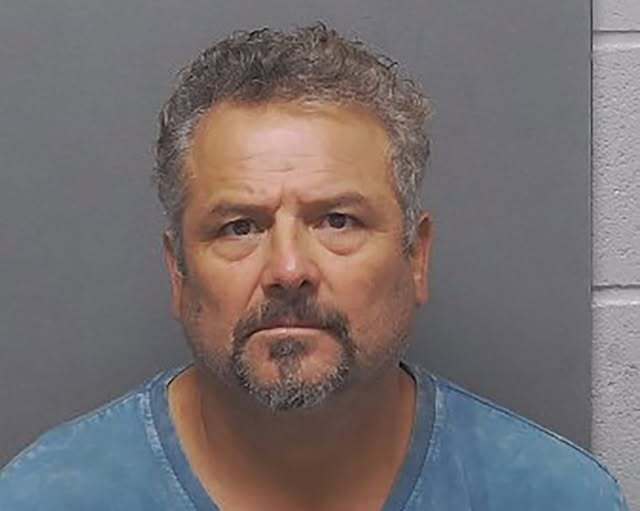
Alvarez, who lived nearby and is now reported as 58 in the Express-News hearing story after a year of coverage that called him 57, told officers, « I shot him. » He was booked on murder. A grand jury indicted him on November 17, 2025. He has been out on a $200,000 bond since shortly after the arrest, under house-arrest conditions. The bond is not a comment on guilt. It is the reason a man who admitted the shooting has been living at home while lawyers collect affidavits from a street that had already called police dozens of times.
The feud was old. Neighbors described roughly two years of arguments, more than sixty calls, and moments when weapons came out before the night of the rifle. Defense lawyer Jason Goss said in May 2026 that the defense had identified forty to sixty relevant witnesses and had located about two dozen of them, people he said had watched « the behaviors of the complainant for years. » By the June 29, 2026, setting, defense investigators told Judge Perez they had spoken to dozens of witnesses and were preparing affidavits. Cordero’s side said those neighbor statements would help the state decide on a plea offer or on punishment. That is a quieter admission than a chyron. Fifteen months after the shooting, the prosecution was still using the block to decide what kind of case it had.
The hate-crime question the early statement tried to close
Joss was Comanche and White Mountain Apache. He was also a gay man who had married Tristan Kern de Gonzales on Valentine’s Day 2025. Kern de Gonzales has said Alvarez shouted homophobic slurs before the shots. The defense has denied the slurs and has framed the shooting as self-defense under Texas law. Former defense comments from attorney Nico LaHood put it in the language Texas juries are built to hear: people have a right not to be a victim, and the defense believes that right applies here.

Texas does not charge a free-standing hate crime the way some states do. Bias can matter later, as a finding that affects punishment after a conviction, and only if the evidence is proved. San Antonio Police Chief William McManus did not wait for that process. In the first days he said there was « no evidence whatsoever » that sexual orientation was part of the shooting. He later apologized for speaking too soon. The walk-back matters more than the original sentence, because the original sentence is what many viewers still remember. A chief’s certainty, offered before the affidavits his own investigators had not finished, became the public’s first draft of motive.
The AEGIS Alliance is not declaring a hate crime the court has not found, and it is not treating self-defense as a fact because a lawyer said the phrase. Both claims are still pleadings. What can be said without a jury is that the widower’s account and the defendant’s account cannot both be the whole night, that a police department tried to settle the difference in a press line, and that the September 17 hearing did not settle it either. Neighbor affidavits can describe a feud. They do not, by themselves, answer whether a slur was shouted in the seconds before a rifle came up. That answer needs testimony under oath, not a scheduling order.
The voice that left the block, and the voice that left the show
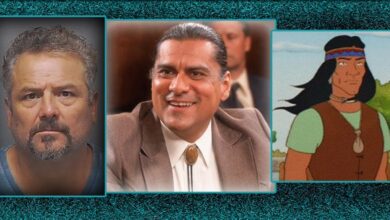
Joss was not famous in the way a lead actor is famous, which is part of why the street could treat him as a neighbor with a grievance instead of a name. From 1998 to 2009 he voiced John Redcorn on « King of the Hill, » the New Age healer and the biological father of Bobby’s friend Joseph. He played Chief Ken Hotate on « Parks and Recreation. » He had film work in « True Grit » and « The Magnificent Seven. » When the animated series returned, his role did not. The absence is the kind of credit a revival cannot fake with a soundalike without the audience hearing the gap.

Fame did not get him a faster trial. It got him a headline every time Alvarez made a two-minute appearance. The appearances have been the case: a February 2026 setting that collapsed, a May 13 hearing, a June 29 continuance to September 17, and now an order to write a schedule. Discovery is the excuse and, on a file with sixty-plus police calls, also a real problem. A street war that long produces body-worn video, 911 audio, prior reports, and a crowd of people who think they saw the latest argument. Cordero was not inventing work when he said the state still had to read what the defense was handing over. The cost of that care is a widower waiting through another season while the man who said « I shot him » remains on bond.
Readers who follow crime news et U.S. news will recognize the pace. High-profile killings in Bexar County do not move at the speed of the first press conference. They move at the speed of affidavits. The police accountability piece of this file is not a claim that SAPD protected a shooter. It is the chief’s early sentence, offered as closure, then withdrawn. Departments that speak in absolutes before the witnesses are on paper teach the public to distrust the second statement. McManus’s apology is the second statement. It should have been the first.
What September did not decide
Alvarez is presumed innocent of murder until a jury says otherwise. His admission that he fired is not a legal admission that the firing was a crime. Self-defense, if believed, is a full answer under Texas law. A hate-crime enhancement, if sought and proved, would be a second answer about why. Neither answer was on Judge Perez’s bench on September 17. The only order in the room was to get a calendar.
KSAT’s June hearing video is still the clearest public look at how small these settings are: an interpreter sworn, a prosecutor asking for neighbor paper, a defense lawyer counting witnesses, a judge picking the next Monday. The drama is not in the courtroom clip. The drama is on Dorsey Drive, in a mailbox, in a house that had already burned, and in a marriage that had lasted from Valentine’s Day to the first of June.
The AEGIS Alliance will not let a television banner outrun the judge. Trial has not begun. A date has not been published from the scheduling order Perez demanded. The slur allegation has not been proved or disproved in open court. The self-defense claim has not been tested by cross-examination. What has been tested is the public’s patience, and the memory of an actor whose best-known face was a drawing. John Redcorn does not get a scheduling order. Jonathan Joss’s husband does. The next honest public fact is a date on a notice, or a plea that says out loud what those neighbor affidavits were gathered to decide.