Elon Musk’s Ketamine Denial Collides With His Own Interview, a 20-Pill Box, and a White House That Never Tested Him


Elon Musk’s own timeline does not match itself. In March 2024 he told Don Lemon he used a prescribed « small amount » of ketamine about once every other week to climb out of a depressive state, and that he did not think he abused it. On May 31, 2025, after The New York Times reported a far heavier habit, he wrote that he was « NOT taking drugs, » that he had tried prescription ketamine « a few years ago, » and that he had not taken it since. A man cannot have been on a biweekly regimen in 2024 and also have quit « a few years » before the spring of 2025. One of those sentences is marketing. The other is the sentence he needed once the paper had sources.
The May 30, 2025 investigation did not describe a clinic lozenge. It said Musk told people he was using the anesthetic so often that it was affecting his bladder, that he also took MDMA and psilocybin, and that he traveled with a daily box of about 20 pills, including tablets with Adderall markings. The same reporting placed that pattern on the 2024 campaign and inside the orbit of Donald Trump’s White House, where Musk ran the Department of Government Efficiency for roughly 130 days without a Senate-confirmed job. The White House, asked whether anyone had drug-tested him on the way in, refused to answer.
A urine cup is not a year
On June 11, 2025, twelve days after the Times story, Musk posted a photo of a urine screen from Fastest Labs of South Austin that appeared negative for ketamine, amphetamines, cocaine, and a list of other drugs. The caption was « lol. » Critics on his own platform noted the obvious limit. A urine test looks back days, not seasons. A hair test can reach about three months. He had not posted a hair test. He had posted a cup collected after the article, then demanded that Wall Street Journal and Times reporters submit to the same theater. « They will fail, » he wrote on June 18.
Charlie Stadtlander, a Times spokesman, answered that Musk was lashing out because he disliked the reporting and that nothing he had said or posted contradicted what the paper had uncovered about 2024. The paper stood by the story. Musk stood by the meme. Those two positions are the entire public record of accountability for a man who, during the months in question, was telling federal agencies which employees to fire.
The Times account, built from more than a dozen people around him, described consumption that « went well beyond occasional use. » Sources said he used ketamine far more intensely than the biweekly dose he had advertised, sometimes daily, and that he mixed it with other drugs. He took ecstasy and mushrooms at private gatherings in the United States and at least one other country. He had told Lemon that too much ketamine would keep him from getting work done, and that investors should want him on the regimen. Output was the defense. It is a founder’s metric. It is not a clearance.
The bladder is a medical claim, not a punchline
Ketamine began as a surgical anesthetic. Clinics later sold low-dose versions for treatment-resistant depression. Chronic, high-frequency use is a different chart. Physicians who treat ketamine cystitis describe pain, bleeding, urgency, and a bladder lining that starts to fail. The damage shows up in people using the drug several times a week or daily, not in patients on a carefully spaced prescription. The Times did not invent that risk. According to the paper, Musk named the bladder problem to people around him. That is the detail that turns a wellness anecdote into a workplace question. If the man redesigning agencies was telling friends his urinary tract was in trouble, the building was entitled to something sturdier than his word.
The only workplace testing the public has been told about cuts the other way. SpaceX, which holds large federal contracts, is supposed to keep a drug-free workplace and test employees. Reporting on the Times investigation, including Megan Twohey’s account on The Daily, said Musk received advance warning of those tests. The company did not answer questions about the warnings. A test you can see coming is not a test. It is a calendar item.
The chief of staff’s sentence, and the denial that followed
In December 2025, Vanity Fair published Chris Whipple’s interviews with White House chief of staff Susie Wiles. Whipple reported that Wiles said the challenge with Musk was keeping up with him, that he was « an avowed ketamine user, » that he slept in a sleeping bag in the Eisenhower Executive Office Building during the day, and that he was « an odd, odd duck. » People reported that Wiles later denied telling the magazine he was an avowed ketamine user. The denial does not erase the picture of how the West Wing talked about him while he was in the building. It adds a second fight: whether the president’s top aide described a drug habit and then walked it back once the sentence was in print.
That fight sits on top of the Oval Office send-off. On the day the Times story landed, Musk stood beside Trump, a black eye on his face that he blamed on his young son, and snapped at Fox News reporter Peter Doocy for asking about ketamine. He compared the paper to Russiagate Pulitzer coverage and said to move on. Representative Mikie Sherrill of New Jersey had already floated a bill to put Musk and the efficiency-office staff on a testing schedule. The bill was a message. The message was that the people with the most sensitive federal access should not be the people least willing to prove they are sober.
The feud did not retire the question
Musk left the building at the end of May 2025. Within days he and Trump were insulting each other in public. Musk called the president’s spending bill a betrayal of the waste-cutting mission, claimed Trump would have lost in 2024 without him, and floated the idea that the president’s name sits in unreleased Jeffrey Epstein files. Trump talked about federal contracts and even deportation. Musk later said some posts went too far. The truce did not hold. Tesla’s value took the kind of hit that arrives when a chief executive turns a political alliance into a knife fight.
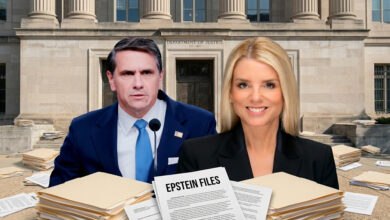
The drug story did not cause that breakup. It sat underneath it. Advisers who thought he was impaired in 2024 suddenly had a public record to point at while the same man was picking a war with the president who had given him the building. The AEGIS Alliance has covered how secrecy works when powerful men want a file buried, including the Justice Department’s admission that almost none of the Epstein records have been released. Musk’s decision to swing those files at Trump was not a side note. It was a billionaire treating a criminal archive and a ketamine argument as interchangeable ammunition.
Why « I can still ship » is not a security policy
Airline pilots do not get to invent a private standard for impairment. Nuclear officers do not. The unelected executive who wandered through federal systems decided he was the exception, then posted a urine screen like a reply-guy. TIME’s account of the Oval Office questions captured the split: Democrats asked for tests, Republicans called the story media malice, and nobody produced a contemporaneous workplace test from the months when his access was greatest. The June 2025 cup, even if the lab image is authentic, measures a day after the government chapter. It does not audit the campaign. It does not audit the sleeping bag in the Executive Office Building.
Readers who follow this desk’s politics and US news coverage already know the pattern. When the subject is poor, a dirty screen ends a job. When the subject is the world’s richest man, the screen becomes content, and his own chatbot has been asked in public to reconcile the contradiction between the Lemon interview and the later denial. There has been no independent audit of what he ingested while he sat in the White House. There has been no official finding that he was impaired on a named date. There has also been no official finding that he was clean on the days that mattered.
If the ketamine was medicine, the prescription should have been boring, dated, and available to the people who cleared him into the building. If it was a habit that worried the chief of staff and the people who watched the pill box, the clearance process failed in public. A daily box of 20 pills, a bladder complaint, a presidential partnership, a chief of staff’s sentence, a denial, and a negative test posted as a joke do not cancel one another. They stack. The country let an unelected executive move through federal systems while the only drug policy in the room was his own word, delivered twice, in versions that cannot both be true.