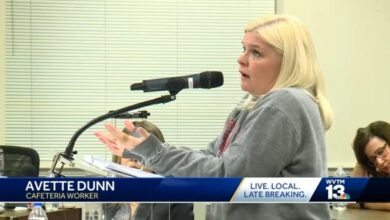
Shelby County Fired Cafeteria Worker Avette Dunn After Donor Cash for Student Lunches Went Into the PTO Fund


Avette Dunn a passé des années sur la ligne de service à l'école primaire Shelby à Columbiana, en Alabama, en mettant des plateaux devant des enfants dont les familles ne pouvaient pas toujours dégager un déjeuner L'équilibre. Le 24 février 2025, après une audience de près de six heures, le conseil d'éducation du comté de Shelby l'a renvoyée. Le surintendant Lewis Brooks a recommandé le licenciement et a ensuite signé la lettre. Stacy Aderholt a dit au conseil d'administration qu'il avait besoin de confiance. Le compte du district de l'argent, c'est qu'il n'a pas été volé. Les dollars qu'un donateur a remis à Dunn ont été versés au fonds du déjeuner de l'organisation mère-enseignante.
C'est le fait que la couverture nationale n'a cessé de trébucher et que le conseil d'administration a traité comme à côté du point. Dunn n'a pas été accusé d'avoir empoché une enveloppe. Elle a été accusée d'avoir recueilli de l'argent en dehors d'une description de travail, d'avoir omis de dire la vérité lorsqu'un directeur l'a interrogée dans une salle à manger bondée, et d'avoir essayé de garder un Le nom du donneur est calme. Le conseil a appelé ça un délit de renvoi. Les parents l'appelaient un système scolaire punissant la personne qui a remarqué que le compte de déjeuner était épuisé.
What the hearing actually established
Les reportages locaux ont présenté une histoire plus petite que les gros titres. Un donateur, identifié dans le compte rendu de l'audience du comté de Shelby comme Wanda, a accepté d'aider et de fournir une enveloppe de 100 $ en espèces et un chèque de 100 $. Ces montants ont été déposés dans le compte du déjeuner de PTO. Dunn l'a de nouveau contactée le 26 septembre 2024, demandant si plus d'aide était possible pour le même compte. Le fonds, les parents et le côté de Dunn, était en baisse. Lorsque les administrateurs lui ont demandé ce qu'elle avait fait, elle ne leur a pas dit dans la pièce. Elle a dit qu'elle avait peur et qu'elle essayait de tenir une promesse que le donateur pouvait rester anonyme.
Peg Hill lui a demandé directement pourquoi elle avait menti à Aderholt. Brooks a qualifié la résiliation d'insubordination, et il a lié ce mot à la véracité plutôt qu'à un dépôt manquant. Le conseil a tenu une séance de direction pendant environ une heure et demie et est revenu avec un vote unanime pour la renvoyer. The Shelby County Reporter, ABC 33/40et AL.com Tous portaient la ligne en deux parties du quartier. Solicitoring and accepting donations n'était pas son travail, et elle n'avait pas été formée pour les gérer. Aucun enfant à Shelby Elementary, a ajouté des officiels, n'a jamais été privé d'un repas, y compris quelques secondes.
Si cette deuxième phrase est vraie, le pot à déjeuner PTO existe encore pour une raison que le district n'aime pas dire à voix haute. La dette alimentaire n'exige pas qu'un caissier retire un plateau des mains d'un enfant. Il faut un équilibre que quelqu'un finit par couvrir, une lettre qui rentre à la maison dans un sac à dos, et un travailleur en ligne qui regarde quels enfants connaissent déjà le script. Dunn pensait que quelqu'un pouvait être un donneur qui l'avait trouvée en premier, pas un formulaire qui n'avait pas encore été écrit.
A decade of evaluations against one answer in a lunchroom
Dunn told the board she made a mistake and wanted the job back. A two-week suspension, she said, would have matched what she did. She had already been on detached duty since October 2024, parked away from the line while the file moved. « I made a mistake and I think I should be able to go back to my job, » she said in the room cameras caught. « In my opinion, I think I should have just got suspended for two weeks, but I’ve been off since October. »
Her lawyers noted that the written job description did not ban her from accepting a donation, that the donor initiated contact, and that her evaluations across roughly eight to ten years were strong in every category. They compared her to teachers who pass a DonorsChoose link or a classroom wish list without being marched into a six-hour hearing. The district was not interested in that comparison. Lying about money, employees told the board, could not be overlooked even for a cause the room otherwise liked. Aderholt’s line was the one the vote followed: it is imperative that a person in that role can be trusted.
The Alabama Education Association backed her in public. A Change.org petition asked for reinstatement. A GoFundMe organized by Laura Torres, « Support Avette Dunn: Help Her Return to Work, » passed its $5,000 goal. Two hundred six donors gave $7,502 for bills while she was off the paycheck. Supporters called it a sad day for a system that writes a policy memo faster than it retires a child’s lunch balance.
The threats, and the question they were used to bury
After the vote, the story flipped. Brooks told AL.com that staff were being threatened over coverage he called inaccurate. That risk is real in a small county once a national tabloid casts a cafeteria worker as a martyr and a principal as a villain. It is also a fog. Harassment of clerks does not answer the question the hearing never resolved in public. If no child is denied a meal, why does the PTO keep a lunch account at all, and why is the worker who filled it the one who lost her keys?
School finance rules exist because cash that floats through a kitchen can disappear. A district that has been burned on petty funds will treat any off-books envelope as a threat, even when the envelope is headed where the books say it belongs. That caution is not imaginary. What the board did with it is the fight. Termination after years of clean evaluations is not a reminder to use the right form. It is a message to every other lunchroom worker in the county: if a donor finds you first, walk them to the office or walk yourself out.
Meal debt is the policy the firing refuses to write
The School Nutrition Association’s trends report for the 2025-26 school year, drawn from fall 2025 responses, makes the dodge harder to maintain. Among programs that do not serve meals free to every student, 92.2 percent reported unpaid meal charges. Among programs that do serve every child free, the share reporting debt was 23.3 percent. The median unpaid balance in the survey slipped from $6,900 in fall 2024 to $6,000 in fall 2025, but the districts at the high end were carrying more, not less. Programs that must charge families reported meal debt at nearly four times the rate of programs that do not.
Alabama did not keep the pandemic-era rule that briefly made school lunch free for every child. Federal waivers ended, and local boards went back to charging, collecting, and explaining. Universal meals would erase the ledger Dunn was trying to patch with a $200 gift and a second ask in September. Until a state or a district writes that rule, cafeteria workers will keep meeting donors, principals will keep citing job descriptions, and boards will keep calling it a trust issue on days when the money was never missing.
The AEGIS Alliance has covered other public employees punished or praised for standing between children and a rulebook. Ohio driver Dorian Pace received a challenge coin for pulling 15 students off a burning bus. A Hartford honors graduate later sued after leaving school unable to read. Dunn’s file is smaller than either of those. It is also cleaner. A worker took money for lunches. The lunches were paid for. She is still out of the job. Readers who want the wider pattern can find it in the U.S. news bureau et le Nouvelles of The AEGIS Alliance, where the institution is often the last party to admit what the hourly employee already saw.
Trust, when the tray is the product
Trust in a cafeteria is not an abstract virtue. It is whether the count at the end of the line matches the count in the drawer. By the district’s telling, the count matched. The breach was narrative. Dunn did not use the approved script when a superior asked a question in front of other adults. Boards like that kind of charge because it cannot be photographed the way an empty till can. There is no missing cash to slide across the table. There is only a worker who looked sideways and a donor who asked not to be named.
Parents who packed the meeting and signed the petition were not confused about the difference between a thief and a lunch lady. They know what a theft looks like. They also know what a debt letter looks like on a Friday. They watched a board choose the letterhead over the woman who tried to make the letter unnecessary. Reinstatement was the ask. A written path that lets a cafeteria worker walk a donor to the PTO without fearing a termination hearing would have been the adult version of the same ask. Shelby County issued neither.
The file is now a warning to every hourly employee in an Alabama school kitchen. Feed the children. Do not get caught holding the envelope that feeds them. The AEGIS Alliance is leaving the hearing video in this post because it is the record the board wanted: a solemn process, a trust issue, a clean ledger. The ledger should have saved her job. It did not. The money reached the account it was meant for. The person who carried it did not get to carry another tray.