Officer Jon Grubbs Still Owes $21 Million After the Eleventh Circuit Refused to Erase Jerry Blasingame’s Taser Judgment

El fallo contra el oficial de policía de atlanta, John Grubbs, sigue siendo $21 millones. Estados unidos El Tribunal de Apelaciones del 11o Circuito lo dijo el 30 de junio de 2026, en una opinión sustituida que sustituyó a uno anterior del mismo año. Jerry Blasingame, el hombre que Grubbs disparó con un Taser, no vivía para leerlo. Murió el 7 de septiembre de 2023, cinco años después de una caída de un terraplén interestatal lo dejaron paralizado desde el cuello hacia abajo. Su patrimonio, a través del representante personal Keith Edwards, es la fiesta que mantuvo vivo el caso.
Un jurado había escrito un número mucho mayor. Después del juicio, el veredicto fue de $100 millones: $60 millones contra la Ciudad de Atlanta y $40 millones contra Grubbs, dividido uniformemente entre daños compensatorios y punitivos. Estados Unidos Juez de distrito Steve C. Jones sacó la ciudad en una moción de la Regla 50, mantuvo el premio compensatorio de 20 millones de dólares contra el oficial, y redujo el premio punitivo de 20 millones a 1 millón de dólares. Grubbs pidió al tribunal de apelaciones que borrara lo que quedaba. La mayoría se negó. El disenso le habría dado inmunidad calificada. Las matemáticas que quedan son los $21 millones que el titular ha estado utilizando desde entonces.
July 10, 2018, on an on-ramp
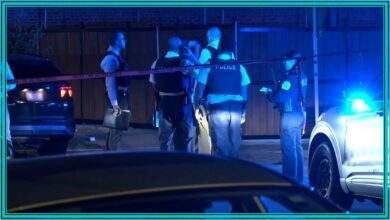
La parada ocurrió el 10 de julio de 2018, junto a la carretera interestatal 20 en Atlanta. Blasingame tenía 65 años. Estaba desarmado. Los oficiales dijeron que estaba haciendo panfletos, pidiendo dinero a los conductores. La opinión del 11o circuito, Edwards v. Grubbs, ahora reportado en 179 F.4th 909, describe lo que sucedió después en secuencia simple. Grubbs apretó el gatillo en un Taser en modo dardo. Las sondas golpearon a Blasingame en la espalda. Había sido rechazado. No había advertencia. Salió cojeando y cayó por un empinado terraplén, en el orden de 30 a 40 grados, una gota de unos 24 pies, y golpeó una caja de la utilidad de metal en una almohadilla de hormigón en la parte inferior.
Estaba inconsciente en la escena. Se desangró de la cabeza. La herida espinal le dejó cuadripléjico. Alrededor de un mes más tarde, mientras todavía estaba hospitalizado, la ciudad le escribió citas para pedir y obstrucción peatonal. Las citas no le devolvieron las piernas. Son parte del registro porque muestran cómo el departamento hizo papel a un hombre que no podía caminar. El vídeo de la cámara corporal de la parada existe. Cualquier persona que lo vea debe saber lo que están a punto de ver: un ciclo de Taser y una caída, no una persecución que termina en un tacto en tierra plana.
Law360’s report on the June 30 decision Pon la división en una línea. La mayoría afirmó el juicio como modificado. La opinión es del Magistrado Adalberto Jordania, sumado a los Estados Unidos El juez de distrito Charles Edwards Honeywell, sentado por designación. El juez Kevin Newsom disentía de inmunidad calificada. Advirtió que el tribunal estaba cerca de declarar la ley claramente establecida a partir del precedente que aún no existía en la forma que la mayoría utilizaba. Ese desacuerdo es el mejor argumento legal del oficial, y no obtuvo dos votos.

Why qualified immunity did not cover this shot
La inmunidad calificada protege a un oficial a menos que violó un derecho constitucional que estaba claramente establecido en ese momento. La mayoría dijo que el derecho aquí estaba claramente establecido por Tennessee v. Garner and by the circuit’s own decision in Bradley, un caso sobre el uso de una persona desarmada y no peligrosa en una superficie elevada. Garner es el caso del Tribunal Supremo que dice que la policía no puede usar la fuerza mortal para detener a un sospechoso fugaz y desarmado que no es una amenaza. El tribunal trató a un Taser disparado en la espalda de un hombre en la parte superior de una gota como fuerza mortal, porque Grubbs utilizó la fuerza que creó un riesgo sustancial de muerte o lesiones corporales graves. La diferencia entre un arma de fuego y un Taser no importaba una vez que la ubicación hiciera la caída de la lesión.
The panel said it did not need a second theory about «obvious clarity,» because Garner already supplied the notice. It also noted that an Eighth Circuit case, Stewart v. García, había ido al otro lado de un Taser usado contra una persona en una cerca en abril de 2018. El 11o Circuito no lo siguió. Tomando los hechos a favor de la finca, Blasingame corría con la espalda al oficial y no tenía oportunidad de presumir. Un lector no tiene que gustar veredictos grandes para seguir esa frase. The constitutional question was whether this particular use of force, in this particular place, was excessive. La mayoría dijo que sí, y dijo que cualquier oficial razonable tenía una advertencia justa.
La ciudad es una pregunta diferente, y la finca la perdió. Edwards argumentó que el fracaso de Atlanta para hacer cumplir su política de cámara corporal, o alguna otra costumbre municipal, era la fuerza motriz detrás de la violación. The district court, and then the appeals court, said the evidence did not get there. La regla 50 quitó el veredicto municipal de 60 millones de dólares. Es por eso que un titular de $100 millones se convirtió en un juicio de $21 millones contra un oficial. La ciudad está fuera. El oficial no lo es. Edwards también perdió, por abandono o por afirmación, la lucha por reabrir los gastos médicos en virtud de la regla 60(b), y el tribunal dijo que el juez Jones no abusaba de su discreción al postularse un fallo sobre los honorarios del abogado hasta que se hizo la apelación de méritos.
The punitive cut, and a second en banc petition
The panel agreed that some punitive damages were constitutional and that $20 million was not. Using the Supreme Court’s guideposts from BMW v. Gore, llamó la conducta de Grubbs reprensible pero no demasiado egregioso, miró sanciones comparables, y afirmó la reducción a $1 millón. The judges said they would not invent a number between $1 million and $20 million without briefing. Llamaron bolas y huelgas. La huelga fue el premio punitivo original. El baile que se mantuvo justo fue el millón de dólares que el juez de primera instancia ya había escrito.
El procedimiento de apelación es fácil de trabar, por lo que las fechas importan. An earlier 2026 opinion, reported at 169 F.4th 1261, was withdrawn and replaced. El 30 de junio, el mismo día que la nueva opinión emitió, el tribunal negó como burla una petición de ensayo dirigida a la vieja opinión, y despidió una orden que había estado reteniendo la mandato. El 21 de julio, Grubbs presentó una nueva petición para ensayar en banc, dirigida a la opinión sustituida. El tribunal registró copias de papel al día siguiente. Patrón público de CourtListener para No. 24-12787 muestra que el 22 de julio recibo como último archivo conocido. No hay orden publicado que otorgue esa segunda petición. Tampoco hay orden publicada que lo niegue. A finales de septiembre, la opinión del 30 de junio sigue siendo la decisión sobre los libros, y la solicitud en banc es una solicitud, no una suspensión de los hechos que la mayoría encontró.
The Northern District of Georgia case under all of this is No. 1:19-cv-02047. Los números de apelación consolidados incluyen 24-12787 y 24-12925, junto con los números anteriores del largo viaje arriba y abajo. Ocho años después de un golpe de Taser a una afirmación de apelación no es inusual en un caso de derechos civiles. Todavía es una acusación de lo lentamente que la finca de un hombre paralizado tiene que moverse para mantener un juicio.
A paycheck is not $21 million
Atlanta Black Star informó en julio que Grubbs todavía estaba en la fuerza y que se esperaba que la colección en su contra corría alrededor de $700 al mes, a través de la decoración o la limosna. La misma historia puso su paga de 2024 a unos $92,000, aproximadamente $5,500 al mes después de impuestos, por lo que la retribución está en el orden del 13 por ciento de la paga de mudanza. A $700 al mes, la aritmética del periódico dice que los $21 millones tomarían algo como 2.500 años. Esa figura es una manera de decir que el juicio es más grande que una carrera. No es una orden judicial que pague por 2.500 años. Los extranjeros, los seguros y cualquier liquidación futura pueden cambiar el dinero. Lo que no pueden cambiar, a menos que un ensayo vaya a su manera, es el resultado legal: la fuerza era excesiva, la ciudad está fuera, y el juicio del oficial se destaca.
The AEGIS Alliance has been writing the other side of the badge as well. In Ohio, a village chief resigned Mientras que una acusación de 70 relatos de sus años como maestro todavía no estaba en peligro. Esos casos no son los mismos. Una es una acusación penal con presunción de inocencia. Este es un juicio civil después de un jurado, un juez de juicio y un tribunal federal de apelaciones. La diferencia es el punto de un police accountability file. Verdicts and indictments do not belong in the same sentence without a label.
Blasingame estaba pidiendo dinero a los conductores. Corrió. No le dieron una última oportunidad verbal. La caída hizo el resto. Su finca ahora tiene un pedazo de papel vale $21 millones contra un hombre cuyo salario reportado no pagará. Readers of noticias y U.S. news en The AEGIS Alliance debe ver el docket en banc, no una promesa de que el cheque está en el correo. El 11o Circuito ya ha dicho lo que la Constitución exige en ese terraplén. El resto es colección.