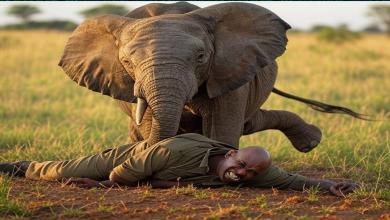
Kruger Rangers Found a Suspected Poacher Dead After an Elephant Stomp at Stolsnek, and the Rhino Hunt Never Left

Krüger-Nationalpark, Südafrika — Am Morgen des Oktobers 2021 fanden Feldranger, die Spuren im Stolsnek-Abschnitt des Krüger-Nationalparks verfolgten, einen Mann, der niemals ausgehen würde. Der sprecher der südafrikanischen nationalparks, Isaac Phaahla, sagte reportern, die leiche sei verstümmelt, die verletzungen seien die art von elefantenblättern und die leute, die mit ihm gekommen seien waren weg. Ein Mobiltelefon am Tatort war noch in einem Stück. Rangers reichte es der Polizei. Kein Nashorn und kein anderes Tier war in unmittelbarer Nähe getötet worden, ein Detail CBS Nachrichten und Newsweek both carried from the park’s account.
Phaahla was blunt about what the injuries suggested. „We believe that he was trampled by elephants due to the nature of the injuries he sustained,“ he said, as All That’s Interesting reported from the South African coverage. He also said that, at first, „Nothing was found except that body.“ The phone changed that picture only slightly. It survived where the man did not, and investigators treated it as a lead toward the accomplices who left him. A Kruger statement put the working theory in one line: initial investigations suspected the deceased was killed by an elephant and left behind by his accomplices. Phaahla said he thought one of those men may have been the person who called for help, not to surrender, but to get the body recovered.
Dieser tod im oktober war keine freak-schlagzeile, die frei vom kalender des parks schwebte. Im April 2021 hatten Ranger in der Nähe von Phabeni bereits einen mutmaßlichen Nashornwilderer tot unter einer Zuchtherde gefunden, nachdem die Gruppe entdeckt worden war und in die falsche Richtung gelaufen war. Die AEGIS Alliance meldete diesen Fall als the Phabeni tramplingZwei mutmaßliche Wilderer, zwei Elefantenbegegnungen, ein Park, ein Jahr. Phaahla, der nach Stolsnek sprach, wies noch weiter zurück auf einen Fall, den er als das Jahr zuvor beschrieb, in dem ein mutmaßlicher Wilderer von Löwen gefressen wurde und nur ein Schädel gefunden wurde. Das Muster, an das sich die Öffentlichkeit erinnert, ist einfach. Die Pattern Ranger leben mit ist nicht. Manche Männer sterben, weil die Tiere zurückschlagen. Einige sterben, weil die Patrouille es tut.
The second kind of death returned to the same stretch of bush. On Friday, February 6, 2026, rangers made contact with suspected poachers in the section SANParks spells Stolznek, the same ground the 2021 reports called Stolsnek. One suspect was fatally wounded. The day before, Thursday, February 5, a separate contact in the Malelane section produced no arrests but did produce a high-calibre rifle and bags. SANParks head of communications JP Louw said the two contacts showed „the ongoing dangers faced by rangers in their daily efforts to protect South Africa’s wildlife.“ The park said the rifle seizure was a disruption of a hunt, handed both matters to the South African Police Service, and praised rangers who „continue to put their lives on the line.“ The February statement is on the SANParks Website. An elephant did not decide that outcome. A confrontation did.
Dann kam das ältere Muster zurück, diesmal im hohen Norden. Die Ranger erhielten am Samstag, dem 12. September 2026, Informationen, dass zwei mutmaßliche Wilderer am Freitag, dem 11. September, durch das Gebiet von Pafuri gekommen waren. JP Louw sagte, dass das Paar in eine Herde von Elefanten ging, in verschiedene Richtungen verschraubt wurde und sich gegenseitig verlor. Der Überlebende stieg aus, ging nach Hause und schlug Alarm, dass sein Partner vermisst wurde und dass er ihn schreien gehört hatte. Die Polizei verhaftete ihn mit Hilfe der örtlichen Gemeinschaft. Er gab die illegale Einreise zu und ging Ranger vom Pafuri-Posten zurück zum Split. Spuren vom Fluss Luvuvhu liefen etwa sechs Kilometer in den Park. Der Tote war am Ende dieses Weges. Während der Suche fanden Ranger auch die Überreste eines Büffels, von dem SANParks glaubt, dass die beiden Männer getötet wurden. Louw sagte, die polizei würde die forensische arbeit fortsetzen, um festzustellen, wie der mann starb. IOL reported the case as a trampling. The careful version is the one Louw actually gave: an elephant encounter, a scream, a body, and a cause of death still sitting with forensics.
The folklore that „the bush judges poachers“ does not survive the files. At Stolsnek in 2021, Phaahla’s account was that no animal died nearby. At Pafuri in September 2026, a buffalo did. At Stolznek in February 2026, the fatal shot was a ranger contact, not a herd. The men who leave their partners show up in more than one of these cases, and so do the tracks and the communities that sometimes help police find the survivor. A dead suspect is not a saved rhino. A saved rhino is a number that has to be counted against a trade that keeps hiring replacements.
Those numbers, released around World Rhino Day, are the part of this story that does not fit on a crime-scene caption. On February 10, 2026, Forestry, Fisheries and the Environment Minister Willie Aucamp said 352 rhinos were poached in South Africa in 2025, down from 420 in 2024. Of the 2025 deaths, 266 were on state land and 86 on private parks, reserves, or farms. He called it a decrease of 68 animals and credited „a balanced, intelligence-driven, and partnership-based approach.“ The provincial table SANParks published with that statement shows why a national decline can still be a disaster in one park. Kruger, listed on the SANParks line, lost 175 rhinos in 2025, up from 88 in 2024 and 78 in 2023. KwaZulu-Natal moved the other way, from 325 in 2023 to 232 in 2024 to 97 in 2025. Hluhluwe-iMfolozi inside that province fell from 198 in 2024 to 63 in 2025. Pressure did not vanish. It moved, and Kruger took the hit.
Ein zweiter Satz von Zahlen, die von der Abteilung am 22. September 2026 herausgegeben wurden, deckt nur Januar bis August ab und sollte nicht auf die Gesamtjahressummen gestapelt werden, als wären sie die gleiche spalte. In diesen acht Monaten wurden 230 Nashörner national gewildert, verglichen mit 248 im gleichen Zeitraum von 2025. Kruger verlor 114, verglichen mit 123 im Vorjahr. KwaZulu-Natal Teiljahres-Maut sank von 67 auf 29. Mpumalanga, getrennt von der Krüger-Linie in dieser Tabelle gezählt, stieg von 3 auf 14. Der Nordwesten stieg von 14 auf 19. Die Abteilung sagte, dass am Ende des Jahres 2025 die minimale nationale Bevölkerung 15.096 Nashörner war: mindestens 2.565 schwarze Nashörner und 12.531 weiße Nashörner, ein Anstieg von 4,9 Prozent gegenüber 2024. Wilderei im Jahr 2025 nahm schätzungsweise 2,2 Prozent der nationalen Herde, unter einer 3,5-Prozent-Schwelle behandeln Beamte als der Punkt, an dem die Verluste die Geburten übertreffen. Die Herde kann wachsen und immer noch unter einem Messer sein. Beide Sätze sind wahr.
Die gleiche Erklärung zum Welt-Rhino-Tag beschreibt, was Kruger tatsächlich tut, außer Leichen zu begraben. Der Park hat Feldranger und Nashornmonitore im Rahmen der Rhino Renaissance Initiative hinzugefügt, in einem breiteren Plan, der Enthornung, mehrschichtige Sicherheit, Technologie, Fähigkeiten und Fähigkeiten umfasst integritätsmanagement. Dehorning ist eine düstere Art von Hoffnung. Es senkt den Gehaltsscheck, der mit dem Töten eines Tieres verbunden ist, und tut nichts gegen die Männer, die bereits mit einem Gewehr im Zaun sind. Integritätsmanagement ist der ruhigere Eintritt. Einige der schlimmsten Schäden in diesem Handel sind von Menschen gekommen, die auf der Gehaltsliste des Staates stehen sollten.
Courts have started handing down sentences that treat a carcass as more than a fine. The September 22, 2026 account includes Sifiso Mbuyane, convicted on eight counts that included trespassing in Kruger, killing two rhinos, conspiracy, and firearm offences, and sentenced to 28 years‘ direct imprisonment. DNA tied horns in his possession to the carcasses. Ballistics tied the firearm. Two former security officers, Nyiko Gumede and Nomsa Ndlovu, were each sentenced to 12 years after convictions that included killing a rhino and conspiracy, the Mail & Guardian reported. A long term does not put a horn back on an animal. It does tell the next crew that an elephant is not the only way a job in Kruger ends.
The Stolsnek phone still matters more than the folklore. A dead man cannot name the buyer, the gun lender, or the person who promised a way through the fence. A working handset might. So might the Pafuri survivor who walked rangers back to the river trail and is now a police case instead of a ghost. The AEGIS Alliance’s view is that the animal is not the justice system. The justice system is the ranger who has to decide, in thick bush, whether the man in front of him is about to fire, and the prosecutor who has to turn a horn, a rifle, and a DNA swab into a sentence that outlasts the news cycle. Kruger is roughly the size of Wales. Cathy Dreyer, the park’s head ranger, has said on camera that losing even a single rhino is too many, which is another way of saying 114 in eight months is not a victory lap. It is a slower bleed.
Related reading from The AEGIS Alliance: the suspected rhino poacher found dead under a breeding herd near Phabeni, more Umwelt reporting, and Internationale Nachrichten.



I hope it was slow and hope it hurt.
That’s awesome
Not the elephant fault that he got stomped on . , the idiot shouldn’t been in the way , oh , yea …. the elephant enjoyed it lol
Fantastic
Awesome 🐘
Lol lol good.